



Wiener Mondesir, Arevo Co‑Founder, on Building the First 3D‑Printed Carbon‑Fiber Bike Frame


In 2018, Silicon Valley startup Arevo captured industry attention by unveiling what it described as the world’s first 3D‑printed carbon‑fiber bike frame. The project highlighted the distinct strengths of Arevo’s proprietary composite 3D‑printing technology—a fusion of robotics and software that delivers lightweight, custom‑made composite components.
Since then, Arevo has partnered with bike manufacturer Franco Bicycles to supply 3D‑printed carbon‑fiber unibody frames for a new e‑bike brand.
This week we speak with Wiener Mondesir, Arevo’s co‑founder and chief technology officer, about the company’s groundbreaking technology, the advantages of composite 3D printing, and the future of additive manufacturing.
Could you tell us a bit about Arevo?

At Arevo, our mission is to enable large‑scale production of composite parts by blending robotics, materials science, and software. The composite sector presents a vast opportunity: carbon fiber offers superior strength‑to‑weight performance, appealing across aerospace, automotive, and sporting goods, yet its adoption has lagged due to inefficient, labour‑intensive processes.
Traditional composite manufacturing remains costly and slow, limiting it to high‑end aerospace and automotive markets. Design cycles are prolonged by inadequate simulation tools, and many industries lack a fundamental understanding of composites.
We tackle these barriers by “digitalising” composites. Our software takes a 3D model, performs structural analysis, optimises lay‑up orientation, and generates production instructions—all without requiring deep expertise. Think of a spider’s web: it uses just enough silk in precisely the right places. That principle guides our optimisation algorithms.
In short, Arevo’s goal is to make composite manufacturing scalable and accessible.
What are the benefits of composite 3D printing?
Carbon‑fiber composites provide an exceptional strength‑to‑weight ratio, enabling components that are both lightweight and robust. Unlike metal lattice structures, which still require heavy base materials, composites start from a material that is already optimised for performance.
Because carbon fiber is anisotropic—strongest along the fiber direction—designing with it traditionally requires specialised knowledge. Arevo’s software removes that barrier, letting designers create complex, optimised parts without a PhD in materials science.
How was the world‑first 3D‑printed bike frame created?
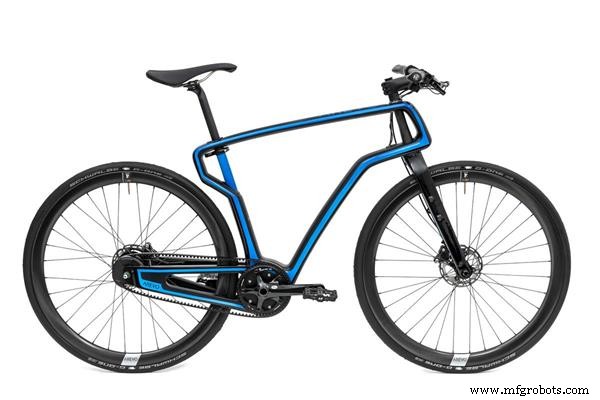
The bike frame was chosen as a showcase for what our technology can achieve. Traditional composite bikes require a year‑long design‑prototype‑production cycle and involve 20–30 hand‑stitched parts, with 40 workers per frame. The process is costly and offers limited customisation.
With Arevo, we cut that timeline from almost a year to just a few days. Our software converts a CAD design into an isotropic, generative model, optimises fiber orientation, and predicts structural performance. The resulting unibody frame is lightweight, strong, and fully customisable—features that attracted major bike manufacturers.
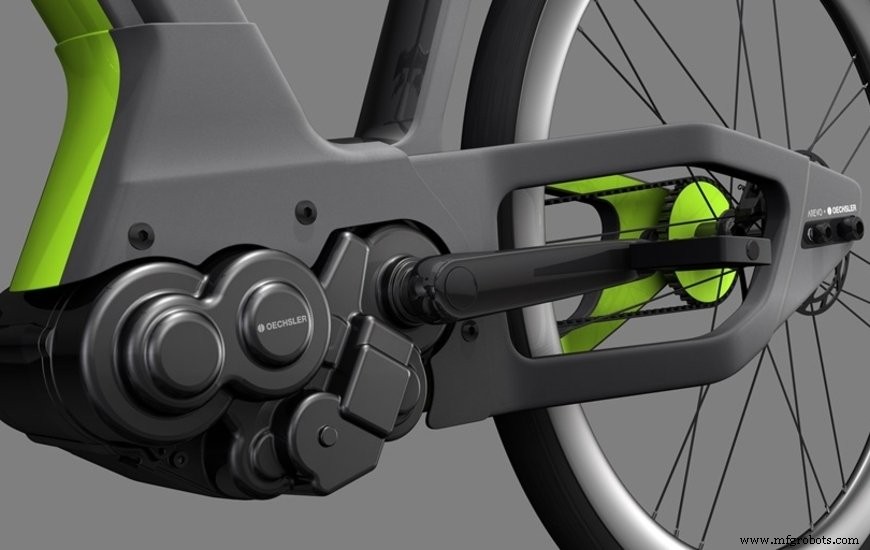
The design diverges from conventional frames: for example, it omits the seat stay and relies on a single carbon‑fiber laminate. By tuning stiffness regionally through software, we can tailor the ride feel for each customer.
Because a 3D‑printed frame can be produced on demand, the industry can move beyond the one‑million‑per‑year composite frame production volume, opening the door to truly custom, mass‑made bicycles.
Is the custom approach scalable?
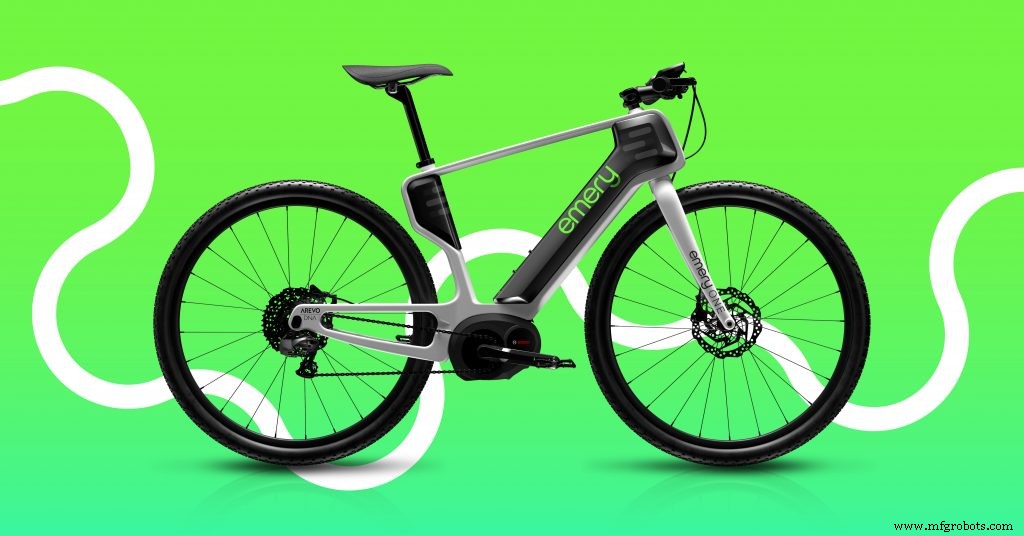
Customisation is a key value driver in cycling: riders thrive on equipment that fits their body and riding style. While mass production struggles to accommodate unique requirements, Arevo’s technology lets consumers design a frame that our software verifies for structural integrity, then produces on demand.
This streamlined path from concept to production positions Arevo to meet growing demand for personalised mobility solutions.
Other applications for Arevo’s technology?
Beyond bikes, Arevo targets any sector that values lightweight, high‑performance, and custom parts—sports equipment, automotive components, energy infrastructure, and aerospace parts. Our platform is ready to tackle the most demanding applications across these markets.
How does robotics fit into the process?
Traditional layer‑based 3D printing deposits material only in the X‑Y plane, resulting in weak Z‑direction strength. Our six‑axis robotic arm deposits carbon fiber in X, Y, and Z, eliminating that weakness and enabling true volumetric lay‑up.
Robotics also expands build envelope capability. Unlike conventional printers limited to a fixed build size, our gantry‑mounted robots can print structures up to four metres high, from a single unit to complex aerospace assemblies.
What is the current state of composite 3D printing?
Composite additive manufacturing has existed for years, but earlier systems were limited by manual fibre placement and simple geometries. Modern automation—robotic fibre deposition and advanced resin chemistries—now enables complex, high‑quality parts. The market is healthy, and Arevo is at its forefront.
Key challenges in the industry?
Software tools that unlock the full potential of additive manufacturing remain scarce. Designers often attempt to retrofit existing parts for 3D printing, limiting innovation. Robust, user‑friendly software is essential to guide engineers through the design‑to‑manufacture pipeline.
Future outlook for the next five years?
Arevo’s focus has always been on production‑grade parts. The industry’s conversation is shifting from feasibility to quality and scalability. We anticipate a future where repeatable, high‑volume production of complex composite parts is standard, driven by data‑rich, closed‑loop manufacturing processes.
Ensuring quality in additive manufacturing?
Our laser‑based deposition system, coupled with machine‑learning‑enabled in‑situ inspection, achieves less than 1% voids in printed parts. Real‑time monitoring and closed‑loop control guarantee consistent, high‑performance output—critical for aerospace and other demanding sectors.
What’s next for Arevo?
Over the coming year, we’ll expand production capacity to meet surging demand, launch new applications, and continue refining our execution platform. Our goal is to democratise custom, high‑performance composites for a wide range of industries.
To learn more about Arevo, visit: https://arevo.com/
3D printing
- Expert Interview: Simon Fried, Co‑Founder of Nano Dimension, on 3D Printing’s Future in Electronics
- Carbon Co-Founder Philip DeSimone on Scaling 3D Printing for High‑Volume Production
- Why Composite 3D Printing Is a Game Changer – Insights from Anisoprint CEO Fedor Antonov
- Carbon Fiber: Revolutionizing Automotive Design, Efficiency, and Sustainability
- VAIO Z: The First Fully Contoured Carbon‑Fiber Laptop
- Carbon 1 MK II: The First Carbon‑Fiber Smartphone Revolutionizing Design & Sustainability
- 3D‑Printed Carbon Fiber: A Superior Alternative to Aluminum Amid Global Shortages
- How I Built a Lightweight Carbon‑Fiber Bike with Markforged 3D Printing
- Arevo Unveils First 3D-Printed Carbon-Fiber Unibody Bike Frame and Rim at Eurobike 2019
- Arevo Launches 3D‑Printed Carbon‑Fiber Unibody Frames for Pilot’s New E‑Bike Line