



How I Built a Lightweight Carbon‑Fiber Bike with Markforged 3D Printing
Editor’s Note: This guest post is by John Nolin, a SolidXperts reseller and avid cyclist who uses Markforged parts to enhance his rides.
Introduction
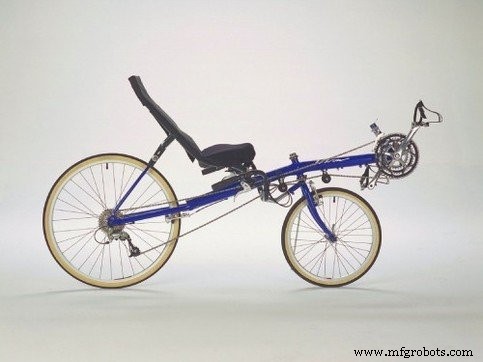
When I’m not installing Markforged printers or teaching SOLIDWORKS, I embark on long‑distance charity rides—50, 75, or 100 miles in one or two days. To tackle these distances comfortably and quickly, I rely on a short‑wheelbase recumbent, the Vision R40. Its compact geometry offers more comfort than a road bike, but the chromoly frame adds 32 lb, more than twice the weight of a lightweight road bike. On the hilly Three Notch Century in the New Hampshire White Mountains, that extra weight becomes a challenge. A lighter bike could make a huge difference on climbs.
A Homemade Carbon‑Fiber Bike
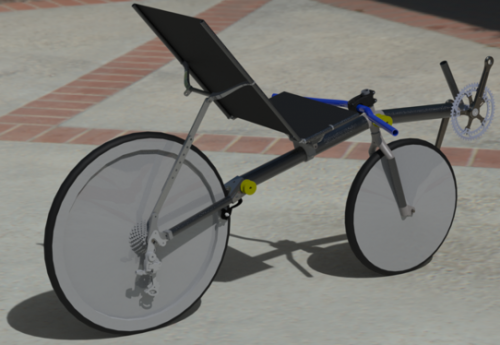
Markforged’s robust, high‑strength materials inspired me to design a lightweight, affordable frame. The final build combines 10 unique Onyx‑printed components with 7 sections of pre‑manufactured bicycle‑size carbon‑fiber tubing, creating a strong, manufacturable frame that is far cheaper than a custom composite frame. I sourced a front fork, stem, and handlebars from eBay in carbon composite. Total material costs ran around $900—over $1,000 less than a custom composite build—while still giving me full control over the design.
The First Part
Designing a composite frame is one challenge; proving it is light and strong enough is another. I began by printing the left rear dropout—the component that secures the rear wheel. It required extreme stiffness, so I modeled it in SolidWorks and printed it with Onyx reinforced with a few layers of High‑Strength High‑Temperature Fiberglass (HSHT). The resulting part weighs 26.7 g, compared to over 115 g for a metal equivalent, confirming the feasibility of the build and giving me confidence to proceed.
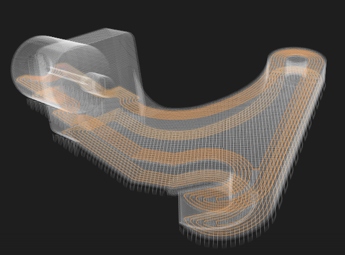
It was printed on a Mark Two Enterprise kit printer. This milestone marks the first step toward a lighter, faster recumbent. Stay tuned for more updates. In the meantime, follow us on social media for additional reseller applications and industry content.
3D printing
- Carbon Fiber: Composition, Manufacturing, and Future Applications
- Top 3 Benefits of Carbon Fiber Watches for Luxury Timepieces
- Unidirectional Carbon Fiber: The Strength, Lightness, and Cost‑Savings Advantage for Modern Manufacturing
- Carbon Fiber Explained: Strength, Production, and Industry Applications
- Is Carbon Fiber Conductive? Understanding Its Electrical and Thermal Properties
- BMW Introduces Mass‑Produced Carbon‑Fiber Bolt‑On Frames for Motorcycles
- Upgrading the 3DR Iris+ with 3D‑Printed Carbon Fiber Parts – Part 2: Electrical Modifications
- Fiberglass vs. Carbon Fiber: Choosing the Right Reinforcement for 3D Printing
- Arevo Unveils First 3D-Printed Carbon-Fiber Unibody Bike Frame and Rim at Eurobike 2019
- 3D Printing with Carbon Fiber: How and Why It Works