



Fiberglass vs. Carbon Fiber: Choosing the Right Reinforcement for 3D Printing
Both fiberglass and carbon fiber are proven reinforcement materials celebrated for their high tensile strength in composite engineering. While they share similar performance characteristics, their histories, cost structures, and typical applications differ markedly.
Fiberglass has long been the workhorse of affordable structural components—boat hulls, inexpensive fixtures, and drainage systems. In contrast, carbon fiber is synonymous with speed and premium performance, gracing race cars, new passenger jets, and other high‑end aerospace and automotive parts. In the 3D‑printing arena, both fibers enhance engineering‑grade prints, but their properties guide the choice of material for a given application.
Below, we compare the two to help you determine the best continuous‑reinforcement fiber for your needs.
Get a free sample part
Fiberglass
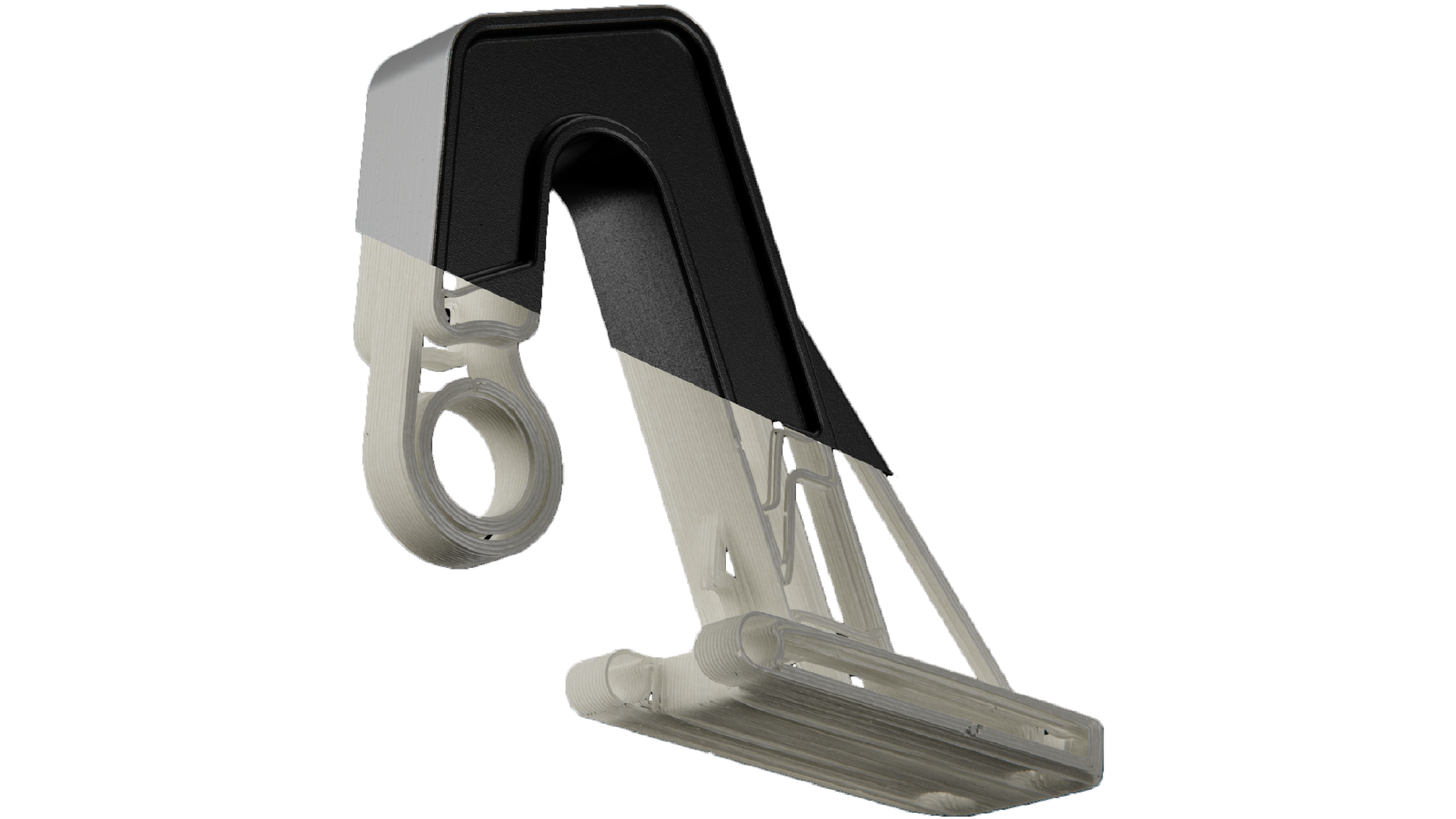
Fiberglass is produced by heating inorganic silica sand to extreme temperatures, drawing the molten material into ultra‑fine strands. These amorphous glass fibers boast extraordinary tensile strength. Markforged offers two fiberglass variants for 3D printing:
- Standard Fiberglass
- High‑Strength High‑Temperature (HSHT) Fiberglass
Fiberglass continuous reinforcement delivers impressive performance gains. Compared with ABS, parts printed with fiberglass are roughly 20× stronger and 10× stiffer in tension, making it ideal for factory‑floor tooling, fixtures, and high‑strength prototypes where cost is a priority.
HSHT fiberglass excels in high‑heat, impact‑resistant applications. Its heat resistance and flexural strength are second only to carbon fiber, enabling it to replace critical machined aluminum parts at a fraction of the cost.
Both fiberglass variants offer unique secondary benefits. When a part wears, the underlying fibers can become exposed, revealing white strands that act as a visual wear indicator. This not only signals imminent end‑of‑life but also contributes to the part’s durability by providing a secondary, tough surface that resists further damage.
In cyclic loading scenarios, HSHT fiberglass yields plastically with minimal rebound, avoiding the catastrophic failure mode sometimes seen with carbon fiber. Because both fibers are amorphous, they also provide superior radiolucency for RF and antenna‑base applications.
Request a demo
Carbon Fiber
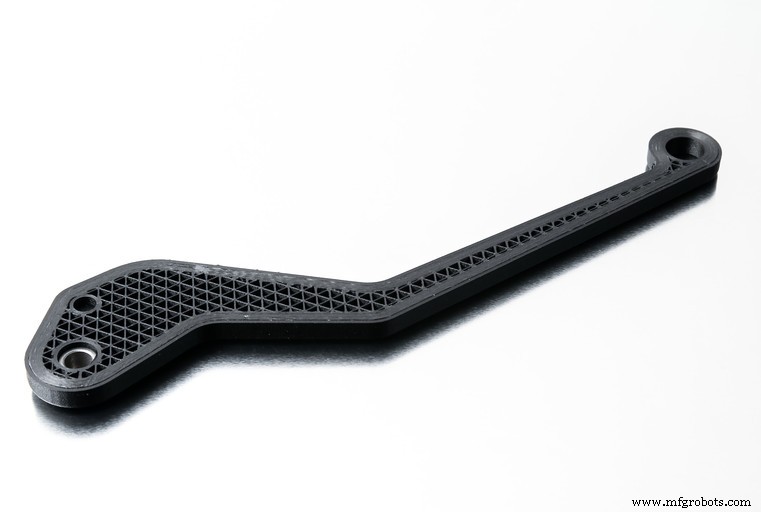
Carbon fiber originates from organic polymers processed at relatively low temperatures. Its crystalline structure, achieved through complex chemical, thermal, and mechanical treatments, yields one of the highest strength‑to‑weight ratios available—outperforming steel and titanium.
In 3D printing, carbon fiber is the go‑to continuous reinforcement for stiffness. It delivers about 25× the stiffness of ABS and doubles the stiffness of any other Markforged fiber.
When benchmarked against 6061 aluminum, carbon‑fiber prints exhibit a 50% higher strength‑to‑weight ratio in flexure and a staggering 300% increase in tensile moment, making it the premier material for maximal mechanical performance.
Markforged’s carbon‑fiber tooling has been employed for conformal jigs, specialty fixtures, and high‑end motorsport components, from global OEMs to one‑off prototypes. The company also partners in industry 4.0 initiatives, delivering ultra‑light, highly damped conformal tooling that enables advanced generative‑design manufacturing without costly post‑finish machining.
What’s the difference between a 3D printer and a CNC machine?
Carbon Fiber vs. Fiberglass: The Final Verdict
Both fibers bring distinct advantages to 3D‑printed parts. Fiberglass offers cost‑effective strength and excellent heat resistance, while carbon fiber provides unparalleled stiffness and a superior strength‑to‑weight ratio. Select the material that aligns with your application’s performance, cost, and environmental requirements.
Need help choosing? Contact us for expert guidance or download our free Design Guide for 3D Printing with Composites to explore advanced applications.
3D printing
- Carbon Fiber: Composition, Manufacturing, and Future Applications
- Top 3 Benefits of Carbon Fiber Watches for Luxury Timepieces
- Fiberglass vs. Carbon Fiber: Key Differences and How to Choose the Right Composite
- Unidirectional Carbon Fiber: The Strength, Lightness, and Cost‑Savings Advantage for Modern Manufacturing
- Carbon Fiber: 3 Key Properties That Drive Innovation
- 5 Unexpected Carbon Fiber Innovations Reshaping Modern Life
- Carbon Fiber Weaves: Types, Properties & Industrial Applications
- Carbon Fiber Explained: Strength, Production, and Industry Applications
- Is Carbon Fiber Recyclable? A Guide to Sustainable Recycling & Repair
- Is Carbon Fiber Conductive? Understanding Its Electrical and Thermal Properties