



DDTv3: 3D‑Printed Nylon‑Kevlar Combat Robot Revolutionizing Micro Battle Arenas
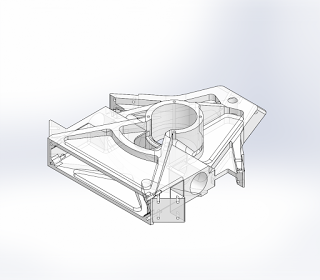
After a modest showing at Bot Blast 2015, where DDT and Silent Spring finished with a 2‑4 record, I seized the opportunity to refine the robot’s core design principles. Emphasizing long‑term reliability and entertaining weaponry, I re‑engineered the frame and drivetrain to meet the demands of top‑tier micro‑battle competition. Charles recently acquired a Mark One 3D printer from Mark Forged. This machine uniquely embeds continuous fiber strands—fiberglass, Kevlar, or carbon fiber—within each layer, dramatically increasing tensile strength without vertical placement. Paired with a nylon base material, the printer offers superior mechanical properties over traditional ABS for combat applications. To showcase the technology, I printed DDT as a nylon‑Kevlar unibody. Designing a unibody requires meticulous planning of part geometry, connection points, and assembly order. Using CAD, I modeled every component with high precision and established a detailed assembly sequence, particularly for the rear component bay. While the design may not be optimal for 3D printing, the reinforced trusses provide stiffness to long or thin features, balancing structural integrity with an engaging aesthetic. A more blocky design would have compromised visual appeal. Key modifications include:
DDTv3: The 3D‑Printed Nylon‑Kevlar Combat Robot
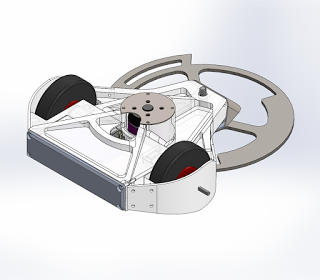
New Design Philosophy
Fabrication Process
The full frame required nearly 36 hours of printing time—a testament to the printer’s precision and the added fiber. Though the printer is slow, I optimized fiber placement by layering continuous strands throughout and adding full layers at critical sections.
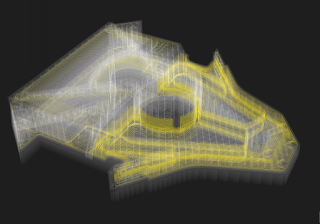
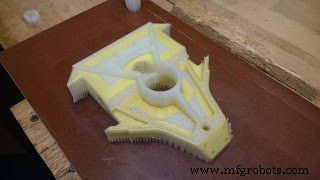
Post‑print cleaning involved removing support material and sanding undercut features with a rotary tool. This step ensured accurate fit for drive motors, screw holes, and other components.
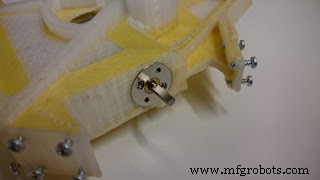
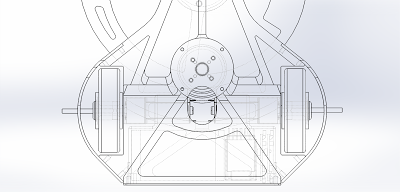
The electronics were compacted into a custom cube housing an Orange RX receiver, a Turnigy Plush 10 ESC for the weapon, and two Vex 29 motor controllers for each spark motor. The cube fits snugly within the frame.
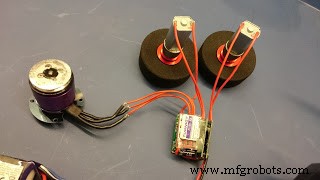
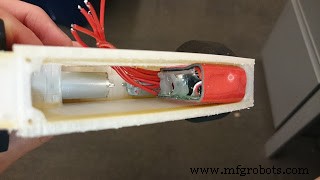
Recycled motor from v2 was used, and wiring completed without a dedicated power switch—direct battery connection proved more reliable given recent switch failures.
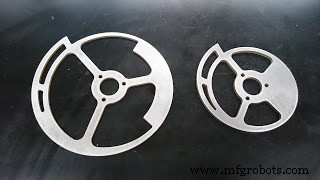
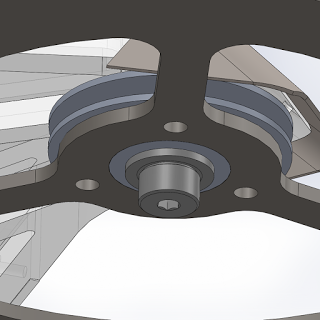
The blade‑pulley interface was redesigned: bearings now sit in the hub, and blades bolt to pulleys. A concentric mating feature on the pulley enhances alignment and reduces shock, allowing blade swaps without disassembling the shaft assembly.
Side armor panels were fabricated from 0.0625 inch polycarbonate—tough yet flexible. Multiple copies were made due to challenging fit and preloading.
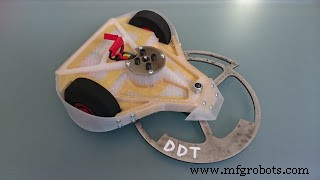
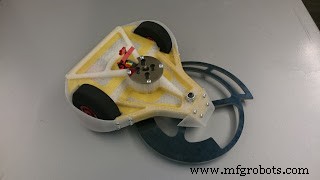
Final weight: 15.5 oz—light enough for agile combat with room for further optimization.
Preliminary Performance Tests
DDT demonstrated significant damage against UHMW, aluminum, and 3D‑printed nylon targets, confirming the robustness of the v2 frame and the effectiveness of the new design.
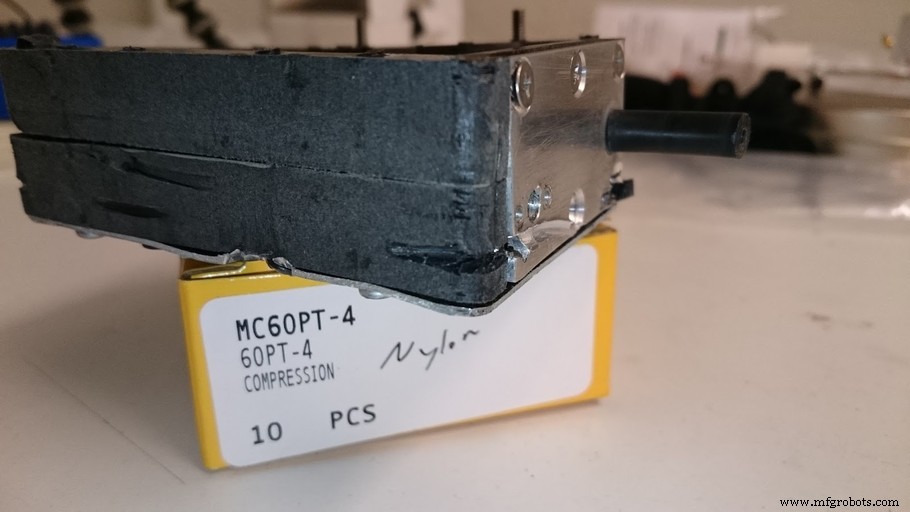
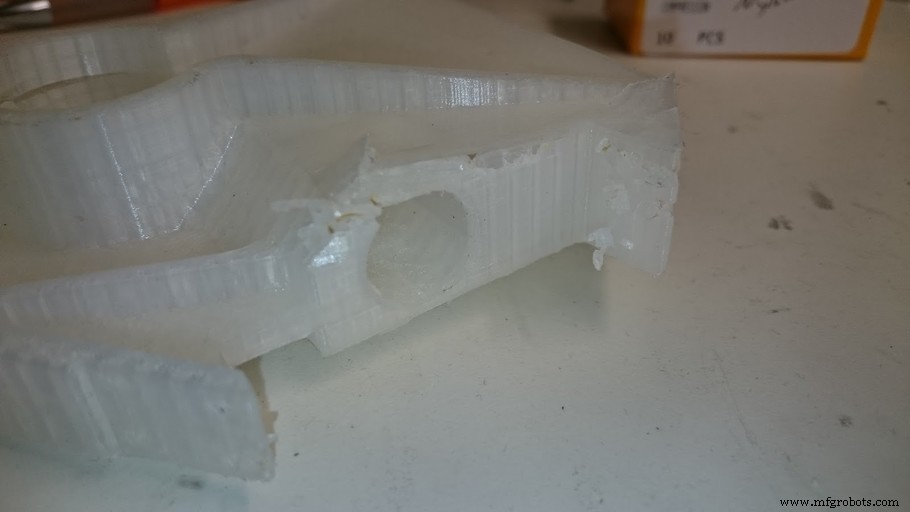
Dragon Con 2015 Microbattles
At Dragon Con 2015, DDTv3 debuted with four matches, recording three victories and one loss. The printed frame remained true under repeated impact, with minimal deformation—testimony to the Kevlar reinforcement. Notably, a solid hit from Algos forced DDT into the pit, underscoring the need for continued resilience improvements.
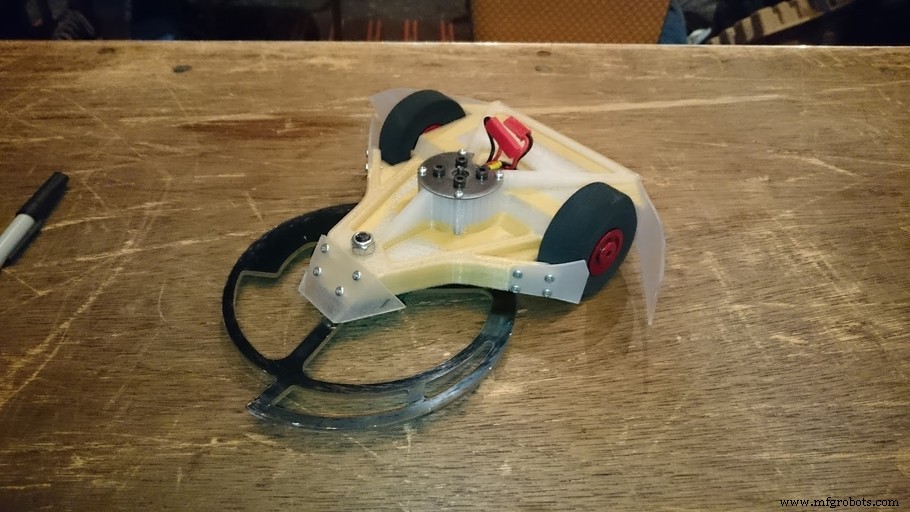
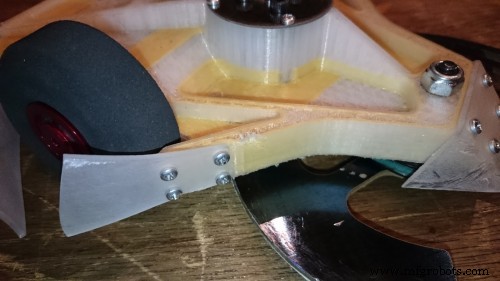
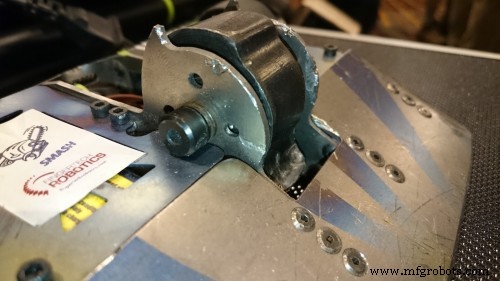
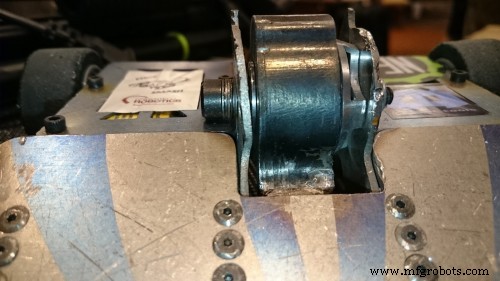
After sustaining damage from Green Reaper’s blade‑climbing strategy, DDT’s reinforced frame withstood a 0.6 mm penetration, and wheel guards created clear markings on opponent titanium armor.
Future competitions are on the horizon—two events in October will provide fresh challenges for DDTv3. Stay tuned for updates.
3D printing
- The Art and Craft of Headstones: History, Materials, and Modern Manufacturing
- The Evolution and Craft of the Modern Swimsuit: From Ancient Pools to High‑Tech Fabric
- The Evolution of the Sword: From Bronze to Modern Ceremonial Weaponry
- 3D‑Printed Prosthetics: Transforming Access and Affordability for Amputees
- Markforged Sets New Standards in Antweight Combat Robotics
- MarkForged Leads Innovation at South‑Tec 2023: Carbon‑Fiber Composite 3D Printing Takes Center Stage
- Haddington Dynamics: The Open‑Source, High‑Performance Dexter 3‑D Printed Robot Arm
- Polycarbonate’s Rise: How a 1950s Innovation Shaped Modern Materials (Part 11)
- Robotics in Manufacturing: A Proven Evolution of Efficiency and Innovation
- Showcasing 3D Printing Innovations at the IX Lacon Network