



Reimagining the Go‑Kart: 3D‑Printed Carbon‑Fiber Parts for Unmatched Performance
Today, we embark on a new challenge: re‑imagining this go‑kart using 3‑D printed carbon‑fiber components. This project pushes the limits of additive manufacturing. From the steering wheel to the steering knuckles, we will disassemble each part, model it in CAD, print it on our Mark Forged Mark Two, and swap the original steel piece for a lightweight, high‑strength 3‑D printed version. As the kart sheds metal for nylon and carbon‑fiber, every new component will be validated on the track—full tank, pedal to the floor, and no compromises.
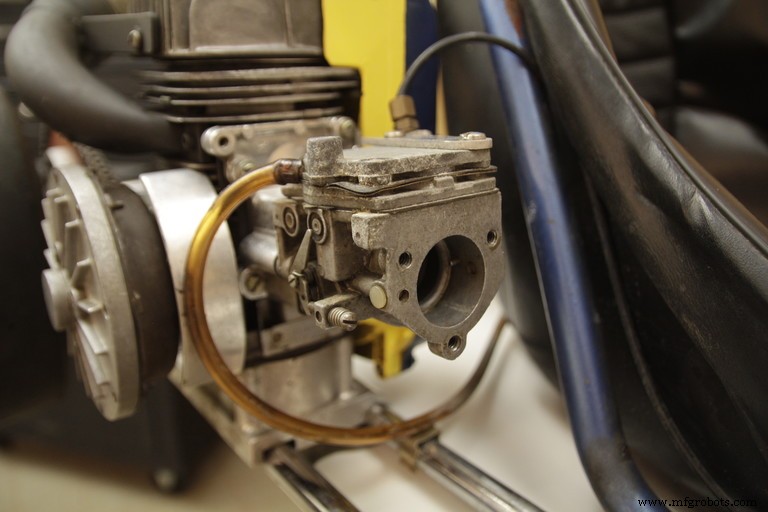
The first part we target is the air‑intake restrictor. Though small, its geometry governs airflow into the engine, directly affecting performance. In racing, an intake restrictor limits power and top speed; Formula SAE, for example, mandates a circular restrictor no larger than 20 mm for gasoline engines. Our goal: design a restrictor that satisfies the 20 mm requirement while allowing the engine to reach its peak output.
Our base kart had no restrictor installed, so we challenged ourselves to meet Formula SAE’s specification. This part is ideal for 3‑D printing—the swept‑profile and extruded base are straightforward for our printers, and design iterations become as simple as clicking Print.
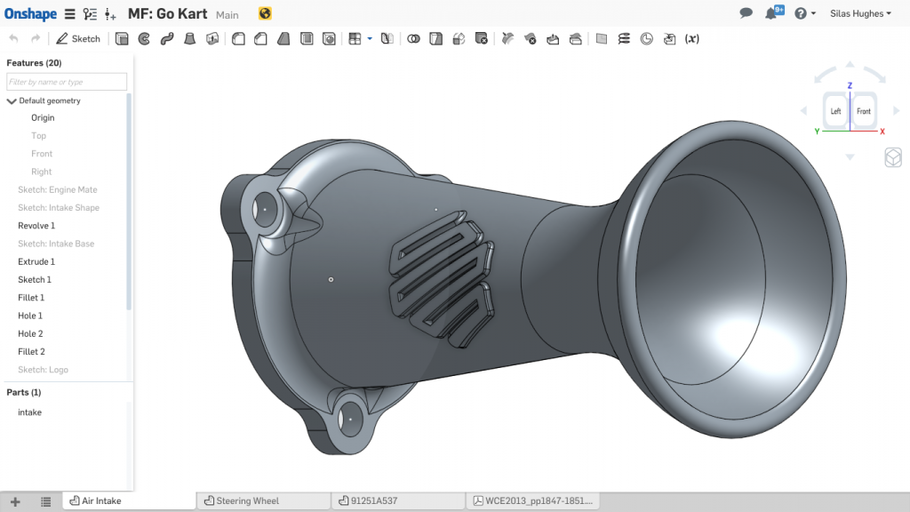
Using Onshape, we built the model with two basic operations: a revolve of the intake profile and an extrude of the mounting base. We also embossed our MarkForged logo on the side for a subtle branding touch.
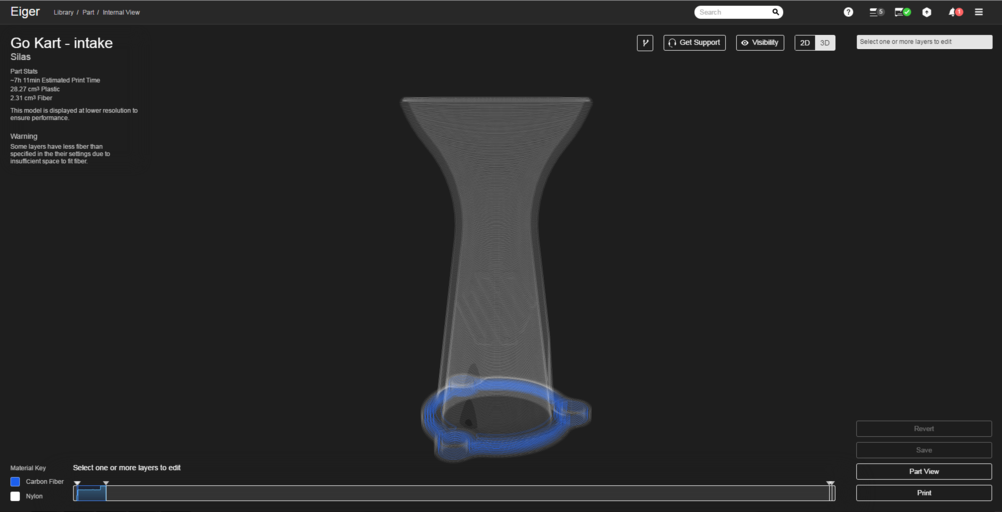
After finalizing the design, we printed the first version. With MarkForged Eiger, we selectively reinforced the base with carbon‑fiber strands, boosting both strength and heat resistance where the restrictor contacts the engine.
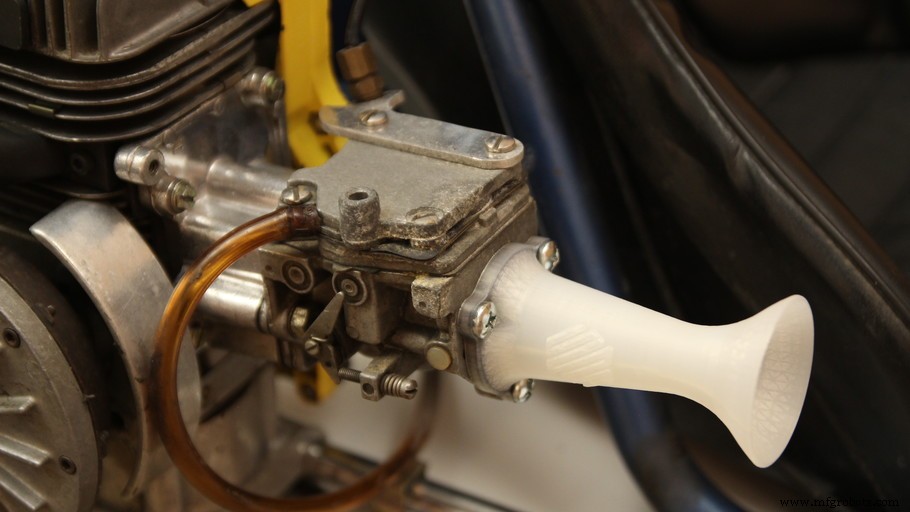
The new restrictor is secured with three ¼‑20 bolts. With the engine primed and ready, the next step is the real‑world test—fuel the tank, start the engine, and hit the track. We’ll document the performance gains and share the results with you.
Want to see the Mark Two in action? Request a Demo today!
3D printing
- Coloring 3D‑Printed Parts with Wax Crayons: A Novel Post‑Processing Technique
- In‑House Production: The Fuse 1 Builds Its Own Parts
- Elevating Quality Control: 3D‑Printed Tooling Enhances Manufacturing Precision
- Designing Functional 3D‑Printed Bicycle Pannier Adapters with Kevlar CFF
- Webinar: Build Stronger 3D Parts with Eiger Software
- How 3D Printing Gave MIT Motorsports Team a Competitive Edge in Formula SAE
- Björn Lindwall’s 3D‑Printed Gear Powers His Everest Ascent
- Calculating SLS 3D Printing Costs: A Step-by-Step Guide for Sinterit Lisa & Lisa Pro
- PPprint: Expert FDM 3D Printing of Polypropylene Parts
- Professional Guide: Dyeing 3D Printed Polyamide Parts for Vibrant Color and Durability