



Mastering Quality Assurance in Metal 3D Printing: Overcoming Three Key Challenges
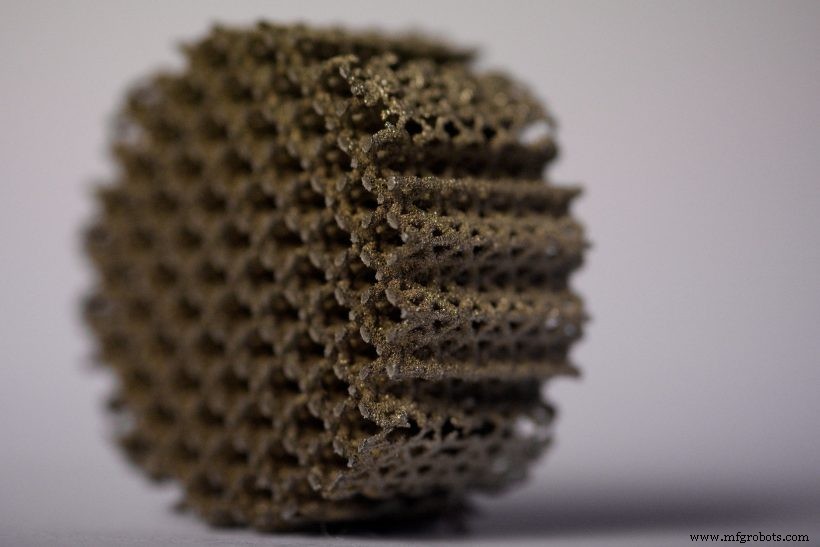
Quality assurance (QA) is the cornerstone of reliable metal 3D printing, yet it remains the most demanding step in the process.
As additive manufacturing expands into high‑performance sectors, the expectation is that each part meets stringent mechanical and dimensional specifications. For metal printers, however, achieving this consistency is a persistent hurdle for many manufacturers.
In this article we examine the primary obstacles to establishing robust QA workflows for metal 3D‑printed parts and outline proven solutions.
Challenge 1: Ensuring the quality of your materials
The foundation of a defect‑free build lies in the powder itself. Material qualification is particularly complex for metal powders, where maintaining purity throughout the supply chain is critical.
Safety‑critical applications—aircraft components, medical implants—demand powders that are 100 % free of contaminants. Even trace amounts of foreign material can alter microstructure and cause a failed print.
Contamination can arise at any stage: during the build, storage, transport or handling. For example, residues from a previous print can mix with fresh powder if the build plate is not thoroughly cleaned. Reusing powder also changes its composition, as moisture, oxygen and nitrogen are absorbed with each cycle.
Effective QA therefore requires rigorous testing methods tailored to additive manufacturing.
Solution: Employ CT scanning
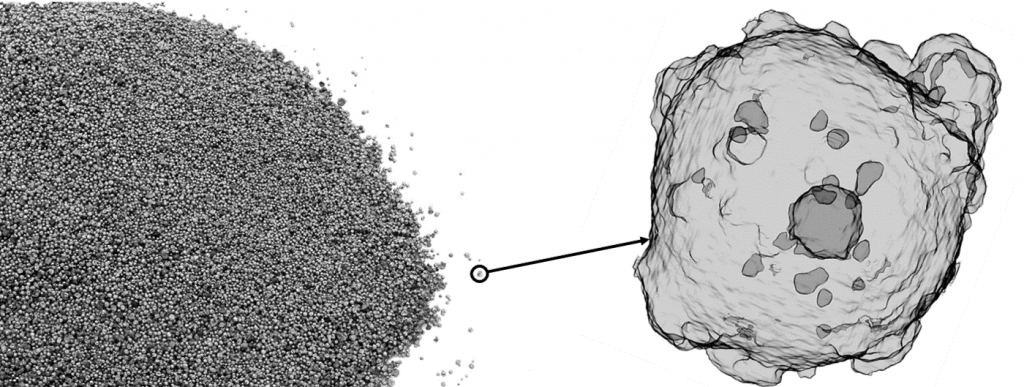
Computed Tomography (CT) offers the most precise way to detect powder contamination. By acquiring hundreds of X‑ray images from multiple angles, a 3‑D representation of the powder is constructed.
Modern micro‑CT scanners achieve resolutions down to 3 µm, and high‑end units can resolve voxel sizes of 0.5 µm. They can inspect a wide range of metals—from aluminium and titanium to stainless steel and Inconel.
When used for powder qualification, CT provides detailed data on particle morphology, size and shape distributions, as well as internal porosity. This insight allows engineers to verify suitability before the powder enters the build chamber.
Expanse Microtechnologies offers a proprietary Micro‑CT solution designed specifically for additive manufacturing. James Hinebaugh, the company’s president, explains that the platform delivers in‑depth reports on porosity, particle and pore morphology, and size distributions—information that directly links feedstock quality to final part performance.
CT scanning remains one of the most reliable tools for validating raw AM materials, making it an indispensable step in any comprehensive QA program.
Challenge 2: Establishing process control
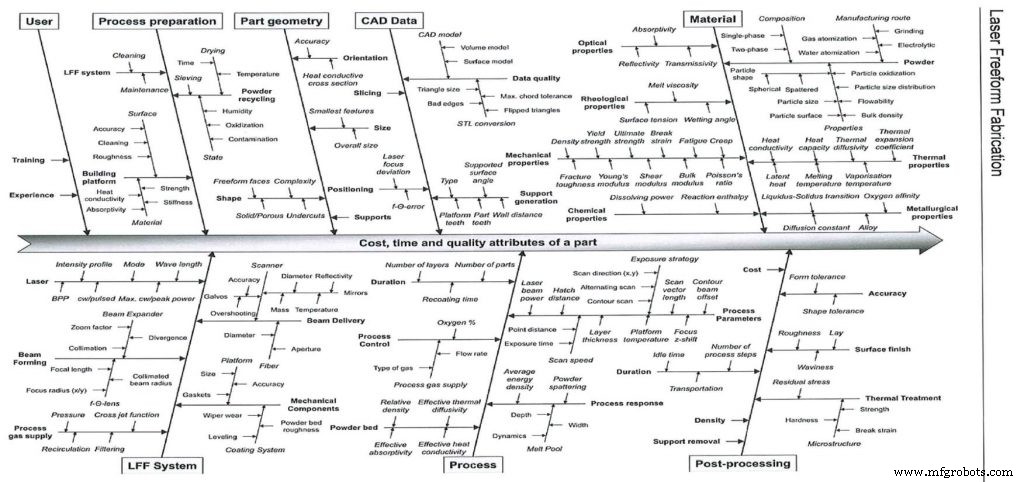
Metal powder‑bed fusion introduces a plethora of variables—from design to post‑processing—that influence part quality. Laser path, energy density, recoater speed, support design and powder recycling all play a role.
Traditionally, manufacturers have relied on trial‑and‑error to tune these parameters, which is costly and counteracts the cost‑effectiveness of additive manufacturing.
To move beyond ad‑hoc approaches, a closed‑loop quality control system—integrating planning, monitoring and feedback—is essential.
Solution: Develop a closed‑loop quality control system
Three pillars underpin a rapid, reliable QA workflow:
- Planning the build
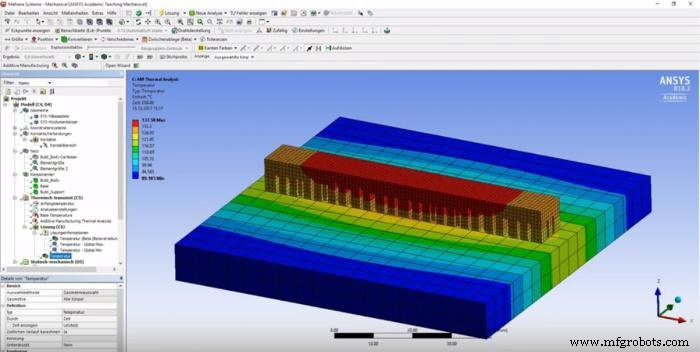
Simulation allows engineers to model the AM process before the first layer is printed. By predicting warping, distortion and melt dynamics, designers can select optimal orientations and support strategies.
While simulation software carries inherent assumptions, vendors such as ANSYS continually refine their models to enhance accuracy. Early integration of simulation reduces print failures and accelerates development.
- Monitoring the build
In‑process sensors and cameras capture real‑time data—melt‑pool size, temperature, laser power—that directly influence microstructure and part performance.
With this data, engineers can predict defects such as warping or cracking before they manifest, enabling preemptive adjustments.
Limited but growing, in‑process monitoring solutions exist. Sigma Labs’ PrintRite3D IPQA technology combines multi‑sensor hardware with inspection software to optimize melt‑pool conditions and generate repeatability reports. Future releases will incorporate Big Data analytics for deeper insights.
Many printers now embed monitoring capabilities. EOS’s EOSTATE suite includes System & Laser, Powder‑Bed, Melt‑Pool and Exposure OT modules, with Exposure OT offering near‑infrared optical tomography to map each part layer by layer.
MTU Aero Engines has adopted this monitoring suite in serial production of aerospace components.
- Closing the loop
Feedback control—automatically adjusting process parameters in response to real‑time deviations—ensures consistent geometry, surface finish and material properties.
Velo3D’s Sapphire system, powered by Flow print‑preparation software and Intelligent Fusion technology, exemplifies this approach. The integrated thermal simulation, performance prediction and closed‑loop melt‑pool control deliver first‑part success rates exceeding 90 % on challenging geometries.
Challenge 3: Reducing human error
Despite automation, human intervention remains a significant source of variability—from design review to post‑processing inspection.
Post‑production workflows often involve manually matching printed parts to job sheets, a laborious process that reduces visibility and increases the chance of oversight.
Automating inspection steps with digital tools mitigates these risks and enhances traceability.
Solution: Implement workflow software for additive manufacturing
Workflow platforms centralize the entire AM production pipeline, enabling teams to manage builds, inspections and quality records in a single digital environment.
For QA, such software can render a 3‑D viewer of each part, compare physical components to their digital twins, and track success versus failure rates. Failed parts can be automatically returned to the production queue for re‑build, ensuring traceability and accountability.
AMFG’s Post‑Production Management tool exemplifies this capability, providing a comprehensive 3‑D view, performance metrics and automated re‑work workflows.
Are there industry‑wide QA standards for AM?
Industry standards play a pivotal role in establishing a common language for quality. While traditional manufacturing has decades of standards, additive manufacturing is still evolving.
In 2023, AMST International published its F3303 standard for laser and electron‑beam powder‑bed fusion qualification, and a complementary standard for part qualification and post‑processing is underway. ASTM International and NIST are also advancing QA protocols through the AM Part Qualification project, which focuses on measurement methods, metrology and mechanical performance assessment.
Keeping an eye on quality
Material integrity and process control are the twin pillars of high‑quality metal 3‑D printing. While the path to consistent QA can be complex, solutions—ranging from CT scanning to closed‑loop monitoring and workflow automation—are increasingly accessible.
By confronting these challenges head‑on and deploying the right technologies, manufacturers can unlock the full potential of metal additive manufacturing for high‑value, demanding applications.
3D printing
- Refractory Metal Powders Set to Revolutionize 3D Printing
- Refractory Metal Powders vs. 3D Printing: Cutting‑Edge Additive Manufacturing for High‑Temperature Metals
- Desktop Metal’s BMD and Microwave Sintering: A New Era for Metal Additive Manufacturing
- H.C. Starck Launches AMPERPRINT®: New Gas‑Atomized Powders for Metal 3D Printing
- Key Design Principles for Optimizing Metal 3D Printed Parts
- Scalmalloy: A High‑Strength Aluminium‑Magnesium‑Scandium Alloy for Aerospace‑Grade Metal 3D Printing
- Metal 3D Printing: 5 Cutting‑Edge Applications Transforming Industry
- Metal 3D Printing: Debunking 7 Common Misconceptions
- Top Metal 3D Printing Materials: Unlocking Additive Manufacturing’s Potential
- Top 5 Metal Powders for Advanced 3D Printing