



Refractory Metal Powders Set to Revolutionize 3D Printing
What Is 3D Printing?
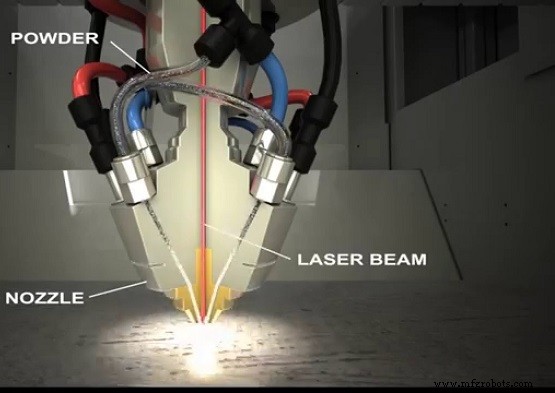
3D printing, or additive manufacturing, builds objects layer by layer from powders—metal or ceramic—without the need for traditional sintering. The process fuses or bonds each new layer directly onto the previous one using precise deposition techniques.
3D Printing
Refractory Metal Powders: The Next Frontier for 3D Printing
Refractory metals such as tungsten, chromium, and rhenium have long challenged additive manufacturing due to their extreme melting points and hardness. Recent breakthroughs are now turning these materials into viable feedstocks for 3D printing, opening doors to applications that demand unparalleled strength, thermal stability, and precision.
Researchers at the California Institute of Technology (Caltech) have pioneered a laser‑directed, two‑photon polymerization technique that assembles nanoscale structures from a composite of nickel ions and organic molecules. The resulting architecture is printed with sub‑50‑micron resolution—roughly half the width of a human hair—allowing for the creation of ultra‑thin beams that are visible only under a microscope.
3D Printing of Ceramics
Once printed, the hybrid structure undergoes a controlled pyrolysis step: it is heated to 1,000 °C in a vacuum chamber. This temperature is well below nickel’s melting point (1,455 °C) yet high enough to evaporate the organic binder, leaving behind a dense, metallic scaffold. The process also fuses adjacent nickel particles, achieving a solid, high‑strength component. Remarkably, the structure shrinks by up to 80 % during pyrolysis while maintaining its original geometry, yielding a final metal beam that is about one thousandth the size of a sewing needle’s tip.
While the current focus is on nickel, the team is actively extending the method to other high‑performance metals—tungsten and titanium—by tailoring the precursor chemistry and laser parameters. Beyond metals, the same principles can be applied to ceramics, semiconductors, and piezoelectric materials, paving the way for bespoke nano‑components in electronics, aerospace, and biomedical devices.
Advanced Refractory Metals (ARM) supplies a full range of high‑quality refractory metal products—including rhenium pellets, tantalum discs, and tungsten rods—worldwide. For more information, visit https://www.refractorymetal.org.
Metal
- 3D Printing Drives Innovation in Refractory Metal Parts for the U.S. Navy’s Trident D5 Missile System
- Refractory Metal Powders vs. 3D Printing: Cutting‑Edge Additive Manufacturing for High‑Temperature Metals
- Key Properties of Refractory Metals – What You Need to Know
- Revolutionizing Space Travel with Next‑Generation 3D‑Printed Materials
- Mastering Quality Assurance in Metal 3D Printing: Overcoming Three Key Challenges
- Top Metal 3D Printing Materials: Unlocking Additive Manufacturing’s Potential
- Top Raw Materials for Reliable Metal Stamping: A Practical Guide
- How 3D Printing Elevates Metal Fabrication: Key Benefits Explained
- Top 5 Metal Powders for Advanced 3D Printing
- 10 Strongest 3D Printing Materials for Ultimate Durability