



Application Spotlight: 3D Printing Transforms Bike Manufacturing
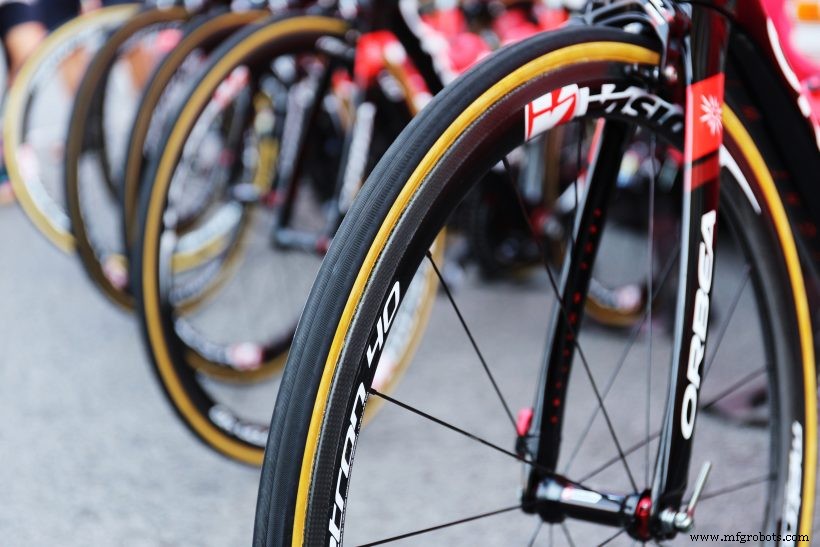
3D printing is reshaping bike manufacturing, enabling lighter frames and faster production of custom components.
In this edition of our 3D Printing Application Spotlight series, we explore how additive manufacturing is driving innovation in bicycle production, from design flexibility to rapid prototyping.
Other applications covered in this series:
- 3D Printing for Heat Exchangers
- 3D Printing for Bearings
- 3D Printing for Digital Dentistry & Clear Aligner Manufacturing
- 3D Printing for Medical Implants
- 3D‑Printed Rockets and the Future of Spacecraft Manufacturing
- 3D Printing for Footwear Manufacturing
- 3D Printing for Electronic Components
- 3D Printing in the Rail Industry
- 3D‑Printed Eyewear
- 3D Printing for End‑Part Production
- 3D printing for Brackets
- 3D Printing for Turbine Parts
- How 3D Printing Enables Better‑Performing Hydraulic Components
- Application Spotlight: How 3D Printing Supports Innovation in the Nuclear Power Industry
Why 3D printing fits bike manufacturing so well
Traditional steel frames have long dominated the market, but the shift toward titanium and carbon fibre offers significant weight savings. A lighter bike not only accelerates performance on flat terrain and climbs but also eases handling, transport, and overall rider control—critical for competitive cyclists.
However, crafting titanium or carbon‑fiber frames by hand is labor‑intensive and time‑consuming. Carbon‑fiber frames involve layering dozens of sheets, while titanium frames require meticulous welding and brazing. 3D printing bypasses these bottlenecks by fabricating parts directly from CAD models, eliminating the need for specialized tooling.
Beyond frames, the technology can produce functional components such as handlebars, chain holders, dropouts, and lugs—each benefiting from the precision and design freedom inherent to additive manufacturing.
The benefits of 3D printing for bicycle production
Design flexibility
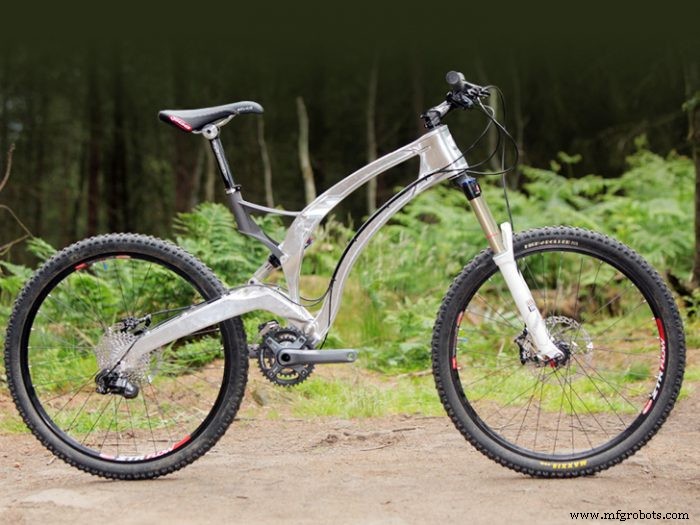
3D printing excels at creating complex geometries that traditional methods cannot match. Engineers can incorporate topology optimisation and lattice structures to reduce weight while preserving strength. For instance, British firm Empire Cycles partnered with Renishaw to produce a topologically‑optimised titanium frame that was 33% lighter than its predecessor, featuring hollow structures and custom elements that would have been prohibitively expensive or impossible to machine.
Affordable customisation
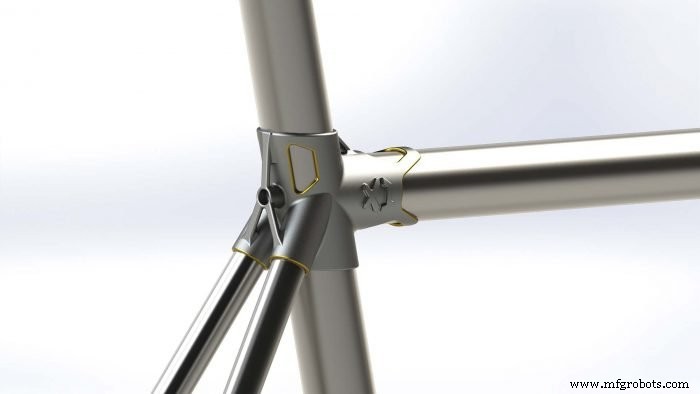
Customisation drives both aesthetics and performance. With tool‑less 3D printing, manufacturers can produce bespoke parts without the cost of dedicated tooling. Ideas2cycles leveraged ExOne’s metal binder‑jetting printer to fabricate steel lugs, brackets, dropouts, and fork crowns in just four days—down from the 3‑4 weeks required for investment casting. Production costs fell by more than 50%, from $1,000 (including labour) to $425 per assembly.
Faster time to market
Carbon‑fiber bikes traditionally require months of design, prototyping, and hand‑layering, with each frame comprising 20‑30 parts. 3D printing compresses this cycle dramatically.
Arevo reduces design & production time for a carbon‑fiber e‑bike from months to days
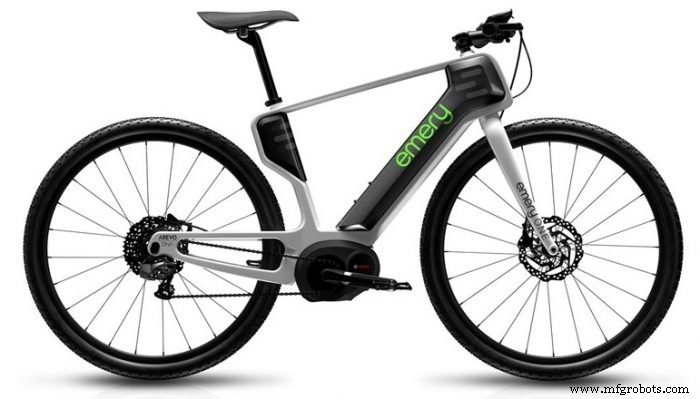
Franco Bicycles launched the world’s first 3D‑printed e‑bike frame, the Emery ONE, using Arevo’s proprietary robotic printer and generative‑design software. The frame—printed as a single, continuous part with PEEK reinforced by continuous carbon fibres—slashed lead time from 18 months to just a few days, while also cutting development costs.
Revolutionising bike manufacturing with 3D printing
Leading brands such as Reynolds now employ metal 3D printing to produce personalized stainless‑steel and titanium frame components with cleaner edges and tighter tolerances, streamlining the fitting process. While mass production remains a future goal, 3D printing is already proving its value in bespoke, high‑end bicycles where customisation and performance matter most.
Ultimately, additive manufacturing unlocks intricate shapes that enhance both aesthetics and functionality, delivering lighter, stronger, and more responsive bicycles.
In our next article, we’ll examine 3D printing in the dental industry, focusing on clear aligners. Stay tuned!
3D printing
- Revolutionizing Bone Implants: How 3D Printing Enhances Fit, Longevity, and Performance
- 3D Printing Revolutionizes Clear Aligners in Digital Dentistry
- Application Spotlight: 3D Printing Revolutionizes Bearing Design and Production
- 3D Printing Revolutionizes Heat Exchangers: Lighter, Smarter, Faster
- Revolutionizing Footwear: 3D Printing Drives Innovation, Customization, and Faster Time to Market
- 3D‑Printed Eyewear: From Prototyping to Customization—Industry Trends & Case Studies
- 3D Printing for Turbine Parts: Accelerating Development, Performance, and Sustainability
- 3D‑Printed Brackets: Optimizing Strength, Weight, and Production Efficiency
- How 3D Printing Is Revolutionizing Aircraft Cabin Interiors
- Revolutionizing Robotic Grippers with 3D Printing: Insights and Industry Successes