



Ultimaker’s Rebranding Signals the Rise of Industrial 3D Printing
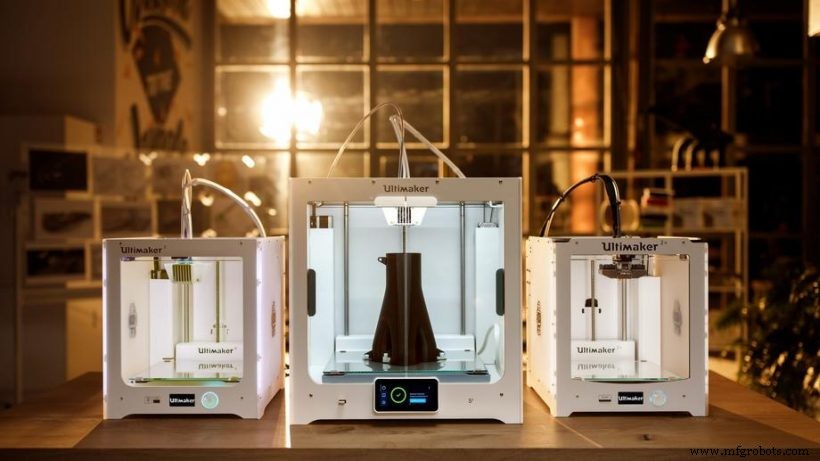
[Image credit: Ultimaker]
In early November, desktop 3D‑printer pioneer Ultimaker unveiled a new branding strategy to reinforce its B2B focus.
Ultimaker’s new trajectory highlights a wider shift in the 3D‑printing ecosystem: enterprises are embracing the technology for full‑scale production, not just rapid prototyping. The company is not alone in following this path.
In the following article, we examine key examples that illustrate how 3D printing has evolved into a robust industrial solution.
Making the leap from consumer to industrial 3D printing

When founded in 2011, Ultimaker set out to democratise 3D printing for makers and hobbyists, offering DIY kits that resonated with the maker community.
“We observed a clear divide in the consumer market: hardcore makers already had the tools they needed at home, creating a niche that was ripe for innovation,” explained former North America President John Kawola in an interview with AMFG.
The subsequent collapse of the consumer‑printer bubble in 2013–2014 prompted many manufacturers, including Ultimaker, to pivot toward industrial applications.
Kawola noted last year, “We’ve evolved our business into a predominantly enterprise‑focused offering since 2018. While we continue to serve makers and education, the bulk of our revenue now comes from large corporates.”
Today, clients such as Ford, Airbus and Volkswagen Autoeuropa rely on Ultimaker machines to produce tooling, jigs and fixtures that meet rigorous industrial standards.
A pivotal milestone was the 2018 launch of the Ultimaker S5 FDM printer, a dual‑extrusion system designed as a “complete professional 3D‑printing solution.” With a 33 × 24 × 30 cm build volume—larger than the previous 21.5 × 21.5 × 30 cm Ultimaker 3—the S5 enables the creation of sizeable parts.
It also supports high‑temperature engineering polymers such as polycarbonate and nylon, delivering the quality and reliability required in production environments.
By aligning its hardware and branding with the professional market, Ultimaker demonstrates a clear commitment to accelerating distributed manufacturing through 3D printing.
MakerBot: shifting to the professional 3D‑printing market
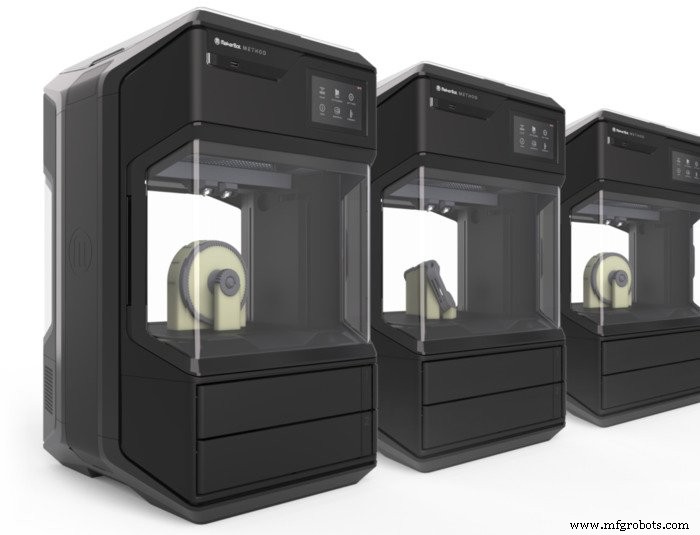
MakerBot’s journey mirrors this trend. Emerging from the RepRap movement in 2009, the company became a household name in consumer 3D printing before its 2013 acquisition by Stratasys.
In recent years, MakerBot has strategically realigned its focus toward the professional and education sectors.
“Despite a strong installed base in schools, breaking into the industrial market proved challenging with our earlier desktop printers,” said MakerBot President and CEO Nadav Goshen in an interview with 3D Printing Industry.
To overcome this barrier, MakerBot introduced the Method FDM in late 2018—a desktop system engineered to bring industrial‑grade performance to engineering offices and design studios.
The Method boasts ± 0.2 mm dimensional accuracy, dual‑extrusion, and a heated chamber that enhances part strength, all built on Stratasys’ industrial expertise.
With this new offering, MakerBot realigned its product portfolio to provide affordable yet professional 3D‑printing solutions, reinforcing the broader shift toward industrial desktop printing.
A vision of autonomous additive manufacturing
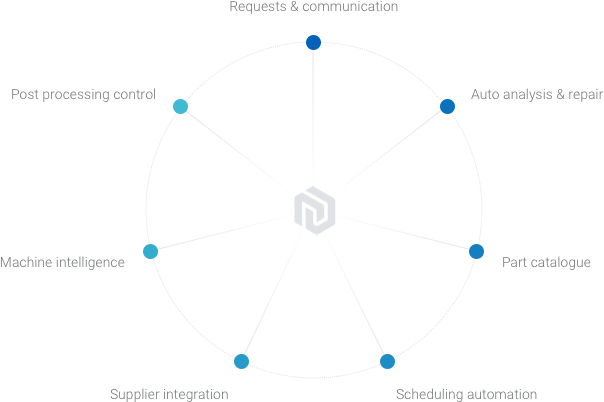
Software innovation has been essential to support the industrialisation of 3D printing. As production volumes grow, companies need robust workflow solutions to manage orders, track parts, and optimise schedules.
AMFG recognized this need early and expanded its software suite to streamline every stage of the printing process—from request management to production scheduling and post‑processing.
In 2018, the company rebranded as AMFG, a name that stands for ‘Autonomous Manufacturing’ and signals its vision of fully automated 3D‑printing workflows.
From prototyping to production applications
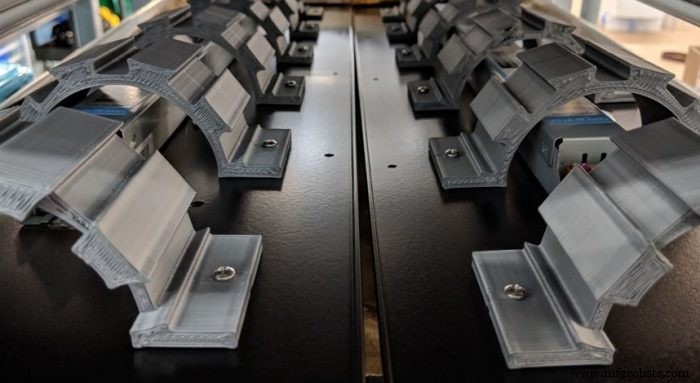
The transition from rapid prototyping to end‑use production is a clear indicator of 3D printing’s maturity. Boyce Technologies, an engineering firm, exemplifies this shift.
Initially skeptical about integrating 3D printing into its workflow, Boyce tested the BigRep Studio 3D printer in 2017 to produce lightweight prototypes for communication kiosks and emergency systems.
Soon, the firm discovered that the technology could reliably manufacture end‑use components such as air‑handling, exhaust, and intake parts for kiosks—demonstrating the speed and precision required for production.
Today, Boyce reports that 90 % of its production processes involve 3D printing, underscoring the technology’s role as a core manufacturing tool.
3D printing moves into production for automotive parts
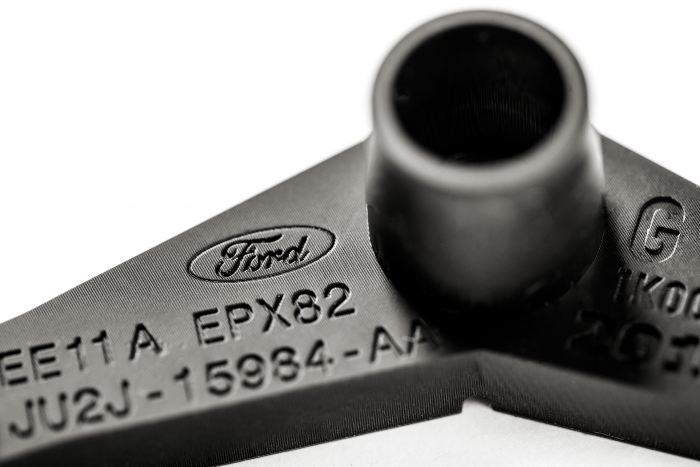
Ford Motor Company is a notable case of an early adopter turning 3D printing into a production staple. Ford’s first 3D printer dates back three decades, and the company has since expanded its use from product development to full‑scale manufacturing.
A recent partnership with Carbon, a pioneer in Digital Light Synthesis (DLS), enables Ford to produce end‑use parts for models such as the Focus, F‑150 Raptor, and Mustang GT500. These parts—including HVAC lever arms, auxiliary plugs, and electric parking brake brackets—must meet stringent requirements for heat resistance, UV stability, fluid and chemical tolerance, flammability, and fogging.
The success of Ford and Boyce demonstrates that 3D printing can now meet or exceed conventional manufacturing standards for critical components.
3D printing: a maturing technology
3D printing is approaching full maturity, solidifying its place within the broader manufacturing ecosystem. Multiple signals confirm this evolution:
• Large enterprises recognise the B2B value of 3D printing, as evidenced by the likes of Ultimaker, MakerBot, and AMFG.
• Platforms such as 3D Hubs have shifted focus from community marketplaces to professional networks, offering traditional manufacturing services alongside additive solutions.
• The technology’s reliability and material performance have matured to support end‑part production, enabling companies to integrate it alongside conventional methods.
These trends suggest a future where 3D printing not only complements but also competes with traditional manufacturing, empowering businesses to streamline production and accelerate innovation.
3D printing
- 3D Printing vs Additive Manufacturing: Understanding the Key Differences
- Infill vs. Shell in 3D Printing: Understanding Their Roles and Differences
- How the COVID‑19 Crisis Reveals 4 Key Lessons About 3D Printing
- ABS vs Nylon in 3D Printing: Key Differences Explained
- SLS vs SLA 3D Printing: Key Differences and How to Choose
- Demystifying 3D Printing: A Clear Guide for Innovators
- Understanding the Printing Industry: Key Roles and Services
- Mastering 3D Printer Flow: Definition, Significance, and Calibration Tips
- ASA in 3D Printing: A Durable, Weather‑Resistant Thermoplastic
- How 3D Printing Enhances Aerospace Innovation and Efficiency