



How the COVID‑19 Crisis Reveals 4 Key Lessons About 3D Printing
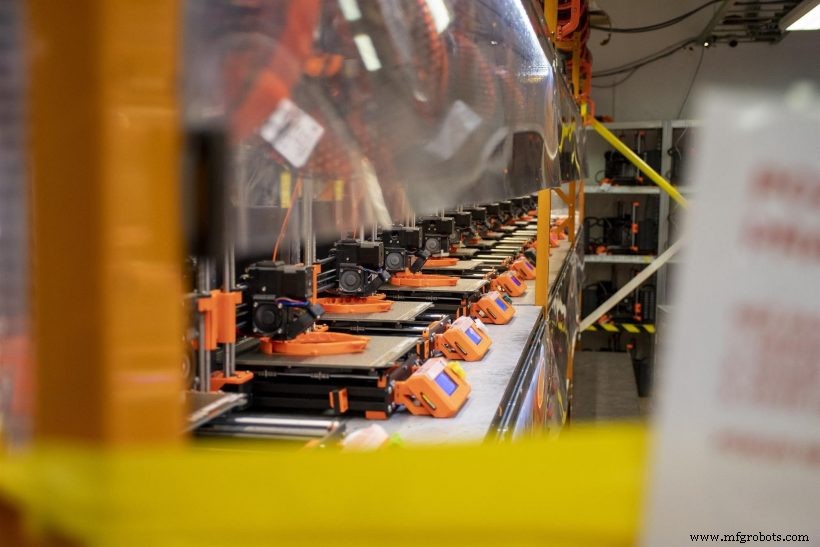
[Image credit: Prusa Research]
The 3D printing industry has proven its value during the COVID‑19 pandemic, not only by providing critical supplies but also by offering clear insights into its future potential.
1. 3D Printing Can Scale to Volume Production
Contrary to the myth that additive manufacturing is only for prototypes, the pandemic showed it can meet high‑volume demands. Hospitals and businesses turned to 3D printing to produce ventilator valves, safety goggles, face shields, and spare parts when supply chains faltered.
Formlabs, for example, now runs over 250 in‑house printers and can produce up to 150,000 COVID‑19 test swabs a day—an impressive feat for a technology often associated with low‑run production.

This demonstrates that stereolithography and powder‑bed fusion can generate thousands of parts quickly, signaling a shift toward broader manufacturing applications.
2. Additive Manufacturing Is Not a Panacea
While 3D printing offers flexibility, it cannot replace every traditional manufacturing process. Complex medical devices often require hybrid approaches that combine additive techniques with conventional machining, casting, or molding.
Moreover, many 3D‑printed materials lack the biocompatibility or sterilization resilience needed for certain medical applications. Collaboration with healthcare regulators is essential to ensure materials and processes meet stringent clinical standards.
In supply‑chain disruptions, 3D printing serves as a valuable stop‑gap, but it will not supplant established high‑volume methods for the foreseeable future.
3. Standardization and Certification Must Accelerate
A persistent barrier to widespread adoption is the lack of clear standards, especially in healthcare. Questions such as material selection, quality control, and certification timelines remain unanswered.
To address this, the U.S. Food and Drug Administration (FDA) and ASTM International have released free guidance on 3D‑printed medical devices. Additionally, the FDA, VA, NIH, and America Makes launched a public‑private partnership that provides a vetted NIH 3D Print Exchange of clinically reviewed designs.
Fast‑tracking standards development through industry collaboration will not only streamline pandemic responses but also unlock broader commercial opportunities.
4. Intellectual Property Challenges Emerge in Medical Design Sharing
The rapid dissemination of 3D‑printed medical designs highlighted IP issues. While many files are royalty‑free, others replicate patented products that are scarce.
Patent holders can mitigate risk by issuing temporary, purpose‑limited licenses that define liability and post‑crisis usage. Clear terms on design file usage are also essential when the finished product is protected but the underlying file is not.
Both IP owners and 3D‑printing practitioners must navigate these legal waters carefully to balance innovation with protection.
Lessons Learned
The pandemic accelerated the transformation of additive manufacturing, offering a realistic view of its capabilities and limits. With renewed media attention, 3D printing is now recognized as a viable manufacturing solution, poised to impact businesses and society positively.
3D printing
- 6 Essential Insights About 3D Printing You Probably Haven’t Heard
- Mastering 3D Printing Support Structures: Essential Strategies for Every Process
- Upcoming 3D Printer Models Poised to Transform the Industry
- Ultimaker’s Rebranding Signals the Rise of Industrial 3D Printing
- Top 6 FAQs About 3D Printing: Expert Answers from CADimensions
- Debunking 3D Printing Myths: What the Technology Truly Can Do
- The ABCs of 3D Printing: How Additive Manufacturing is Shaping Modern Industry
- COVID-19 Detector: Responding to the Crisis with Innovative Technology
- 3D Printing: Innovative Response to COVID‑19 PPE Shortage
- 4D Printing: Revolutionizing Additive Manufacturing for Adaptive Solutions