



Choosing a Metal Powder Supplier: 5 Expert Questions for Additive Manufacturing Success
Securing a reliable metal 3‑printing powder supplier is pivotal for any AM program. The search can be daunting, given the stringent quality and safety requirements that govern metal additive manufacturing.
Below are five critical questions that will help you evaluate any prospective supplier and ensure they can meet your technical, logistical, and regulatory needs.
1. What production technology do you use for your powders?
The foundation of any high‑quality AM part is the powder itself. To assess a supplier’s capability, ask how they manufacture the powders.
Key characteristics for AM powders include particle shape, size distribution, bulk density, and low residual gas content. While electrochemical, chemical, and atomisation methods exist, atomisation remains the industry standard for producing the spherical powders required for laser and electron beam processes.
In an atomisation cycle, molten metal is rapidly cooled by a high‑velocity gas, water or plasma stream, forcing droplets to form near‑perfect spheres that minimise surface energy. Titanium alloys (Ti‑6Al‑4V) typically demand plasma atomisation, whereas most other alloys are produced by gas atomisation.
2. Can you meet my production volumes and timelines?
As demand for AM parts grows, powder supply can become a bottleneck. Verify that the supplier can deliver the quantities you need, within the lead times your production schedule requires.
High yield is also crucial: a lower yield translates into more waste and higher cost. Ask for yield statistics and confirm that their process consistently delivers high‑purity, high‑yield powders.
3. What material portfolio do you offer, and can you tailor powders to my needs?
A competent supplier should stock a wide range of base chemistries and particle sizes suitable for your applications. More importantly, they should be able to develop specialty alloys or customised particle size distributions when your design demands it.
Inquire about their material science expertise, case studies, and whether they have internal capabilities for alloy development and property tuning.
4. How do you mitigate the inherent hazards of metal powder handling?
Metal powders pose fire, explosion, and inhalation risks. A responsible supplier implements closed‑system processing under inert gas (argon or nitrogen) and maintains rigorous ventilation and containment protocols.
Visit the facility if possible to verify segregation of alloy production lines, proper dust collection, and employee safety training. Ask for documentation of safety certifications (e.g., ISO 45001, OSHA) and any incident history.
5. What compliance and traceability measures do you follow?
Compliance with industry standards—such as ASTM F2980 for additive manufacturing powders, ISO 9001 for quality management, and ISO 14001 for environmental management—is essential.
Request full material certificates, traceability logs, and purity analyses. The supplier should be able to provide documentation that the powder meets the specifications required for your final part.
Choosing the Right Supplier
Beyond these five questions, consider whether the supplier offers application support, technical data sheets, and responsive customer service. A knowledgeable partner will guide you through material selection, process optimisation, and post‑production QA.
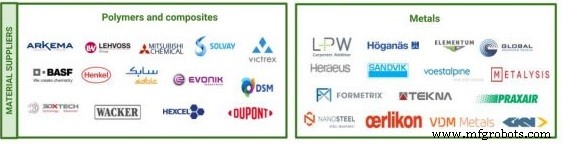
Explore a curated list of vetted metal AM powder suppliers in our Additive Manufacturing Landscape 2019.
3D printing
- Wire Arc Additive Manufacturing: A 2020 Guide to Large‑Scale Metal 3D Printing
- Four Critical Questions Facing Additive Manufacturing in 2019
- MELD Manufacturing CEO Nanci Hardwick on Revolutionizing Metal 3D Printing
- Top Metal 3D Printing Materials: Unlocking Additive Manufacturing’s Potential
- Key Questions to Ask Before Hiring a Manufacturing Marketing Agency
- 5 Essential Questions to Ask Your Metal Supplier for Quality and Value
- Additive Manufacturing: Driving Innovation and Cost Efficiency in Aerospace
- Metal Additive Manufacturing: Transforming Production for Aerospace and Beyond
- Additive vs. Subtractive Manufacturing: Unlocking the Future of Production
- Exploring Metal Additive Manufacturing: A Beginner’s Guide to Direct Metal Laser Sintering (DMLS)