



Interview with Photocentric MD Paul Holt: Inside Daylight Polymer Printing and the Future of Affordable 3D Manufacturing
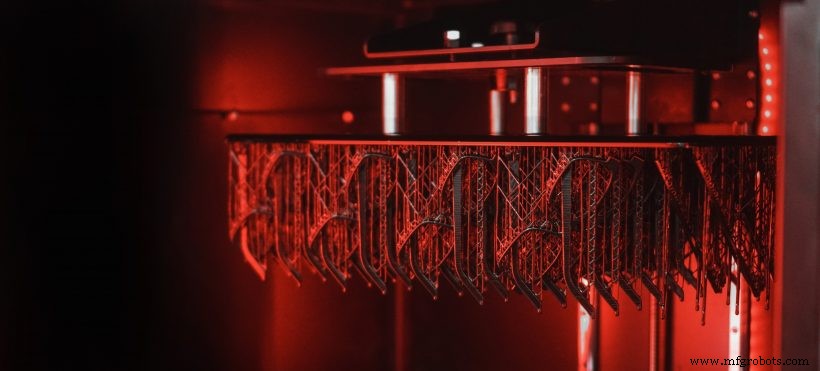
Photocentric is a UK‑based manufacturer of 3D printers and photopolymer materials, founded in 2002. The company pioneered what it calls Daylight Polymer Printing, a resin‑based process that uses ordinary LCD screens instead of UV lasers or projectors to cure liquid resin layer by layer.
By leveraging commercial mobile, TV and tablet displays, Photocentric’s printers deliver the same high quality as traditional SLA/DLP systems while dramatically reducing cost. Their proprietary Daylight resins harden precisely when exposed to the printer’s LCD light, enabling fast, accurate builds.
To dive deeper into this technology and see it in action, we spoke with Managing Director Paul Holt.
Could you tell me about Photocentric and your mission as a company?
Photocentric began as a photopolymer specialist and has since expanded into multiple markets, applying its resin innovations to 3D printing, dentistry, jewellery, automotive and more.
Our core focus remains photopolymer research. In 2005 we introduced the concept of LCD‑based 3D printing; in 2014 we launched our first prototype, and today we offer seven LCD printers, with additional models on the horizon.
Our customers range from jewellery designers creating complex geometries, to dental technicians producing patient‑specific models, to engineers and manufacturers turning concepts into functional prototypes.
Ultimately, Photocentric’s mission is to transform global manufacturing by making 3D printing affordable, scalable and functional, enabling custom mass production worldwide.
How does your Daylight Polymer Printing technology work, and what sets it apart from other resin‑based machines available on the market?
Daylight Polymer Printing uses our in‑house Daylight liquid photopolymer resin, cured layer by layer by the high‑resolution LCD screen. Each layer hardens when the screen’s light reaches it, building the part sequentially.
Our technology’s key advantages are quality, cost and scalability. Every printer undergoes rigorous quality control to guarantee performance. By using everyday LCD panels—low‑cost, reliable digital displays—we cut hardware expenses while maintaining high precision.
Unlike many 3D‑printing companies that outsource resin chemistry, we manufacture both printer and resin in‑house, ensuring full control over the entire process.
We also offer the market’s largest LCD‑based build volume with our Liquid Crystal Magna, delivering high accuracy at a scale unmatched by competitors.
Which industries could benefit the most from your technology?
Our printers excel in both small, highly detailed work—such as dentistry and jewellery—and large‑scale production for automotive and entertainment sectors.
Dental applications are especially promising; after attending IDS 2019, we recognized a strong demand for LCD printing in this field. We’re developing Liquid Crystal Dental, a specialized printer for chairside and lab use, slated for release later this year.
Large component production is also a strong fit for automotive, aerospace and entertainment industries, thanks to our LCD technology’s versatility and expansive build volumes.
Could you share one or two successful applications of how your technology has been used?
Quimbaya Orfebrería, an Argentinian goldsmith, adopted our LC Precision 1.5 desktop printer to meet growing demand and overcome design limitations. The switch to 3D printing cut manufacturing time by 80% and boosted production by 400%, enabling more intricate designs.
In the UK, the Robert Jones & Agnes Hunt Orthopaedic Hospital used our LC Pro printer to produce patient‑specific models for a complex femoral osteotomy. The detailed prints allowed pre‑planning of cuts and implant shaping, saving the NHS over £1,000 and cutting operating time by an hour.
What are some of the challenges that need to be overcome to accelerate the adoption of additive manufacturing?
The biggest barrier remains material performance. Historically, three factors hindered wider adoption: high cost, limited scalability, and insufficient functional properties.
LCD screens have largely addressed cost and scalability—hundreds of affordable, high‑resolution panels are now available, and large‑format screens enable bigger builds. Material properties, however, still lag behind.
We’re partnering with BASF to develop a broader range of durable resins suitable for functional industrial use.
How do you see additive manufacturing technologies and the industry evolving?
LCD‑based systems will disrupt SLA by enabling custom mass production—single large screens produce big parts quickly, while multiple smaller, high‑resolution screens can mass‑produce small parts.
Automation will be the next frontier, reducing manual intervention. Within two years, we anticipate functional 3D‑printed plastic parts entering mainstream production lines, thanks to tooling‑free design freedom.
For ceramics and metals, 3D‑printed green bodies followed by sintering promise lower energy use and cost, broadening custom manufacture of these materials.
Photocentric recently announced its new Liquid Crystal Magna 3D printer. Could you take us through some of the specs and the benefits of this machine?
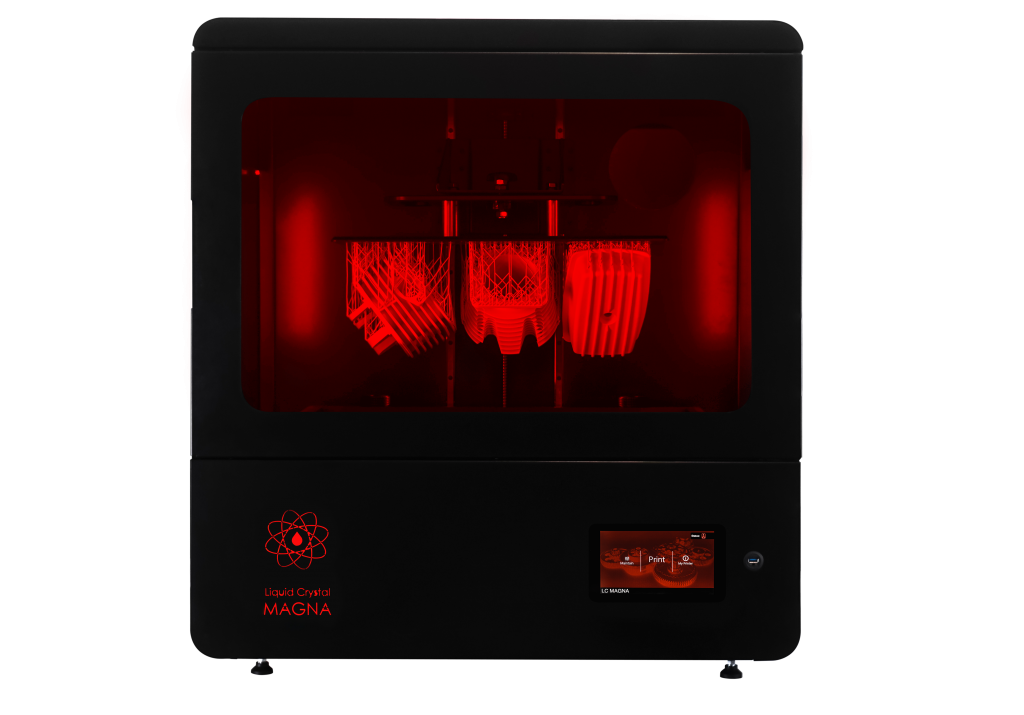
The LC Magna is engineered for custom mass production and large‑scale prototyping at a competitive price. With a build volume of 510 mm × 280 mm × 350 mm, it’s the largest LCD‑based printer on the market.
Its 23.4‑inch 4K Ultra‑HD screen, paired with a custom backlight, delivers high print accuracy and detail. The powerful backlight exposes 100‑micron layers in 3–8 seconds.
Target users include dental technicians, product designers, engineers and manufacturers who need to increase throughput, shorten lead times and reduce costs.
Examples: a glasses maker can produce 36 optical frames in 12 hours—under 20 minutes per set—while a dental technician can print 46 flat arches in just over an hour, costing less than £1.06 per arch when using our Daylight dental resin.
What do the next 12 months hold for Photocentric?
We’re expanding R&D to explore new printers for plastics, ceramics and metals, and growing our team to deepen expertise in these materials.
These developments will reshape how we manufacture and deliver custom solutions across industries.
To learn more about Photocentric, visit: https://photocentricgroup.com/
3D printing
- Inside 3D Printing: Professor Neil Hopkinson on Innovation, Scale, and the Future
- Interview with Philip Cotton, Founder of 3Dfilemarket.com, UK 3D Printing Education Expert
- Dr. Alvaro Goyanes of FabRx on 3D‑Printed Medicines: From Innovation to Personalised Care
- Dr. Bastian Rapp on 3D‑Printed Microfluidics: Advancing Biotech with NeptunLab
- Interview with Markforged’s Ibraheem Khadar on 3D Printing Innovation at formnext
- Carbon Co-Founder Philip DeSimone on Scaling 3D Printing for High‑Volume Production
- How Graphite AM’s Jonathan Warbrick Drives Success in Industrial 3D Printing
- Ben Batagol on How 3D Printing is Revolutionizing Heat Exchanger Design at Conflux Technology
- Aconity3D’s Yves Hagedorn on Empowering Metal 3D Printing Innovation
- Polymer 3D Printing: 6 Cutting‑Edge Innovations Driving Industry Transformation