



Ben Batagol on How 3D Printing is Revolutionizing Heat Exchanger Design at Conflux Technology
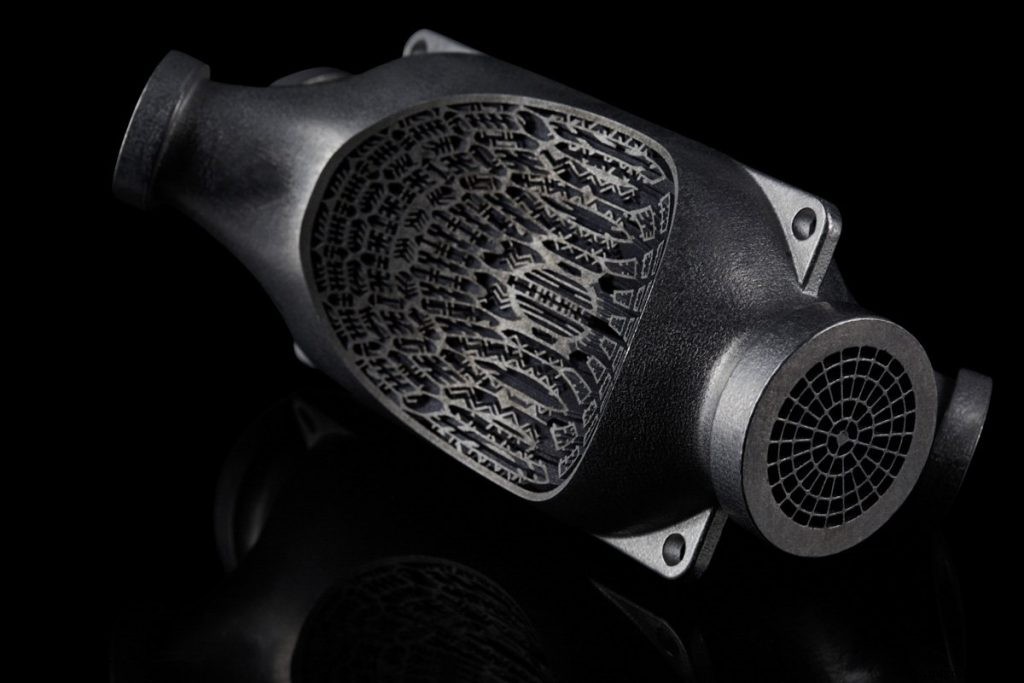
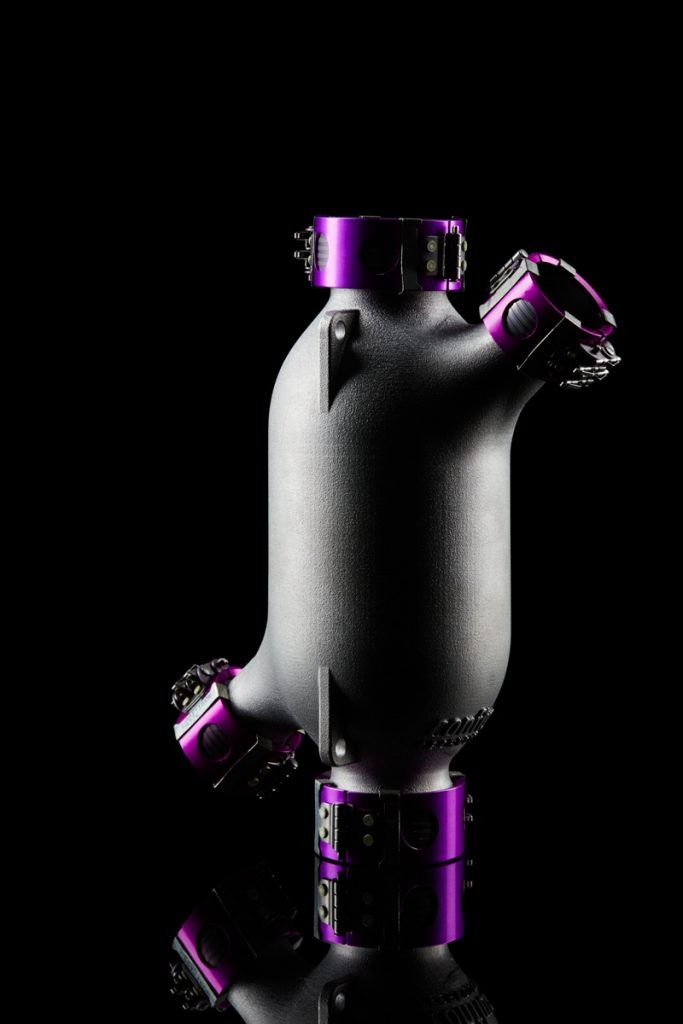
Heat exchangers power countless everyday appliances—from air‑conditioners and car engines to refrigerators. Designing these compact devices has traditionally been a complex task, balancing efficient cooling with limited space. Conflux Technology, an Australia‑based company, tackles this challenge head‑on. By harnessing additive manufacturing (AM), the firm engineers highly efficient, optimised heat exchangers for automotive, motorsport, aerospace and more. In this Expert Interview, Conflux’s Head of Business Development Ben Batagol shares the company’s cutting‑edge approach and the unique benefits and challenges of metal 3D printing. Founded by former Formula One engineer Michael Fuller, Conflux emerged in 2014 from a vision to fuse heat‑exchange design with additive manufacturing. Fuller’s experience in motorsport and early AM projects highlighted the freedom of geometry that 3D printing offers—capabilities unattainable with conventional methods. Over two years of prototyping and validation led to a successful first funding round in 2017, with AM Ventures (AMV) Group taking a leading equity stake. From day one, the company has focused on delivering application‑specific thermal and fluid solutions across a broad spectrum of industries. Rather than positioning itself as a generic service bureau, Conflux identifies a clear market gap: many companies wish to adopt AM but lack guidance. We help them evolve existing heat‑exchanger designs, unlocking packaging flexibility and performance gains that would otherwise be impossible. Our process begins by mapping a client’s current situation and project objectives. We then pinpoint the product that offers the highest upside—whether it’s a redesign of an existing heat‑exchanger or a completely new concept. We also prioritise knowledge transfer. By training engineers in AM‑specific design principles, we empower organisations to extend additive thinking beyond a single project, accelerating broader adoption across their product lines. AM demands a distinct design philosophy. Engineers accustomed to subtractive methods must learn to exploit the freedom of build‑orientation, material flow, and micro‑geometry. This educational journey is at the core of Conflux’s internal tooling and customer engagement. Our iterative development cycle—concept, simulation, prototyping, and optimisation—ensures we continually push the limits of what is manufacturable while delivering real‑world performance. 1️⃣ Concept Development: We identify key inputs and assess feasibility, delivering a high‑level performance estimate. 2️⃣ Detailed Design & CFD: Using Computational Fluid Dynamics, we refine the geometry, confirm printability, and predict thermal performance before a physical prototype is built. 3️⃣ Build, Test & Validate: We compare bench‑test data against CFD results, iterating until performance targets are met. 4️⃣ Serial Production Readiness: The final package includes the manufactured part, validated design files, and optimised build parameters ready for mass production. Heat‑exchange challenges span many sectors, but we focus on markets that can immediately reap the benefits of AM—motorsport, aerospace, defence, oil & gas, and heavy industry. Our motorsport heritage gives us deep insight into performance‑critical requirements, while aerospace and defence demand weight savings and reliability that AM can deliver. In the resource sector, the ability to reduce lead times and improve uptime makes our compact, high‑efficiency heat exchangers especially attractive. We protect client confidentiality, but our internal R&D demonstrates remarkable performance gains. Benchmarks against traditionally manufactured heat exchangers consistently show superior thermal transfer and reduced packaging volume, validating the AM advantage for our customers. Designing thin walls, tight feature spacing, and optimal build angles in metal alloys is a constant engineering exercise. Maintaining structural integrity without leakage, especially in aluminium, pushes the boundaries of current AM processes. Material selection also poses challenges. Emerging alloys require careful assessment of their impact on system performance, particularly when replacing long‑term standard materials. Metal AM is still maturing. Powder‑bed systems, while versatile, remain slow and limited in build volume. We anticipate next‑generation technologies—laser‑based and continuous‑beam processes—will unlock mass‑production volumes while preserving the complex geometries that give AM its edge. Many of our clients target hundreds to thousands of units per run; scaling to hundreds of thousands will hinge on these technological breakthroughs. Today, we employ EOS powder‑bed machines, chosen after a rigorous benchmark that highlighted their reliability, consistency, and minimal downtime. We continuously evaluate emerging processes, balancing design freedom with production efficiency. Australia lags behind global leaders in AM adoption, yet a growing cohort of practitioners is actively educating the market. We see an urgent need for more local success stories and training to unlock the full potential of AM across Australian industry. Building on last year’s momentum, we expect rapid expansion across multiple verticals. Customers now understand the synergistic value of combining AM with heat‑exchanger design, and they’re eager to explore further applications throughout their product portfolios. To learn more about Conflux Technology, visit: https://www.confluxtechnology.com/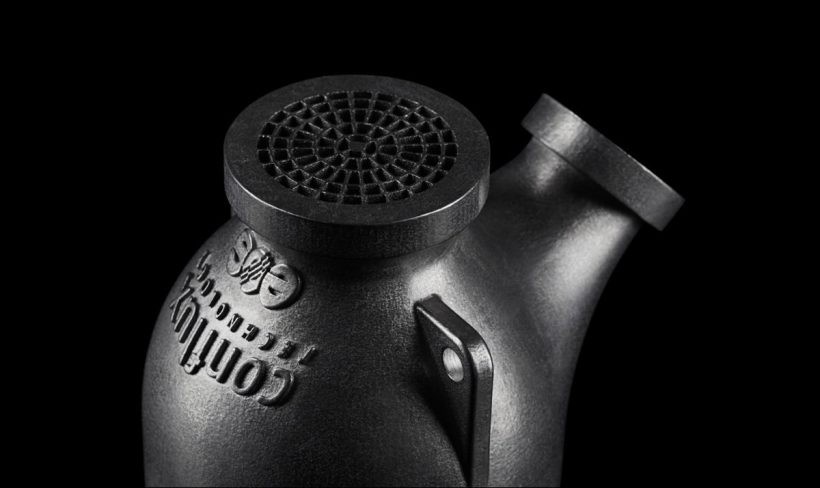
Could you tell me a bit about Conflux Technology?

How does Conflux Technology help companies identify the best AM use cases?
What is your approach to designing for additive manufacturing?
What does the design‑to‑production workflow look like?
Which industries do you target?
Can you share any success stories?
What challenges do you face with metal 3D printing?
How do you see metal 3D printing evolving?
Which technologies are you currently using and how do you select new investments?
What is the status of the AM market in Australia?
What does the future hold for Conflux?
3D printing
- Inside 3D Printing: Professor Neil Hopkinson on Innovation, Scale, and the Future
- Interview with Philip Cotton, Founder of 3Dfilemarket.com, UK 3D Printing Education Expert
- Interview with Spencer Wright of pencerw.com and nTopology: Expert Insights on Metal Additive Manufacturing
- Dr. Alvaro Goyanes of FabRx on 3D‑Printed Medicines: From Innovation to Personalised Care
- Dr. Bastian Rapp on 3D‑Printed Microfluidics: Advancing Biotech with NeptunLab
- Carbon Co-Founder Philip DeSimone on Scaling 3D Printing for High‑Volume Production
- How Graphite AM’s Jonathan Warbrick Drives Success in Industrial 3D Printing
- Interview with VELO3D’s VP of Technology Partnerships: Advancing Metal 3D Printing Capabilities
- Interview with Photocentric MD Paul Holt: Inside Daylight Polymer Printing and the Future of Affordable 3D Manufacturing
- Interview with BCN3D CTO Eric Pallarés: Unlocking the Power of IDEX 3D Printing Technology