



Expert Interview: nTopology CEO Discusses Advancing Additive Manufacturing with Generative Design Software
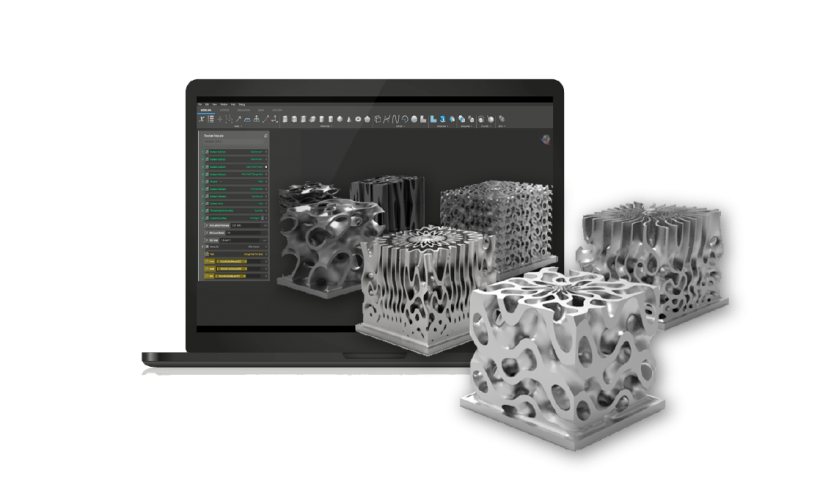
Engineers today have an impressive suite of software tools that tackle complex challenges in additive manufacturing (AM). Generative design software is a standout example, leveraging advanced computation to generate innovative, lightweight structures that are costly or impossible to produce with conventional methods.
To dive deeper into how generative design is reshaping AM, we spoke with Bradley Rothenberg, CEO of New York‑based nTopology. The company’s flagship nTop Platform supports both AM and traditional manufacturing, and we explored why generative design is essential, how the platform ensures seamless interoperability, and the latest trends in design for AM.
Can you tell me a bit about nTopology?

Founded in 2015, nTopology is a New York City–based engineering software firm that launched the nTop Platform in 2019. Today, our solution powers projects in aerospace, automotive, medical, and consumer sectors, serving hundreds of companies and thousands of engineers worldwide.
How does nTop platform differ from other 3D design software solutions that already exist in the market?
Unlike traditional CAD tools that store geometry as BReps or meshes, nTop represents shapes as mathematical equations. This foundation enables engineers to create and modify highly complex geometries instantly, with changes automatically reflected across the entire design without rebuild errors.
Why are tools like topology optimisation and generative design so crucial to the additive manufacturing process?
Generative design expands the engineer’s design space far beyond manual trial and error, revealing solutions that may not be intuitive from material and physics perspectives. At nTopology, our system exposes every parameter of the generative equation, ensuring engineers retain full control and visibility—it's a collaborative tool, not a black‑box one‑click solution.
Design for Additive Manufacturing (DfAM) unlocks both new opportunities and challenges. Can you share some tips that can help engineers and designers new to AM start with DfAM?
We recommend learning from those who have already navigated the AM adoption journey—from prototyping to production. Understand the unique constraints of each AM process; for laser powder‑bed fusion, for example, the GAPS worksheet from Jennifer Bracken at Penn State is a valuable resource that assesses geometry suitability. Always seek guidance from experienced practitioners to build a solid business case.
What applications can benefit the most from combining generative design and AM?
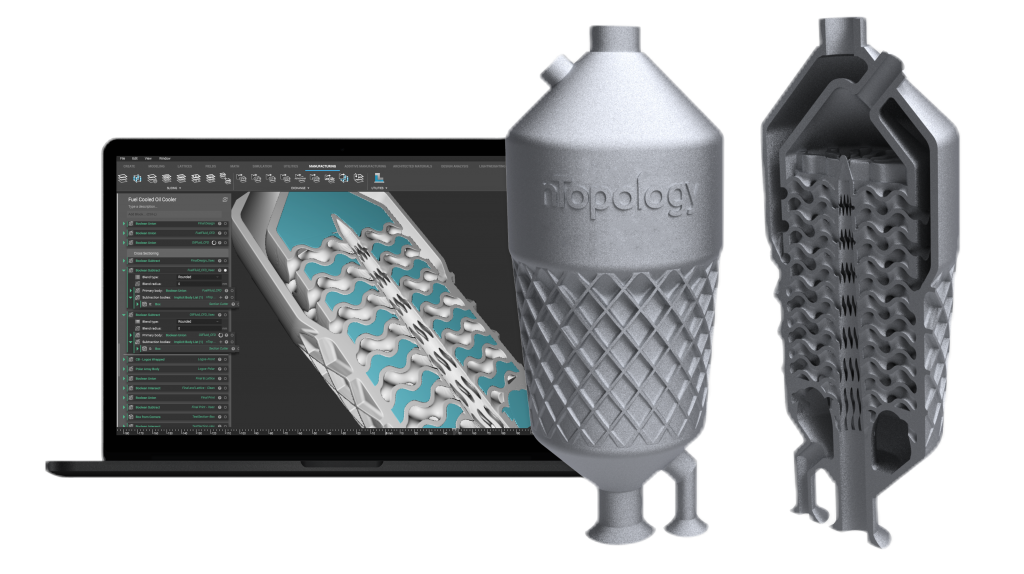
At nTopology, we see three primary use cases:
- Design‑of‑experiments: automated script‑driven generation of thousands of variants for simulation or physical testing.
- Surface geometry exploration: topology optimisation that balances weight, strength, and stiffness.
- Material property tailoring: creating mesostructures to mimic bone density for implants or to optimise heat dissipation.
One of the issues we see in the 3D printing software ecosystem is the lack of greater interoperability. What are your thoughts on that?
Interoperability is a core focus for nTopology. While no single file format solves all cases, we prioritize frictionless data flow. We natively support 3MF, CLI, CLF, bitmap stacks, and CSV (including laser parameters), and can import CAD, mesh, and simulation data from tools such as ANSYS and ABACUS. Command‑line access enables integration with Python, ModeFRONTIER, Excel, and other workflows—making our platform a hub for diverse manufacturing ecosystems.
Are there any trends in AM you’re most excited about?
We’re thrilled to see designs move from R&D labs into critical end‑use parts. By unlocking geometry constraints that traditional CAD systems impose, nTopology empowers engineers to create higher‑performance products more efficiently. We’re also excited by the growing adoption of process‑aware design approaches that respect each AM technology’s unique freedoms and limitations.
What is on the horizon for nTopology?
Recent funding will accelerate nTop Platform development and expand our international footprint in AM and beyond. While many early adopters use us as a DfAM tool, our flagship solution now supports a wide range of manufacturing processes—from injection moulding and composite lay‑up to high‑volume metal part production.
Are there any final thoughts that you’d like to share with our readers?
We’re grateful for the community’s feedback, which directly shapes our roadmap and helps us unlock maximum value from advanced manufacturing. We continue to host weekly demos, in‑depth webinars with industry partners, and a global DfAM series featuring experts from around the world. Thank you to AMFG for the opportunity to discuss these topics.
3D printing
- Interview with Spencer Wright of pencerw.com and nTopology: Expert Insights on Metal Additive Manufacturing
- Dr. Alvaro Goyanes of FabRx on 3D‑Printed Medicines: From Innovation to Personalised Care
- Dr. Bastian Rapp on 3D‑Printed Microfluidics: Advancing Biotech with NeptunLab
- Felix Ewald, CEO of DyeMansion, Discusses Innovations in Powder-Based 3D Printing Post-Processing
- Interview with Markforged’s Ibraheem Khadar on 3D Printing Innovation at formnext
- AMendate’s CEO Thomas Reiher on Revolutionizing 3D Printing with Automated Topology Optimization
- Interview with FIT AG CEO Carl Fruth: Driving Radical Innovation through Additive Manufacturing
- Autodesk’s Robert Yancey on Additive Manufacturing, Generative Design, and Industry 4.0
- Inkbit CEO Davide Marini Discusses the Future of Multi‑Material Inkjet 3D Printing
- Altair’s Ravi Kunju Discusses Simulation-Driven Design & the New Inspire Print3D for 3D Printing