



Interview with RIZE CEO Andy Kalambi: Advancing Sustainable, Scalable Industrial 3D Printing
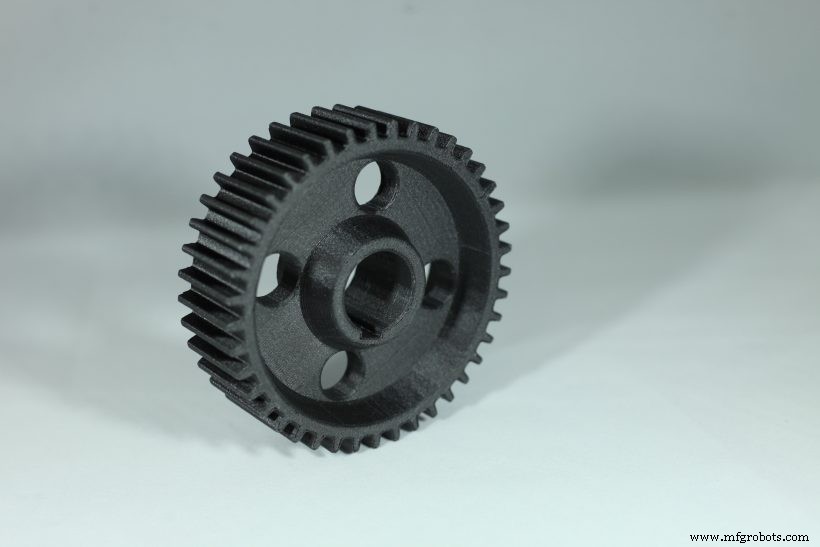

RIZE is a 3D printer manufacturer on a mission to make industrial 3D printing inclusive, sustainable and scalable. Founded in 2014 in Boston, the company pioneered its proprietary Augmented Deposition (APD) technology, enabling the creation of high‑quality, digitally enhanced printed parts.
In this interview, RIZE CEO Andy Kalambi shares insights on APD’s unique advantages, the evolving landscape of industrial additive manufacturing, and how businesses can adopt this transformative technology.
Could you tell me a little bit about your background in AM and how you came to join RIZE?
I'm a mechanical engineer by training, beginning my career in the software industry—primarily in manufacturing—and spent early years in the ERP space with SAP. I later transitioned to product lifecycle management, where I spent 17 years at Dassault Systèmes, eventually becoming CEO of the ENOVIA brand and leading the 3DEXPERIENCE® platform.
My additive‑manufacturing exposure began at Dassault Systèmes, developing design software for AM. In November 2017, I joined RIZE, drawn by the sector’s transformative potential for manufacturing, supply chains, and design, and the convergence of software, materials and hardware that could drive scalability.
What is RIZE’s vision?
RIZE’s vision is straightforward: make 3D printing inclusive and sustainable, unlocking its full scaling potential. Since the first stereolithography printer in 1986, the technology has largely remained the domain of experts, with complex hardware and extensive pre‑ and post‑processing deterring widespread adoption.
We tackle both technical challenges and user experience, simplifying operations to enable any user to safely and easily employ industrial 3D printing. This approach positions 3D printing as a versatile tool across an organization’s stakeholders.
Our efforts earned the IDC Award last year as a top innovator and the Frost & Sullivan Award for zero‑emission best practices—signaling growing recognition of the value that accessible, safe 3D printing delivers.
RIZE has developed its proprietary Augmented Deposition Technology. Could you explain what the technology is and the value it brings to the market?
Augmented Deposition Technology addresses three industry pain points:
- Pre‑ and post‑processing: Up to 80 % of the cost and time of a print are spent preparing and finishing the part, including support removal and dimensional integrity.
- Safety: Traditional printers emit VOCs and ultrafine particles. Our system uses zero‑emission materials for a safe user environment.
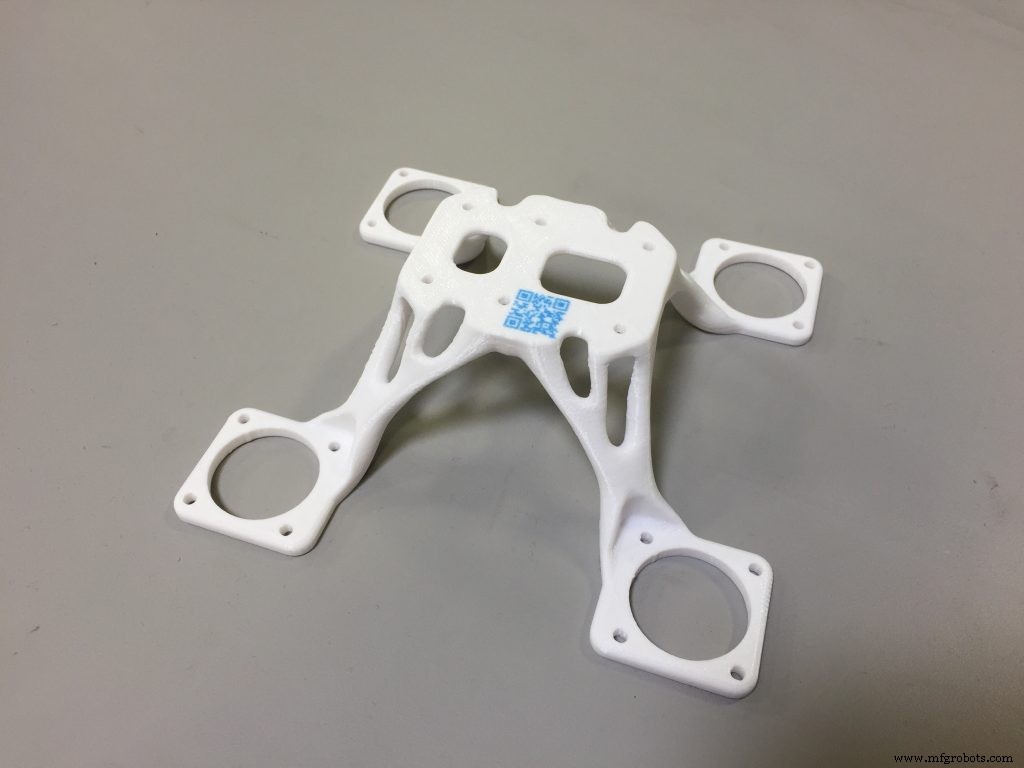
- Authenticity: Embedded QR codes and markers within parts enable verification and digital linkage to ERP, CRM or PLM systems.
By hybridising fused filament fabrication with inkjet deposition, we create a patented dual‑ink process: release ink creates a removable support layer, while marking ink embeds text, images or QR codes directly into the part.
This dual functionality not only simplifies handling but also generates a digital thread, allowing users to access design data, assembly instructions, and component histories via AR/VR or standard scanning.
So exactly how does the Augmented Deposition printing process work?
The workflow starts with a CAD model, which our software slices and auto‑generates supports. After placing the build plate, users upload the job via memory stick or network—essentially a one‑touch operation.
Unlike other systems that require manual alignment and adhesive application, our printer self‑aligns and is ready for printing immediately. During the build, inks are jetted into the part, and once finished, the support can be peeled off in under a minute—eliminating chemical baths, gloves and dedicated clean‑room facilities.
What industries or verticals can benefit the most from your technology?
Augmented Deposition serves three primary application areas:
- Prototyping—rapid, haptic prototypes that accelerate design validation and stakeholder communication.
- Manufacturing—custom tooling such as jigs and fixtures, streamlining production lines.
- Service parts—on‑demand replacement components for aerospace, automotive, defense, life‑sciences and more.
Key sectors already deploying our printers include automotive OEMs and suppliers, life‑science research labs, pharmaceutical and medical device developers, the U.S. Army, and the emerging full‑colour, functional market spanning consumer, architecture and education.
What tips would you give a company looking to get started with additive but not knowing where to start?
View additive manufacturing as a continuous‑improvement, practice‑based technology—similar to how early computer users discovered incremental applications.
Start with low‑hanging fruit: prototyping, jigs, fixtures, and other custom, one‑off solutions that reduce complexity and cost—potentially shaving up to 90 % from small‑scale production.
Avoid forcing conventional manufacturing workflows into additive; instead, identify problems that traditional methods cannot solve efficiently and leverage AM’s ability to produce complex, integrated assemblies.
Treat the journey as iterative—experiment, learn, and expand capabilities over the next few years to sustain improvement.
How do you see additive manufacturing evolving over the next five years?
AM is moving toward mainstream adoption, with accelerating innovation and a record number of patents filed last year—second only to the electric‑vehicle sector.
Consolidation will continue; companies that fail to scale or execute risk obsolescence, but the ecosystem will grow, providing more technologies and capabilities for broader adoption.
What spurred the decision for RIZE to move into the desktop 3D printing space?
We identified a gap for an industrial‑grade desktop printer that is simple, safe and portable. The RIZE ONE® weighs just 60 kg, fitting on a typical desk while still producing robust parts.
Health and safety considerations—specifically VOC emissions—were paramount. A Georgia Tech study highlighted 200 VOCs emitted by conventional printers; our zero‑VOC materials eliminate ventilation concerns and ensure safe food‑ and skin‑contact use.
Desktop machines also serve as the foundation for our industrial line, bridging user accessibility with end‑use part strength.
What does RIZE’s future product roadmap look like? Are you looking to continue developing desktop 3D printers?
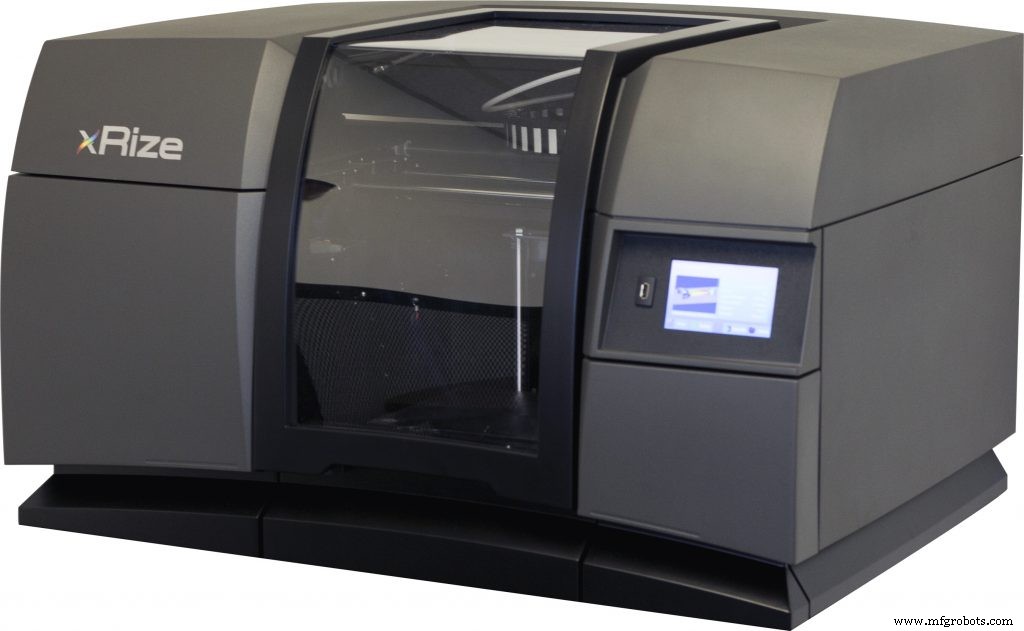
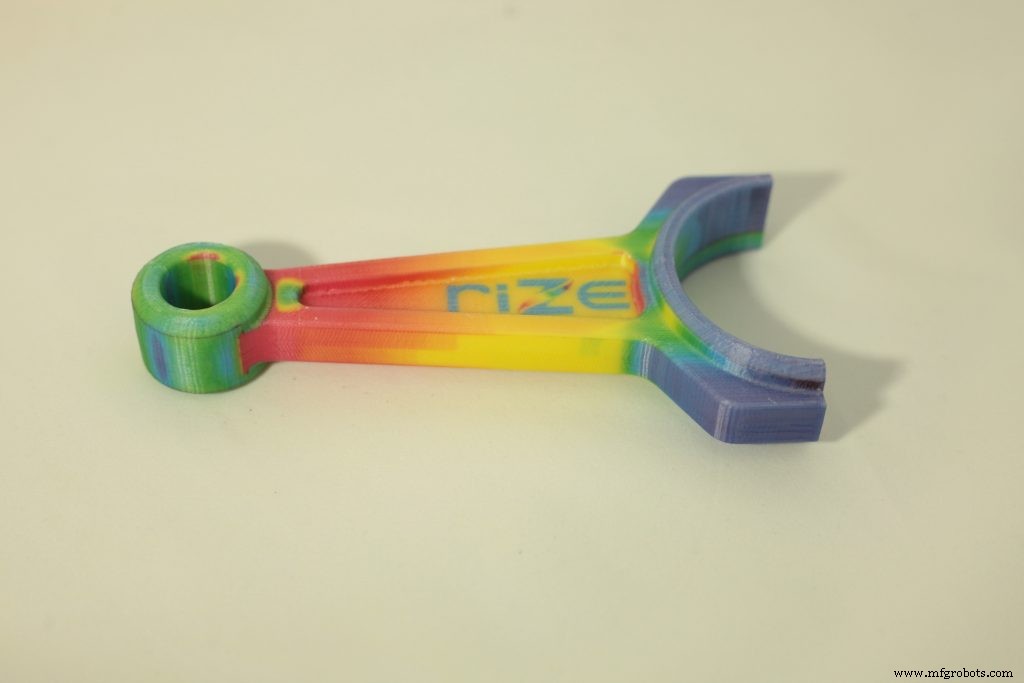
We currently offer a monochrome and a full‑colour printer (XRIZE®). Our roadmap focuses on expanding material options: RIZIUM Carbon, a high‑strength carbon composite, and RIZIUM ENDURA, among others. We’re also adding CMYK ink colors, creating a modular platform akin to a smartphone app ecosystem.
RIZE passed a Series B funding round earlier this year. What does this mean for the company going forward?
We closed a $15 million Series B, exceeding expectations. Investors—Innospark Ventures, Sparta Group LLC, Converge (women‑focused fund), Longworth Venture Partners and Dassault Systèmes—bring not only capital but strategic expertise, especially in AI and manufacturing.
These partners reinforce RIZE’s ability to accelerate product development, expand market reach and strengthen industry partnerships.
RIZE has also recently partnered with Dassault Systèmes. What do you hope to achieve from the partnership?
Our partnership is the first of its kind. Dassault Systèmes invested in RIZE during Series B and now collaborates across SOLIDWORKS, CATIA and the 3DEXPERIENCE marketplace. Together we deliver integrated design‑to‑print solutions, promoting 3D printing as a core component of the design workflow.
What’s next for RIZE in 2019?
We’ll continue rolling out innovations: an IoT‑ready platform, new materials, and expanded capabilities. Our goal is to meet the promises we’ve made, delivering tangible, market‑ready solutions without hype.
To learn more about RIZE, visit: https://www.rize3d.com
3D printing
- Interview with Spencer Wright of pencerw.com and nTopology: Expert Insights on Metal Additive Manufacturing
- Digital Alloys CEO Duncan McCallum Discusses Joule Printing and the Future of Metal 3D Manufacturing
- Nanoe CEO Guillaume de Calan Discusses the Future of Ceramic 3D Printing
- Roboze CEO Alessio Lorusso Discusses Cutting‑Edge Composite 3D Printing and Industry Outlook
- Scaling 3D Printing: Makelab CEO Christina Perla Shares Insights on Building a Resilient Service Bureau
- Interview with Eckhart Additive Manufacturing Engineer Robert Heath: 3D Printing, Automation & Industry 4.0
- Dunlop Systems Accelerates Tooling Production with 3D Printing – Insights from Mark Statham
- Inkbit CEO Davide Marini Discusses the Future of Multi‑Material Inkjet 3D Printing
- Why Post‑Processing Is the Key to Scalable 3D Printing – Insights from AMT CEO Joseph Crabtree
- Assessing the Sustainability of Industrial 3D Printing