



3D Printing Revolutionizes Clear Aligners in Digital Dentistry
Digital dentistry— the integration of digital technologies into everyday dental practice—is reshaping the industry. Among the most influential innovations is 3D printing.
From bridge models and surgical guides to dentures, 3D printing is already pivotal. However, the most pervasive use today is in clear‑aligner manufacturing.
According to SmarTech Analysis, clear aligners represent “perhaps the single highest‑volume application for 3D printing technologies in the world today.”
So, how exactly does 3D printing integrate into clear‑aligner production?
In this article we’ll explore the advantages of 3D printing for clear aligners and examine how clinicians and labs embed the technology into their digital workflows.
Other applications covered in this series:
- 3D Printing for Heat Exchangers
- 3D Printing for Bearings
- 3D Printing for Bike Manufacturing
- 3D Printing for Medical Implants
- 3D‑Printed Rockets and the Future of Spacecraft Manufacturing
- 3D Printing for Footwear Manufacturing
- 3D Printing for Electronic Components
- 3D Printing in the Rail Industry
- 3D‑Printed Eyewear
- 3D Printing for End‑Part Production
- 3D printing for Brackets
- 3D Printing for Turbine Parts
- How 3D Printing Enables Better‑Performing Hydraulic Components
- How 3D Printing Supports Innovation in the Nuclear Power Industry
What are clear aligners?
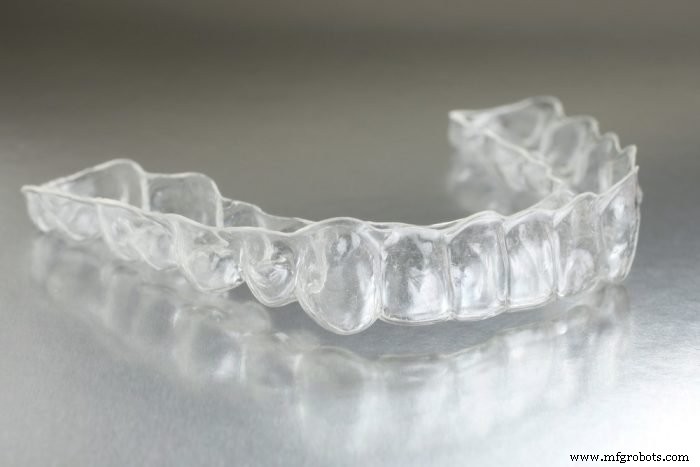
Clear aligners are removable, transparent trays that gradually move teeth into a desired position. Unlike traditional metal braces, they’re virtually invisible and can be taken out for eating and brushing.
The manufacturing journey begins when an orthodontist captures a patient’s dentition with a 3D intra‑oral scanner. Those digital scans inform the design of each successive aligner, mapping the incremental steps from the current to the final tooth arrangement. Typically, a treatment plan requires 5 to 30 aligners, averaging 6–10.
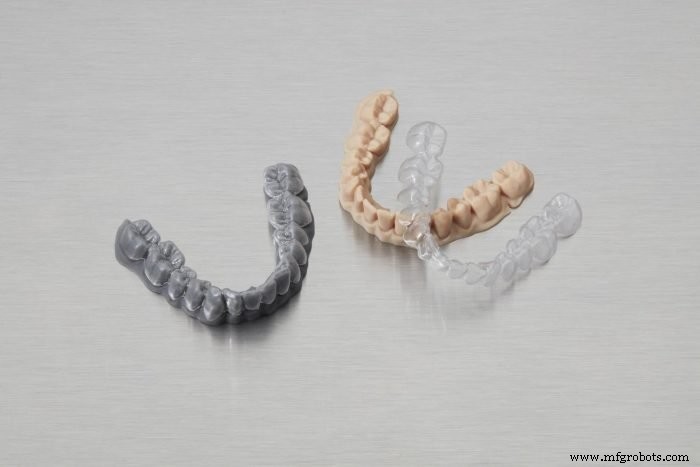
To fabricate each aligner, orthodontists first create moulds—usually via thermoforming. 3D printing is now the preferred method for producing these moulds, thanks to its speed, precision, and flexibility.
Key technologies include Stereolithography (SLA) and Material Jetting, both resin‑based and capable of producing highly accurate, full‑color models. HP’s Multi‑Jet Fusion (MJF) is also gaining traction for its rapid build times and robust material properties.
The benefits of 3D printing for clear aligners
Patient‑specific solutions
Clear aligners are inherently customized; each tray is slightly different to guide teeth along a precise trajectory. This level of personalization demands a technology that can deliver complex, unique designs without prohibitive costs.
3D printing is the only technique that can economically produce the intricate moulds required for each patient, unlike conventional milling, which incurs expensive tooling and setup.
With 3D printing, labs can fabricate complex, patient‑specific moulds directly from digital scans, keeping production costs low while maintaining high fidelity.
Mass customisation
Historically, creating clear‑aligner moulds involved milling followed by manual trimming—a time‑consuming, labour‑intensive process. 3D printing bypasses these steps, allowing a full batch of customised moulds to be produced straight from the patient’s digital files.
For instance, Stratasys reports that its J700 Dental 3D printer can generate up to 400 clear aligners per day. HP has taken this further: SmileDirectClub’s 49 HP Jet Fusion 3D printers running 24/7 can produce 50,000 unique moulds daily—roughly 1,020 moulds per printer.
No other technology matches that throughput and cost efficiency, underscoring why 3D printing dominates the market.
Producing clear aligners at the point of care
By printing moulds directly in‑office, orthodontists save both time and money. In a typical workflow, intra‑oral scans are sent to a lab for modelling, then the high‑resolution digital files are returned to the office for on‑site printing and thermoforming.
With this approach, treatment can commence within days instead of weeks. Moreover, if an aligner is lost, the digital file can be used to print a replacement mould within hours, ensuring minimal disruption to the patient’s schedule.
Examples of 3D printing for clear aligners
Below are case studies illustrating how companies harness 3D printing to scale and streamline clear‑aligner production.
DynaFlex: Expanding into the clear aligner market with 3D printing

DynaFlex, a manufacturer of orthodontic devices and dental office solutions, recognized the growing demand for clear aligners and adopted 3D printing to support that expansion.
Using Stratasys’ J700 Dental 3D printer—designed specifically for aligner moulds—DynaFlex can jet liquid photopolymer layer by layer, curing with UV light. The resulting moulds are fully cured and ready for use immediately, eliminating post‑curing steps.
According to DynaFlex, a single J700 build can produce roughly 55 moulds in three hours. With plans to acquire two additional printers, the company aims to exceed 1,000 moulds per day.
Cranston Orthodontics: 3D printing clear aligner moulds in‑office
US‑based practice Cranston Orthodontics has adopted in‑office 3D printing to produce clear aligners, cutting turnaround times to a single day.
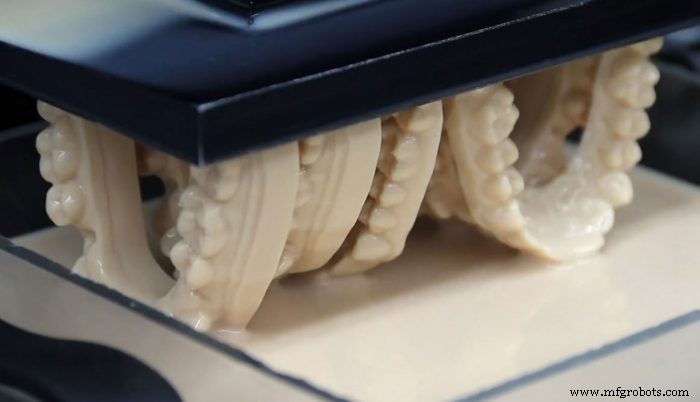
The office uses desktop EnvisionTec 3D printers with dental‑grade materials. After intra‑oral scans are prepared with dedicated software, the printer produces a batch of up to seven moulds using EnvisionTec’s E‑Model resin.
Following a brief cleaning and drying cycle, the moulds are thermoformed, hand‑finished, and ready for patient use, delivering a precise fit and superior service.
SmileDirectClub: Making clear aligners more affordable with 3D printing

Founded in 2014, SmileDirectClub pioneered a cost‑effective model by letting patients submit home impressions or attend a SmileShop for intra‑oral scans. Dental professionals then craft a treatment plan before the company 3D prints and ships the aligners.
Over 300,000 people have already benefited from this remote, affordable solution. In partnership with HP, SmileDirectClub is scaling its production to 50,000 unique moulds per day across 49 HP Jet Fusion 3D printers, equating to roughly 20 million moulds in the next year.
With this scale, SmileDirectClub can offer aligners at up to 60% lower cost than traditional invisible braces, democratizing orthodontic care.
3D printing clear aligners directly?
As the clear‑aligner market accelerates, manufacturers seek to streamline operations by moving from a two‑step moulding process to a single‑step direct‑printing approach.
A direct‑printing workflow would reduce capital expenditures and dramatically boost throughput.
Align Technology, the parent of Invisalign, is investing heavily in this area and actively researching direct‑printing solutions.
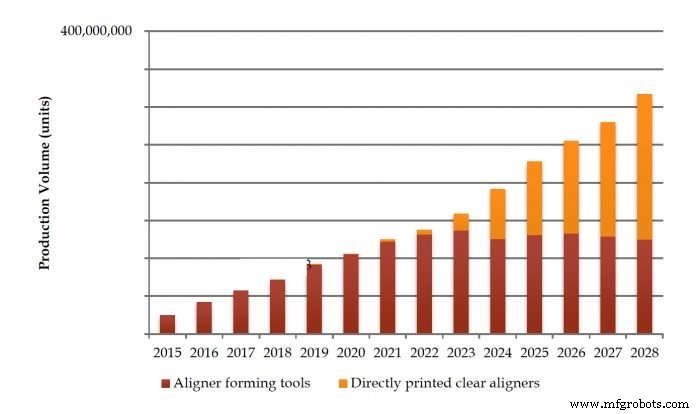
Recent SmarTech research suggests that the market could reach a tipping point for directly 3D‑printed aligners within the next five years, driven largely by advances in photopolymerisation‑based printers.
3D printing is already reshaping orthodontics, offering a cost‑effective, high‑volume production model and unprecedented levels of mass customisation. Continued advances promise direct‑printing of aligners, further reducing costs, shortening turnaround times, and elevating patient care quality.
In our next article, we’ll examine 3D printing in the medical industry, focusing on implants. Stay tuned!
3D printing
- Virtual Inventories & 3D Printing: Securing the Future of Distributed Manufacturing
- Revolutionizing Bone Implants: How 3D Printing Enhances Fit, Longevity, and Performance
- Application Spotlight: 3D Printing Transforms Bike Manufacturing
- Application Spotlight: 3D Printing Revolutionizes Bearing Design and Production
- 3D Printing Revolutionizes Heat Exchangers: Lighter, Smarter, Faster
- Revolutionizing Footwear: 3D Printing Drives Innovation, Customization, and Faster Time to Market
- 3D‑Printed Eyewear: From Prototyping to Customization—Industry Trends & Case Studies
- 3D Printing for Turbine Parts: Accelerating Development, Performance, and Sustainability
- How 3D Printing Is Revolutionizing Aircraft Cabin Interiors
- Revolutionizing Robotic Grippers with 3D Printing: Insights and Industry Successes