



How 3D Printing Is Transforming Electronic Component Design: 5 Key Applications
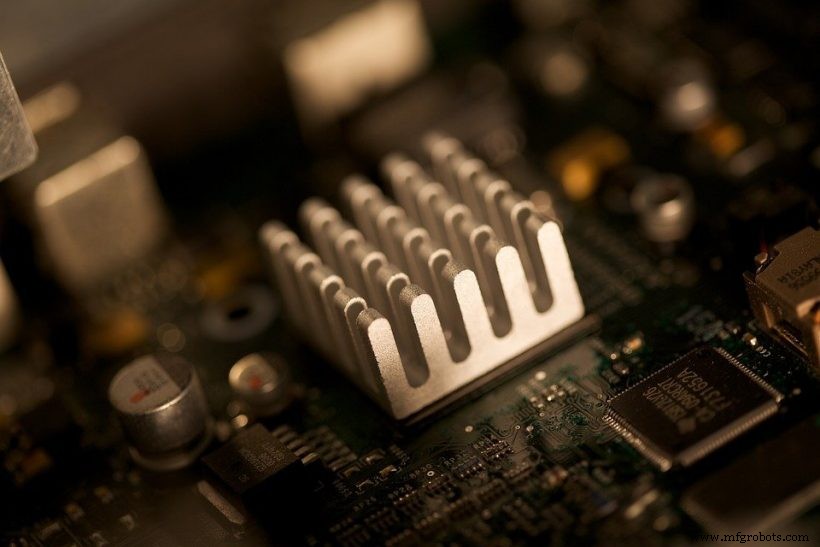
3D printing is rapidly emerging as a pivotal technology in electronics manufacturing. While initially focused on rapid prototyping, it is now increasingly applied to produce fully functional electronic components.
By 2029, the global market for 3D‑printed electronics is projected to exceed $2 billion, reflecting a surge in demand for customized, high‑performance parts.
Other applications featured in this series:
3D Printing for Heat Exchangers, 3D Printing for Bearings, 3D Printing for Bike Manufacturing, 3D Printing for Digital Dentistry & Clear Aligner Manufacturing, 3D Printing for Medical Implants, 3D‑Printed Rockets and the Future of Spacecraft Manufacturing, 3D Printing for Footwear Manufacturing, 3D Printing in the Rail Industry, 3D‑Printed Eyewear, 3D Printing for End‑Part Production, 3D printing for Brackets, 3D Printing for Turbine Parts, How 3D Printing Enables Better‑Performing Hydraulic Components, How 3D Printing Supports Innovation in the Nuclear Power Industry, 3D printing for Footwear Manufacturing.
Why the electronics sector is embracing 3D printing
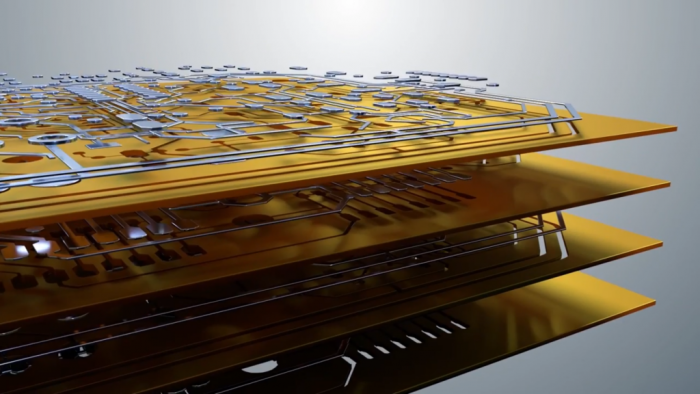
Electronics product lifecycles are shortening, pressuring manufacturers to accelerate design and production cycles. Outsourcing prototyping to East Asia introduces delays, high minimum order quantities, and IP risks. Bringing the build capability in‑house solves these challenges.
Special‑purpose desktop 3D printers for electronics enable rapid, in‑office fabrication of PCBs, antennas, capacitors and sensors—often in a matter of hours. This agility accelerates validation and iteration while safeguarding proprietary designs.
Moreover, the relentless push toward smaller, flexible, and multifunctional devices demands manufacturing methods that can create complex, non‑planar geometries. 3D printing offers that flexibility, opening avenues for truly conformal circuitry.
Key applications of 3D‑printed electronics
3D‑Printed Antennas

Antennas are essential to aircraft, satellites, UAVs and ground stations. 3D printing has unlocked novel designs that reduce weight, simplify assembly and cut cost. Optisys, for example, uses powder‑bed fusion to build an X‑band SATCOM Integrated Tracking Array (XSITA) in a single part, cutting lead time from 11 to 2 months and lowering production cost by at least 20 %.
Interconnects
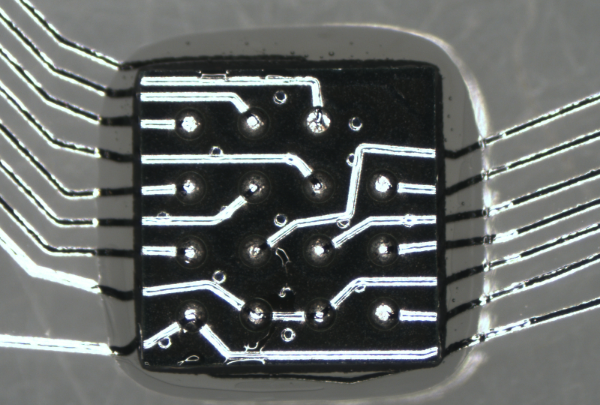
Traditional wire bonding imposes long traces and mechanical stress. Aerosol‑Jet printing—developed by Optomec—adds ultra‑thin, conformal interconnects directly onto 3D surfaces at room temperature, eliminating bonding altogether. Northrop Grumman demonstrated this by printing gallium arsenide (GaAs) interconnects on microwave monolithic integrated circuits that withstood rigorous RF and thermal testing.
Capacitors
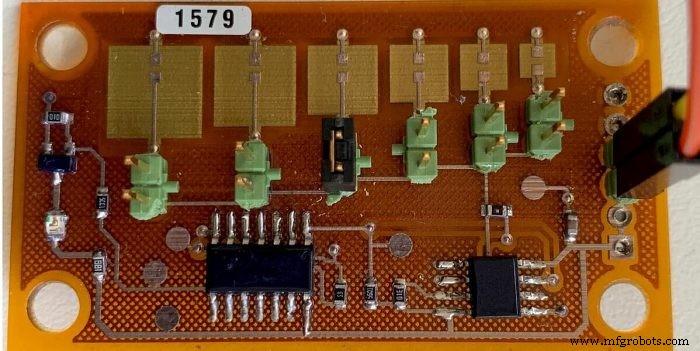
3D printing can deposit conductive and dielectric layers directly onto a PCB, eliminating the need for discrete component mounting and reducing board real‑estate. Nano Dimension’s DragonFly printers have produced embedded capacitors with less than 1 % variance across 30 tests, suitable for RF transmission, audio, and power conditioning.
Radio‑Frequency Components
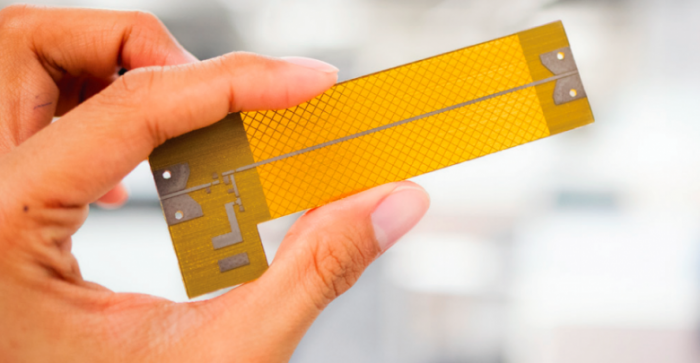
RF modules benefit from the same additive approach. Harris Corporation used a DragonFly Pro 2020 to fabricate a 101 × 38 mm amplifier in just 10 hours, achieving RF performance on par with traditionally manufactured units.
Sensors
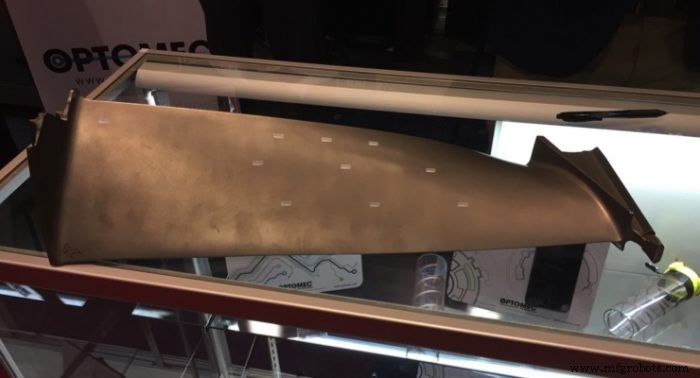
Biomedical and industrial sensors are among the most compelling use cases. A Georgia Tech/Emory team printed a six‑layer, biocompatible sensor that can wirelessly monitor aneurysm healing. GE leverages Optomec’s Aerosol Jet to deposit ceramic strain sensors on turbine blades, a solution that has reportedly saved the company $1 billion by reducing maintenance costs.
The future of electronics 3D printing
While today’s focus remains on rapid prototyping, the pace of development in hardware and materials suggests mass‑production will arrive within a few years. Nano Dimension’s latest DragonFly Lights‑Out Digital Manufacturing (LDM) platform demonstrates production‑grade multilayer PCBs, capacitors, coils, sensors and antennas in small batches.
Advances in conductive inks, dielectrics and printer resolution are unlocking higher performance parts, while research into new geometries expands the design space. As the industry embraces these capabilities, the electronics sector is poised for unprecedented growth.
3D printing
- Revolutionizing Bone Implants: How 3D Printing Enhances Fit, Longevity, and Performance
- Application Spotlight: 3D Printing Transforms Bike Manufacturing
- Application Spotlight: 3D Printing Revolutionizes Bearing Design and Production
- 3D Printing Revolutionizes Heat Exchangers: Lighter, Smarter, Faster
- 3D Printing Revolutionizes the Rail Industry: Case Studies & Benefits
- Revolutionizing Footwear: 3D Printing Drives Innovation, Customization, and Faster Time to Market
- 3D‑Printed Eyewear: From Prototyping to Customization—Industry Trends & Case Studies
- 3D Printing for Turbine Parts: Accelerating Development, Performance, and Sustainability
- 3D‑Printed Brackets: Optimizing Strength, Weight, and Production Efficiency
- How 3D Printing Revolutionizes Hydraulic Component Design and Performance