



Application Spotlight: 3D Printing Revolutionizes Bearing Design and Production
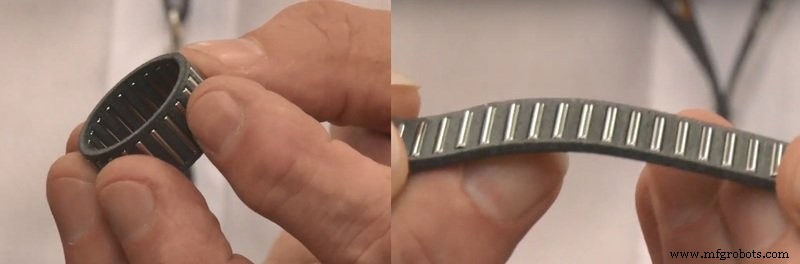
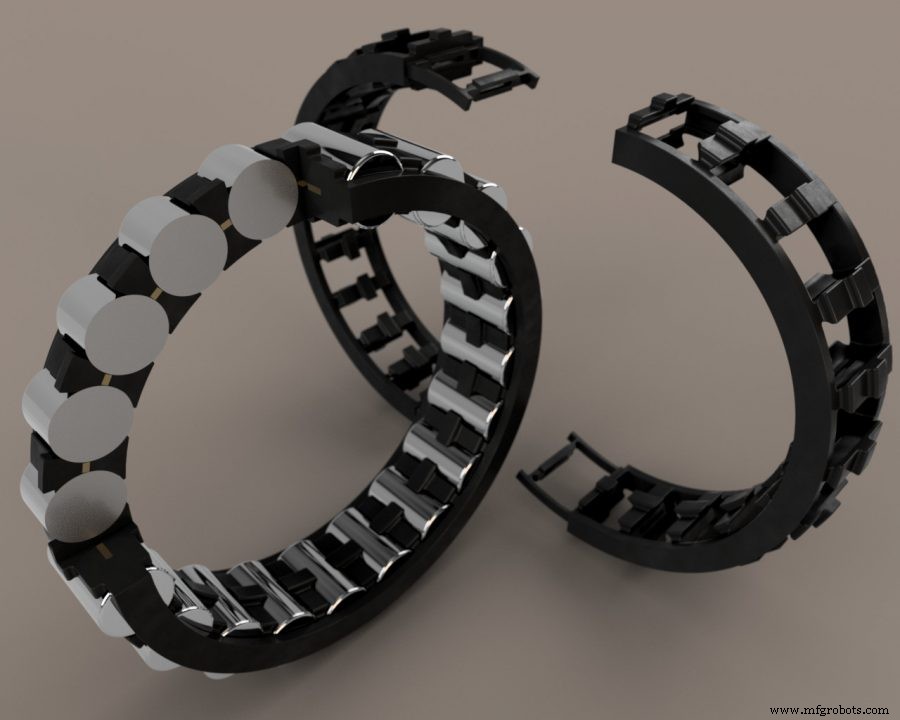
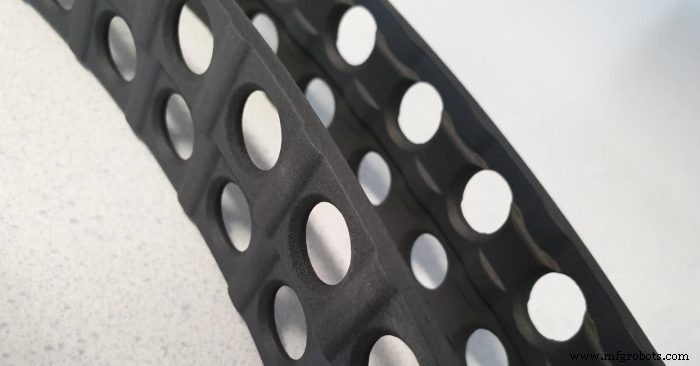
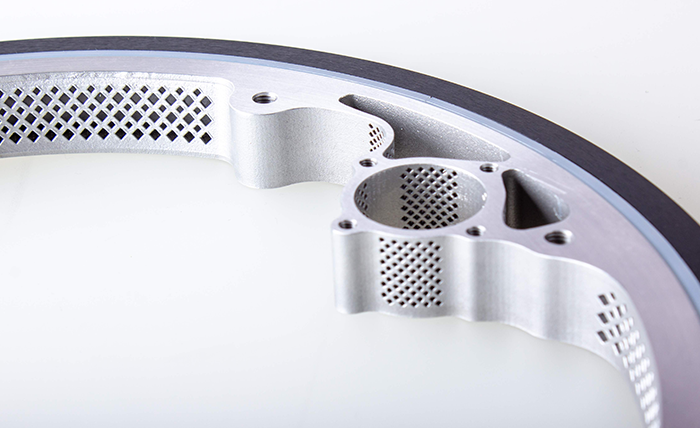
[Image credit: Bowman Additive Production] This week, we continue our Application Spotlight series by looking at bearings, critical components that are used to reduce friction between moving metal parts. In this article, we’ll dive into the benefits 3D printing provides for the design and production of bearings, and explore how bearing manufacturers use these benefits to produce radically new bearing components. Take a look at the other applications covered in this series: 3D Printing for Heat Exchangers 3D Printing for Bike Manufacturing 3D Printing for Digital Dentistry & Clear Aligner Manufacturing 3D Printing for Medical Implants 3D-Printed Rockets and the Future of Spacecraft Manufacturing 3D Printing for Footwear Manufacturing 3D Printing for Electronic Components 3D Printing in the Rail Industry 3D-Printed Eyewear 3D Printing for End-Part Production 3D printing for Brackets 3D Printing for Turbine Parts How 3D Printing Enables Better-Performing Hydraulic Components How 3D Printing Supports Innovation in the Nuclear Power Industry The round, wheel‑like devices are designed to carry loads and dramatically reduce friction between two moving parts. By placing a bearing between components that move relative to each other, the parts roll over the bearing rather than sliding, keeping friction to a minimum. Ball bearings are among the most common types. They typically consist of three essential elements: a smooth inner race, a smooth outer race, rolling elements such as balls or cylinders, and a cage that keeps the rollers spaced. The rolling elements bear the load, allowing the bearing to spin freely. Bearings are ubiquitous across industries—from automotive engines and steering systems to aircraft turbines, assembly lines, and medical equipment. Manufacturers continually seek ways to deliver bespoke solutions and improve performance, and additive manufacturing has become a key enabler. 3D printing unlocks the ability to embed intricate geometry into bearing components, directly translating to superior performance. Bowman International, a UK‑based bearing maker, leveraged this advantage to redesign a cage that accommodates 45% more rollers, thereby extending the bearing’s service life. The flexibility of additive manufacturing also allows cages to be produced from flexible polymers, enabling seamless wrapping around shafts. By employing lattice or honeycomb architectures, 3D printing enables designers to reduce weight without sacrificing strength—a task that would be laborious with CNC machining. Cages can be printed in nylon or composite materials instead of steel, cutting mass and simultaneously diminishing wear on rolling elements. Traditional bearing production can incur tooling costs of £40,000–£60,000 per set, making small‑to‑medium runs prohibitively expensive. Additive manufacturing bypasses tooling entirely, allowing manufacturers to produce bespoke cages on demand and compete on price for limited batches. Bowman Additive Production, the additive manufacturing arm of Bowman International—a leading bearing and sintered component manufacturer—has been refining cage designs through 3D printing for years. The result is Rollertrain™: a patented split‑bearing cage that incorporates an interlocking lattice, enabling up to 45% more rollers than conventional cages. The design distributes loads across a greater number of rolling elements, boosting load capacity by 30‑40% and tripling the cage’s service life. Although the production cost of Rollertrain™ cages is comparable to traditional steel cages, the enhanced performance and longevity make them a superior choice. The cage is now employed in John Handley Bearings’ JHB Split Bearing, which achieves radial capacity gains of up to 70% and axial capacity improvements of 1,000%—the highest figures recorded for split bearings worldwide. While 3D printing may not supplant conventional methods for every bearing type, it has already become the go‑to manufacturing route for split bearings. Engineering firm Scheurer Swiss merged additive manufacturing with carbon‑fibre composites to craft lighter, more efficient bearing cages for the Moonwave, a privately‑owned luxury catamaran. The steering ball bearings required cages that were both lightweight and robust. Using carbon‑fibre‑reinforced polyamide‑12 (PA12), Scheurer printed the cages in pieces and bonded them together. Each cage reached up to 630 mm in diameter. What would have taken weeks with moulding was completed in just three days, delivering a smoother, more responsive steering system. German specialist Franke GmbH tackled the challenge of producing a wire‑race bearing for a rescue‑helicopter patient bed, with a strict weight limit of 800 g and the need to endure severe turbulence. Conventional manufacturing could not achieve this. By applying topology optimisation and a complex lattice structure, Franke generated a design that could only be realised through metal 3D printing. The final aluminium bearing met the weight and performance criteria and was successfully installed in flight‑ready aircraft, underscoring the role of additive manufacturing in weight reduction for aerospace. 3D printing grants bearing manufacturers the freedom to prototype and produce high‑performance components without the financial burden of tooling. The technology also expands material choices—from flexible polymers to high‑strength metals—enabling features that would be impossible with traditional processes. As the industry embraces additive manufacturing, it is poised to become the standard for producing small‑to‑medium batches of bearings, delivering tangible benefits in cost, performance, and sustainability. In our next article, we’ll explore 3D printing for bikes. Stay tuned!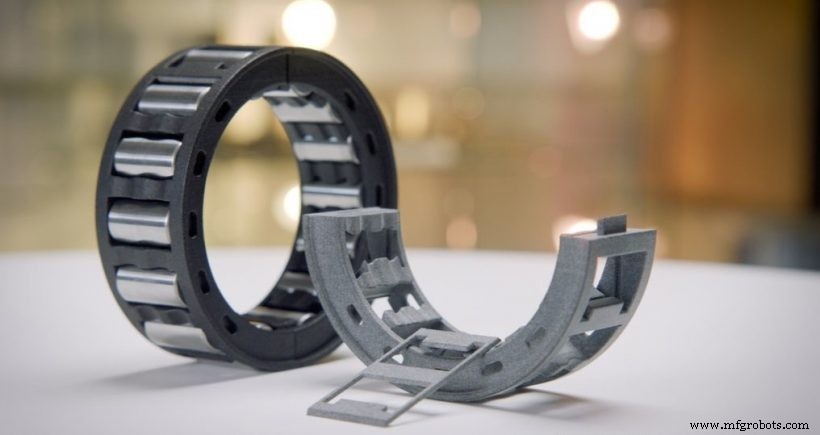
What is a bearing?
Bearings play a crucial role in motion applications. 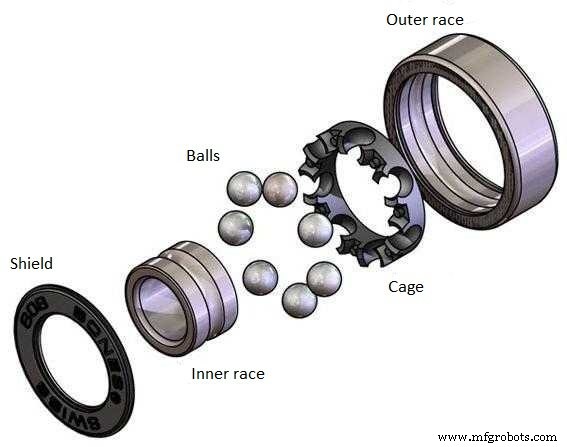
The benefits of 3D printing for bearings
Increased design complexity
Lighter weight
Eliminated tooling costs
Examples of 3D‑printed bearings
Bowman’s Rollertrain™: Bearing cage for split roller bearings
Lighter bearing cages for a luxury catamaran
Lightweight metal 3D‑printed bearings for aerospace
A look into the future
3D printing
- Revolutionizing Bone Implants: How 3D Printing Enhances Fit, Longevity, and Performance
- 3D Printing Revolutionizes Clear Aligners in Digital Dentistry
- Application Spotlight: 3D Printing Transforms Bike Manufacturing
- 3D Printing Revolutionizes Heat Exchangers: Lighter, Smarter, Faster
- Revolutionizing Footwear: 3D Printing Drives Innovation, Customization, and Faster Time to Market
- 3D‑Printed Eyewear: From Prototyping to Customization—Industry Trends & Case Studies
- 3D Printing for Turbine Parts: Accelerating Development, Performance, and Sustainability
- 3D‑Printed Brackets: Optimizing Strength, Weight, and Production Efficiency
- How 3D Printing Is Revolutionizing Aircraft Cabin Interiors
- Revolutionizing Robotic Grippers with 3D Printing: Insights and Industry Successes