



How 3D Printing Revolutionizes Sand Casting: A Practical Guide
3D printing has already transformed injection moulding by enabling lightweight, cost‑effective molds and consistent quality. Foundries are now extending this advantage to sand casting, combining rapid digital tooling with the versatility of traditional metal casting.
What is sand casting?
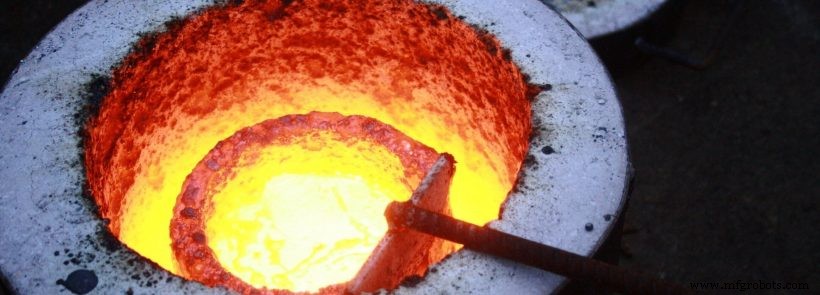
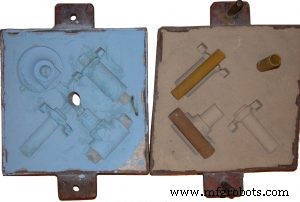
Sand casting is the age‑old technique of pouring molten metal into a mould made of a specially blended sand. The sand, called green sand, is packed in a frame (the flask) and shaped by patterns that create the cavity and gating system. After the two halves of the mould are assembled, the metal is poured, solidifies, and the sand is broken away to reveal the finished part, which may then be cleaned or finished as required.
Green sand consists of silica, chromite or zircon, water, clay, and anthracite. It remains wet ("green") until the casting is complete, which is why it can be shaped quickly and reused in the same batch.
When automated, sand casting delivers cost‑effective, high‑volume parts for both prototypes and production runs. Commonly cast materials include:
- Aluminum
- Brass
- Magnesium
- Iron
- Steel
Nearly every alloy that can be cast can also be produced using sand moulds, offering designers a wide palette of options.
Where does 3D printing come in?
The biggest bottleneck in sand casting has always been the creation of patterns and gating systems. Traditional methods—hand‑shaped, sand‑bagged or CNC‑machined—are time‑consuming and expensive, and the patterns have a short shelf life. 3D printing removes these constraints by allowing patterns to be designed in CAD, printed on demand, and reused as needed.
Thermoplastic patterns printed with FDM or PolyJet can be post‑coated to resist heat and sand abrasion, dramatically improving dimensional accuracy and reducing the need for secondary machining. The ability to print complex geometries—such as intricate gating systems or internal cores—opens up new design possibilities that were previously impractical.
For prototyping, 3D printing means foundries can iterate quickly. What once took weeks of pattern fabrication can now be done in days, with each iteration cost‑effective and low‑risk. This agility accelerates time‑to‑market and ensures that only fully validated designs move to full‑scale production.
Leading manufacturers already use FDM and PolyJet for sand‑casting tooling. Companies like Stratasys have proven these technologies deliver high‑resolution patterns, while Ex‑One’s S‑Max series is engineered to withstand the rapid temperature swings of foundry environments, maintaining surface quality and dimensional stability.
Complementary technologies drive efficiency
When sand casting and 3D printing are integrated, the strengths of each reinforce the other: the low‑cost, high‑volume capability of sand moulds combined with the precision, flexibility, and speed of additive manufacturing. By adopting both, foundries can reduce tooling costs, shorten lead times, and produce parts that meet stringent tolerances without sacrificing production scale.
As the industry evolves, 3D printing is becoming an indispensable component of the modern foundry’s tool kit, enabling smarter, more sustainable manufacturing.
3D printing
- Harnessing 3D Printing in Higher Education: Benefits, Case Studies, and Resources
- How 3D Printing is Revolutionizing Sand Casting
- Mastering Material Jetting 3D Printing: Fundamentals & Applications
- Mastering Metal 3D Printing: A Comprehensive Guide
- Mastering Greensand Casting: A Comprehensive Overview
- Step-by-Step Guide to 3D Printing Molds for Casting
- Efficient Rapid Prototyping for Sand Casting – Accelerate Design and Validation
- Mastering Sand Casting Terminology: A Comprehensive Guide
- Enhancing Sand Casting with 3D Printing: Faster Tooling and Reduced Lead Times
- Premium Sand Casting Solutions for Industrial Applications