



Mastering Polyjet 3D Printing: Precision, Detail, and Versatile Applications
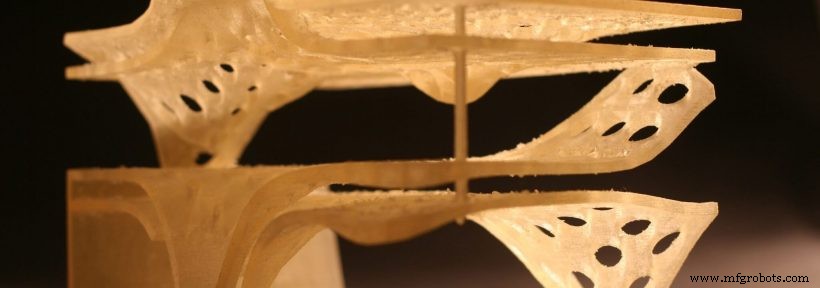
First introduced by Stratasys in 2007, Polyjet 3D printing—though less common than SLS or SLA—offers unmatched surface fidelity. It can render details as fine as 0.1 mm and finishes with a naturally smooth, high‑quality surface that typically requires no post‑processing sanding or polishing.
Key Applications
- Highly detailed, multi‑colour display models, such as medical and anatomical replicas.
- Rapid‑iteration prototyping where many design revisions are anticipated.
- Limited‑run, non‑functional decorative components for luxury vehicles.
- Creation of molds and patterns for injection moulding, sand casting, and other downstream processes.
How It Works
Polyjet shares conceptual similarities with FDM: a moving print head builds the part layer by layer. However, instead of extruding filament, it deposits micron‑sized droplets of photopolymer onto a build platform. Each droplet is instantly cured by a UV light source, enabling high precision and fast build times.
The technology’s inherent smoothness means post‑processing is minimal. Parts can be dyed, painted, or bonded—making it possible to assemble large structures from individually printed segments.
Materials
Polyjet printers primarily use liquid photopolymers. Early machines handle a single resin, whereas modern systems can co‑print up to 12 resins simultaneously, offering rich colour palettes and material contrasts within a single build.
Resin hardness ranges from flexible, rubber‑like grades (26–28 Shore D, e.g., Objet TangoPlus) to rigid, transparent or opaque variants (83–86 Shore D, e.g., Objet VeroClear). Over‑mold resins add a rubber coating to rigid parts, and composite blends provide tailored mechanical properties. This versatility allows Polyjet to approximate many production materials during prototyping.
Design Guidelines
- Support structures: All overhangs require support, but dissolvable materials make removal quick and clean.
- Layer thickness vs. speed: While layers as thin as 0.00063 in (16 µm) are possible, they reduce build speed. Choose a thickness that balances detail and turnaround.
- Material costs: Photopolymers are denser than filament, so expect higher material usage and support costs.
- Use case suitability: Polyjet is ideal for non‑functional parts, molds, and patterning. For functional production parts, other technologies may be preferable, though Polyjet can still accelerate the overall workflow.
File Formats
Full‑colour Polyjet parts are typically exported as STL (RGB colour codes) or VRML. While STL is ubiquitous, VRML offers advanced texture mapping and richer colour control, which can be advantageous for complex, multi‑colour builds.
Polyjet’s ability to deliver ultra‑smooth, highly detailed, multi‑colour parts makes it the go‑to choice when aesthetics and precision dominate the design criteria. With thoughtful experimentation, its creative potential is vast—don’t hesitate to push the boundaries.
3D printing
- Polymer 3D Printing: 6 Cutting‑Edge Innovations Driving Industry Transformation
- Stratasys J55 – Revolutionizing Polyjet 3D Printing with a Rotating Build Platform
- Discover How Easy 3D Printing Is: A Beginner’s Guide
- PolyJet 3D Printing Explained: How It Differs from FDM and SLA
- Demystifying 3D Printing: A Clear Guide for Innovators
- Optimize Your Polyjet 3D Prints: Design Guidelines for Precision & Multi-Material Success
- Polyjet 3D Printing: Advanced, High-Speed Photopolymer Technology for Industrial Precision
- 3D Printing Explained: Part 1 – From Raw Materials to Modern Innovations
- Revolutionizing Jewelry Design: The Power of 3D Printing
- Revolutionizing Fashion: How 3D Printing Transforms Design & Production