



3D Printing for Turbine Parts: Accelerating Development, Performance, and Sustainability
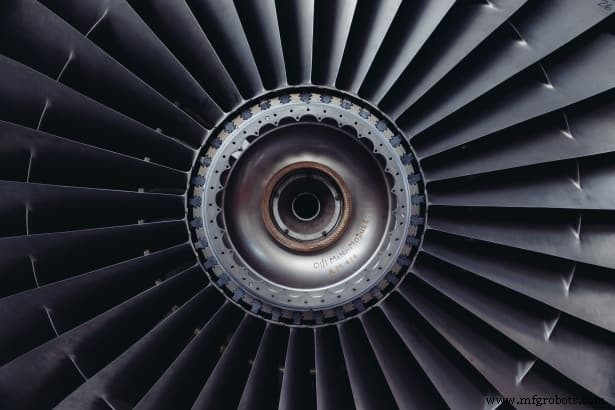
3D printing is transforming prototyping, production, and maintenance in turbomachinery manufacturing.
The technology offers a powerful alternative to casting and machining for a wide array of turbomachinery components.
In this week’s Application Spotlight, we examine the tangible benefits of 3D printing in turbomachinery manufacturing and showcase compelling real‑world examples.
Other applications covered in this series:
3D Printing for Heat Exchangers
3D Printing for Bearings
3D Printing for Bike Manufacturing
3D Printing for Digital Dentistry & Clear Aligner Manufacturing
3D Printing for Medical Implants
3D-Printed Rockets and the Future of Spacecraft Manufacturing
3D Printing for Footwear Manufacturing
3D Printing for Electronic Components
3D Printing in the Rail Industry
3D-Printed Eyewear
3D Printing for End-Part Production
3D printing for Brackets
3D Printing for Turbine Parts
How 3D Printing Enables Better-Performing Hydraulic Components
How 3D Printing Supports Innovation in the Nuclear Power Industry
What is a turbomachine?
Every modern power system—from rockets and jet engines to wind turbines and hydropower—relies on turbomachinery. A turbomachine is a rotating device where a rotor or impeller moves through a fluid—gas, steam, water, or air—to convert the fluid’s energy into usable mechanical power.

The benefits of 3D printing for turbomachinery
Faster product development
3D printing dramatically shortens the design‑to‑prototype cycle. Engineers no longer need to fabricate tooling; they can send a digital file directly to a printer, producing a functional part in hours or days.
Siemens used this approach in 2017 to develop and test gas‑turbine blades. By printing prototypes, Siemens cut development and validation time from two years to just two months and moved from testing a single design to evaluating ten variants within that period.
Because the blades could be tested under real operating conditions, Siemens improved the cooling system and extended blade life. The company now expects to transition to fully 3D‑printed blades within the next three to five years.
Faster production
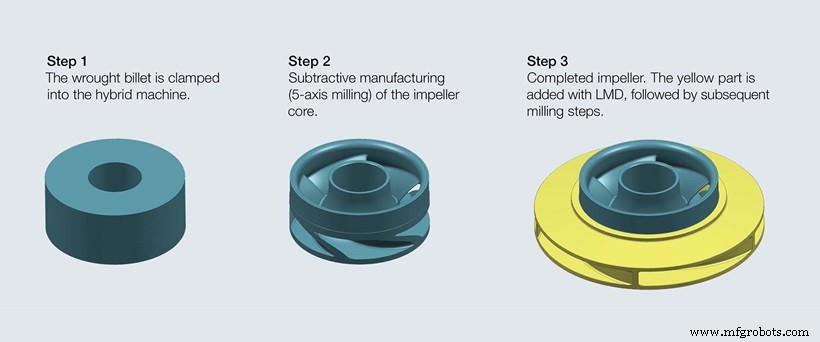
Sulzer combined metal 3D printing with machining to create closed impellers—a critical pump component that accelerates fluid to generate pressure.
Traditional casting of a closed impeller can produce surface defects and take up to 35 days. Sulzer’s hybrid process—5‑axis milling of a wrought billet followed by Laser Metal Deposition (LMD)—produces a complete part in roughly 48 hours.
Design flexibility
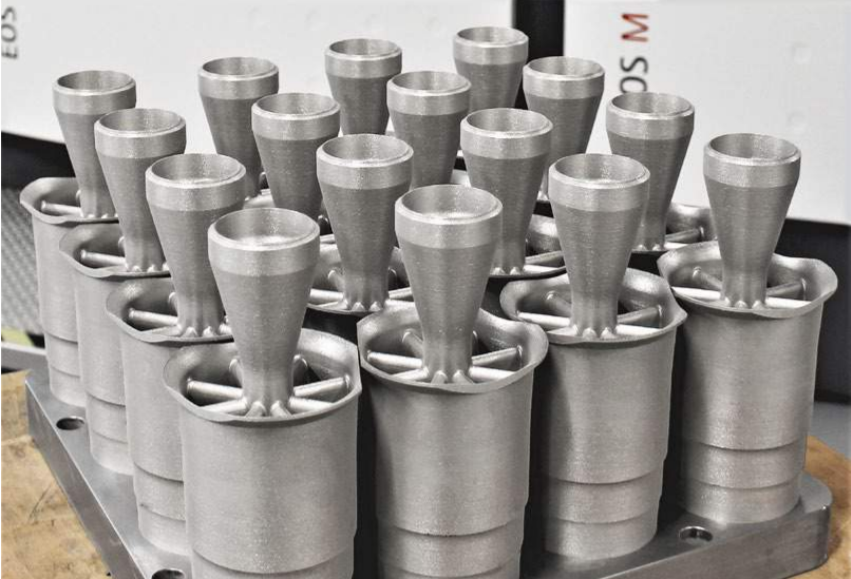
3D printing enables component consolidation, reducing assembly steps and boosting strength. Siemens re‑engineered a gas‑turbine fuel swirler from ten cast and machined pieces into a single additive‑manufactured part.
The redesigned swirler—made from a solution‑strengthened Inconel alloy—fits into a single EOS M 400‑4 quad‑laser powder‑bed fusion build that produces 16 units per run in up to 100 hours.
Quicker repair
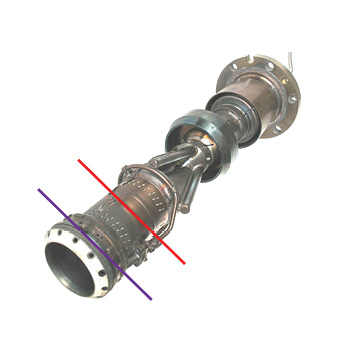
Selective Laser Melting (SLM) and LMD also streamline repair of worn parts. Siemens pioneered an SLM burner‑tip repair that trims only the damaged zone and rebuilds the tip layer by layer.
The process reduces repair time by 90%, and since 2013 Siemens has repaired over 2,000 burners. Siemens also employs LMD to replace blades and vanes, eliminating traditional welding.
3D printing – the future of turbomachinery?
Additive manufacturing accelerates product development, enhances component performance, and shortens repair cycles. The next frontier lies in integrated sensors: Optomec has printed strain sensors directly onto turbine blades with its Aerosol Jet technology, enabling real‑time structural monitoring.
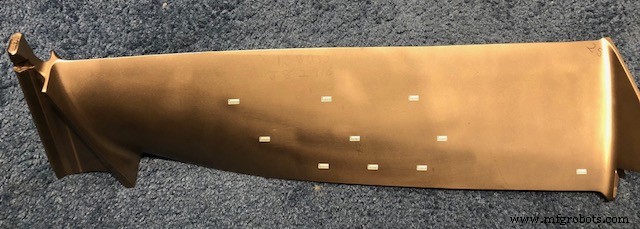
GE, Oak Ridge National Laboratory, and Xerox‑owned PARC have secured $1.3 million to cut the design‑and‑validation timeline for 3D‑printed turbine components by up to 65%. The goal is a defect‑free, high‑performance, multi‑functional part that withstands extreme temperatures and stresses.
Although 3D printing for turbomachinery is still emerging, its momentum is undeniable. As manufacturers chase durability and efficiency, additive manufacturing will become integral to future turbine designs.
3D printing
- Revolutionizing Bone Implants: How 3D Printing Enhances Fit, Longevity, and Performance
- Application Spotlight: 3D Printing Transforms Bike Manufacturing
- Application Spotlight: 3D Printing Revolutionizes Bearing Design and Production
- 3D Printing Revolutionizes Heat Exchangers: Lighter, Smarter, Faster
- Revolutionizing Footwear: 3D Printing Drives Innovation, Customization, and Faster Time to Market
- 3D‑Printed Eyewear: From Prototyping to Customization—Industry Trends & Case Studies
- 3D‑Printed Brackets: Optimizing Strength, Weight, and Production Efficiency
- How 3D Printing Is Revolutionizing Aircraft Cabin Interiors
- Revolutionizing Robotic Grippers with 3D Printing: Insights and Industry Successes
- How 3D Printing Is Revolutionizing the Automotive Industry