



3D Printing Software: Driving Reliable Digital Production
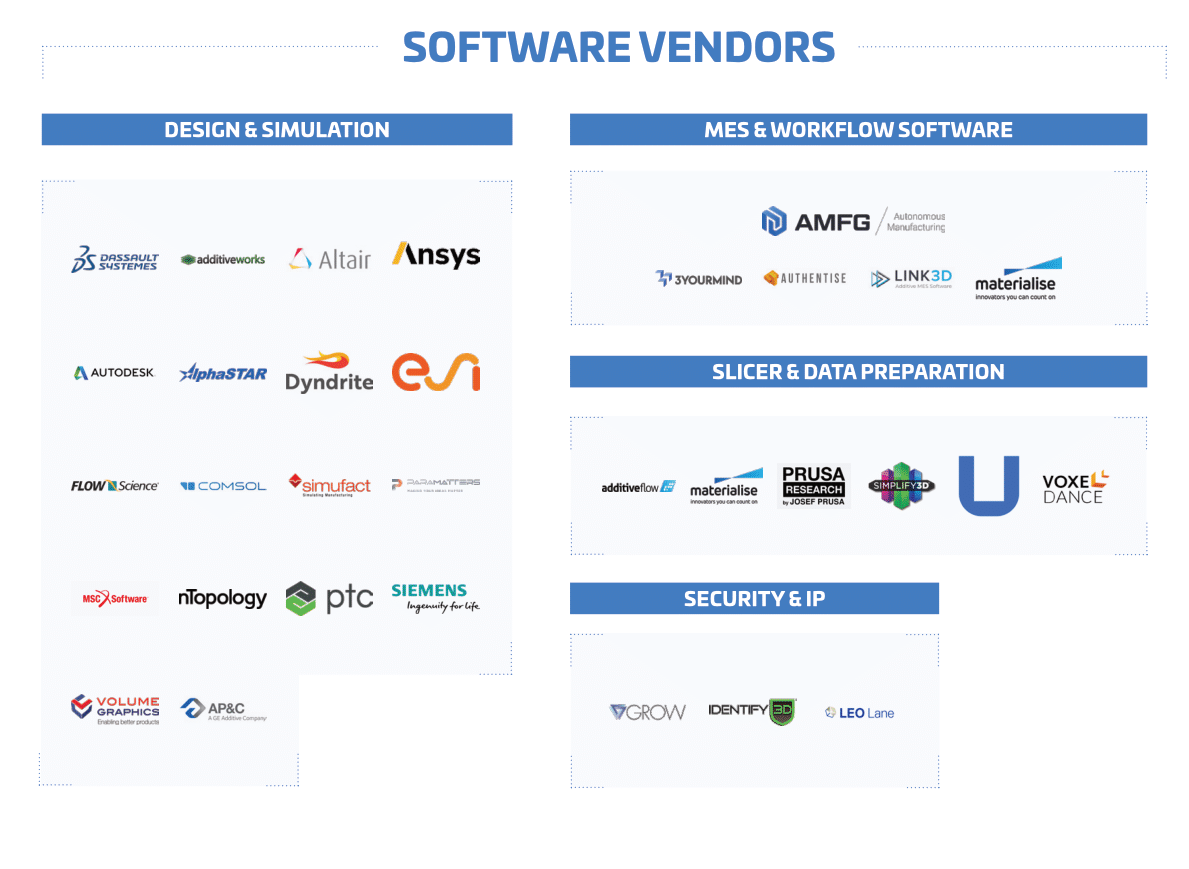
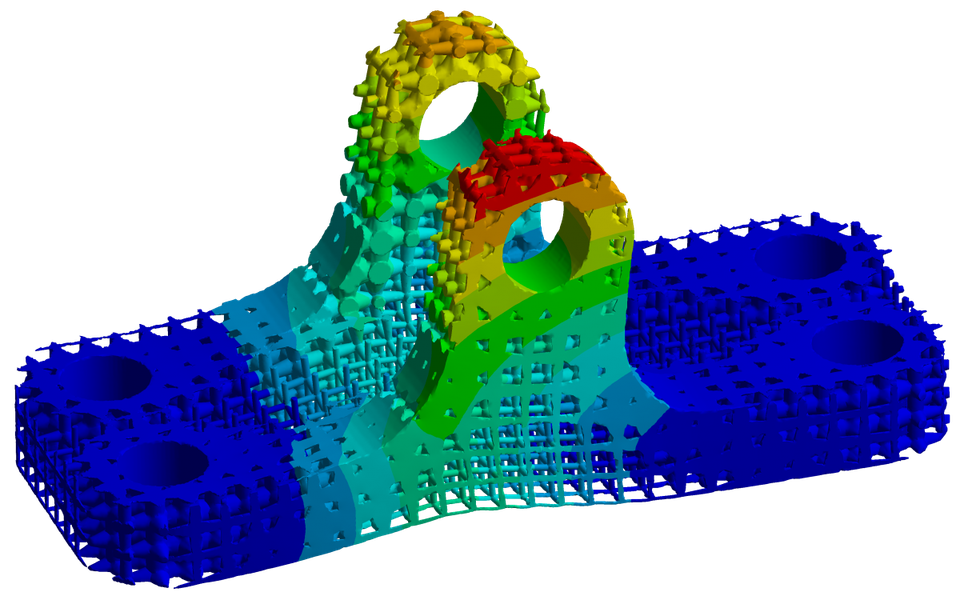
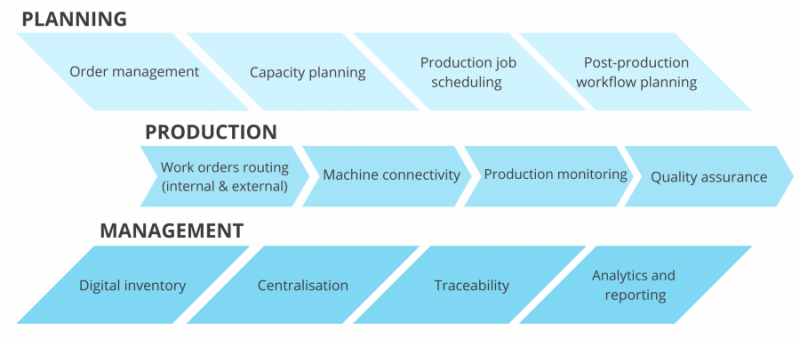
The capabilities of 3D printing software are growing, as the industry continues to mature. Historically, the 3D printing software segment has lagged behind hardware and materials. Recent breakthroughs, however, are closing that gap, enabling faster, higher‑quality production and more efficient workflow management. Software is the linchpin of viable 3D‑printing production. Below we examine the innovations driving this shift. Explore related articles: Until recently, standard CAD tools were not optimised for the unique design rules of additive manufacturing (AM). AM unlocks unprecedented design freedom, but it also demands a distinct mindset—Design for AM (DfAM)—to reduce material, weight, and to exploit complex geometries. Leading vendors—Autodesk, Altair, Dassault Systems, and PTC—have responded by embedding AM‑specific capabilities into their flagship CAD suites. Autodesk’s Netfabb, part of a major AM investment, lets engineers import, analyse, repair, and automatically generate support structures from any CAD format, then optimise models for production. PTC’s Creo 6.0 now includes native support for lightweight features such as stochastic foam, conformal lattices, and custom latticework. It also evaluates build orientation and support design, saving time on both fabrication and post‑processing. nTopology’s nTop Platform blends CAD, simulation, and CAM to tackle geometry‑heavy challenges. Engineers can perform topology optimisation across multiple loading conditions—stress, displacement, stiffness, weight—while the software directly slices parts, eliminating fragile STL files and outputting machine‑ready data. Hexagon, through its MSC Software division, integrated German topology‑optimisation firm AMendate into MSC Apex Generative Design. The result is a rapid, automated design flow that delivers an AM‑ready part in hours, boosting productivity by up to 80 % versus legacy tools. STL remains the most common file format for 3D printing, yet it discards colour, texture, and design metadata, and its file size can explode with complex models. 3MF, developed by the 3MF Consortium, preserves full design fidelity and is extensible for emerging technologies. Simulation tools are essential for eliminating the trial‑and‑error cycle in AM. By modelling material behaviour during build, they reveal optimal part orientation, support strategies, and heat‑management, thereby improving first‑time‑right rates. Metal AM dominates the simulation landscape because of its complex physics—laser path, powder behaviour, support design. Leading players—ANSYS, Siemens, Additive Works—offer robust solutions. ANSYS Additive Prep, part of the Additive Suite, now generates heat maps to predict build‑time distortions, supports orientation optimisation, and can export directly to the machine, eliminating the need for an STL intermediate. Altair’s Inspire Print3D targets Selective Laser Melting, providing integrated support generation, thermo‑mechanical simulation, and validation of AM‑ready files. In the polymer domain, MSC’s e‑Xstream Digimat‑AM predicts warpage, delamination, and supports multi‑material designs. The latest Digimat 2019.0 adds fibre‑reinforced material models from DSM, Solvay, and Stratasys. Future trends will pair simulation with real‑time monitoring to confirm predicted outcomes against live build data, further raising print reliability. As AM moves from prototyping to mass production, companies need software that manages order intake, scheduling, post‑processing, and traceability. Dedicated AM MES solutions are emerging to fill this gap. MES platforms streamline machine utilisation, automate workflows, and provide end‑to‑end visibility. Few vendors offer fully customisable, AM‑specific MES systems, making them a premium offering. Integrating printers from EOS, HP, and others on a single platform—exemplified by AMFG’s MES—enables seamless data exchange, traceability, and scalability essential for industrialisation. Advanced MES solutions may also heal STL files, prepare models, and incorporate QA management, allowing users to compare printed parts against documentation and enforce quality standards. Because AM workflows generate vast amounts of data, embedding AI algorithms can surface bottlenecks, suggest process improvements, and elevate overall productivity. Traditional QA—destructive testing or CT scanning—are costly, slow, and wasteful. In‑process monitoring, which combines sensors, cameras, and analytics, offers a more efficient alternative. Sigma Labs’ PrintRite3D® suite—INSPECT, CONTOUR, and ANALYTICS—measures melt‑pool dynamics, detects anomalies, and delivers actionable insights. It remains one of the few third‑party QA solutions for metal AM. Manufacturers such as EOS (EOSTATE MeltPool) and VELO3D (Assure) are also integrating QA tools, yet the overall market penetration is still limited. As demand for rapid, reliable part validation grows, we expect a proliferation of QA software that reduces variation and accelerates production cycles. Historically, software development for AM lagged behind hardware. Recent years, however, have seen a surge in innovative CAD, simulation, MES, and QA tools, all designed to make AM a true digital manufacturing platform. The momentum is set to accelerate, positioning AM software as a cornerstone of future production ecosystems.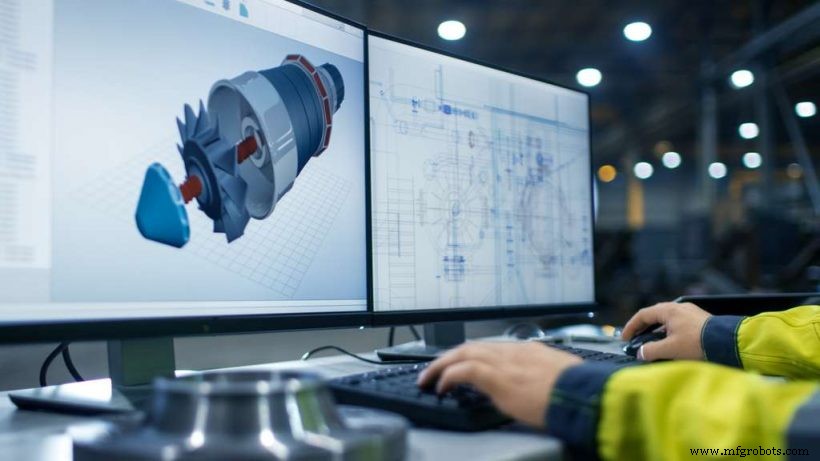
Design & CAD Software: Tailored for Additive Manufacturing
Advanced Design Platforms
Beyond STL: The Rise of 3MF
Simulation Software: Predicting and Preventing Failures
Additive Manufacturing Execution Systems (MES): Scaling Production
Machine Connectivity
Quality Assurance Software: From In‑Process Monitoring to Digital Certification
AM Software: A Fast‑Maturing Landscape
3D printing
- Revolutionizing Interior Design: How 3D Printing Brings Spaces to Life
- 4 Key Design Principles for Successful 3D Printing
- Software That Solves Four Major Additive Manufacturing Hurdles
- AMendate’s CEO Thomas Reiher on Revolutionizing 3D Printing with Automated Topology Optimization
- 5 Emerging Trends Shaping 3D Printing Software
- Altair’s Ravi Kunju Discusses Simulation-Driven Design & the New Inspire Print3D for 3D Printing
- How 3D Printing and Software Drive Digital Transformation in Manufacturing
- ZBrush for 3D Printing: Unlocking Design Potential
- Choosing the Right 3D Printing Software: A Comprehensive Guide
- Optimize Your Polyjet 3D Prints: Design Guidelines for Precision & Multi-Material Success