



Bioprinting Explained: How 3D Printing Creates Living Tissues & Future Organs
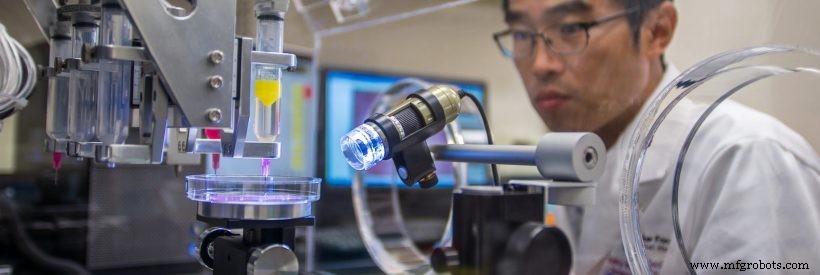
For years the idea of printing living tissues with 3D printers has captivated scientists and the media alike. Bioprinting— the use of additive manufacturing to build functional biological structures— is the cutting‑edge technology that could transform medical research and transplantation.
Unlike conventional 3D printing, which deposits plastic or metal powders, bioprinting layers living cells. The result is tissue that can be cultured, tested, or even transplanted. In the long run, the technology promises organs printed from a patient’s own cells, dramatically reducing rejection risk.
Bioprinting follows the same layer‑by‑layer logic as other 3D printers, but the materials and processes differ significantly because they involve living biology. Below we break down the core steps and key players in the field.
How Does It Work?
Every bioprinting project starts with a 3D model of the target structure. This model is derived from a patient’s CT or MRI scan, or designed from scratch in CAD software. The model is then translated into a printable format that defines the tissue architecture.
Next, the appropriate cells are harvested—ideally from the patient’s own tissue—to maintain compatibility. These cells are suspended in a specialized, oxygen‑rich medium known as a bioink. Bioinks can vary in viscosity and composition, allowing different cell types to be printed together.
Because living cells need a scaffold to grow, bioprinters often use multi‑material heads. The scaffold, typically a collagen or gelatin‑based bioink, provides structural support while the cells differentiate and mature.
Several printing technologies are employed: inkjet‑style nozzles for high‑resolution deposition, extrusion systems for robust constructs, and stereolithography for precise geometry. Regardless of the method, the printer builds the tissue layer by layer until the entire 3D model is complete.
After printing, the construct requires post‑processing to promote cell–cell integration. Mechanical or chemical cues, often delivered through a bioreactor, stimulate remodeling and vascularization— the growth of blood vessels— essential for functional tissue.
For a concise visual walkthrough, watch the accompanying video below.
Pioneers & Industry Leaders
The first functional bioprinter was unveiled by Professor Makoto Nakamura of the University of Toyama, who printed a tubular structure resembling a blood vessel using a modified Epson inkjet printer. Nakamura’s work laid the foundation for modern bioprinting research.
Organovo, in partnership with Invetech, commercialized the NovoGen MMX— a multi‑head bioprinter that separately deposits cardiac cells, endothelial cells, and a collagen scaffold to build complex tissues.
The U.S. military has also invested heavily, establishing the Armed Forces Institute of Regenerative Medicine (AFIRM) in 2008 to explore battlefield applications for injured soldiers.
In Germany, the Fraunhofer Institute is advancing whole‑organ printing and collaborating with the ArtiVasc 3D project to fabricate vascularized tissues that mimic natural blood supply.
Swedish company Cellink leads in bioink development, offering a broad catalog of proprietary inks and the printers that use them.
What’s Next?
Bioprinting’s journey mirrors the early stages of additive manufacturing: incremental successes in niche applications pave the way for broader adoption. As the technology matures, standardised processes, regulatory frameworks, and scalable production will unlock its full potential in clinical and research settings.
While the path forward is complex, the promise of custom, patient‑specific organs and reduced animal testing is a powerful incentive for continued investment and innovation.
3D printing
- Multi‑Material 3D Printing: Unlocking Complex Designs & Faster Production
- Robocasting 3D Printing: Process, Differences, and Key Advantages
- Understanding Ringing (Ghosting) in 3D Printing and How to Eliminate It
- What Is a 3D Printing Marketplace? A Complete Guide to Buying and Selling 3D Models
- 4D Printing Explained: The Future of Adaptive, Time‑Responsive Manufacturing
- The Fundamentals of 3D Printing: Process, Applications, and Benefits
- Understanding SLA 3D Printing: Process, Benefits, and Applications
- Understanding SLS 3D Printing: How Selective Laser Sintering Creates Durable Parts
- Demystifying 3D Printing: A Clear Guide for Innovators
- Understanding Resin 3D Printing: Process, Applications, and Benefits