



The Fundamentals of 3D Printing: Process, Applications, and Benefits
Three-Dimensional printing is a fairly new process with many different applications. Many manufacturers have invested in 3D printers because they understand their value and the wide variety of products 3D printers enable manufacturers to create. If you're curious about 3D printers, here is a breakdown of the 3D printing process and its advantages.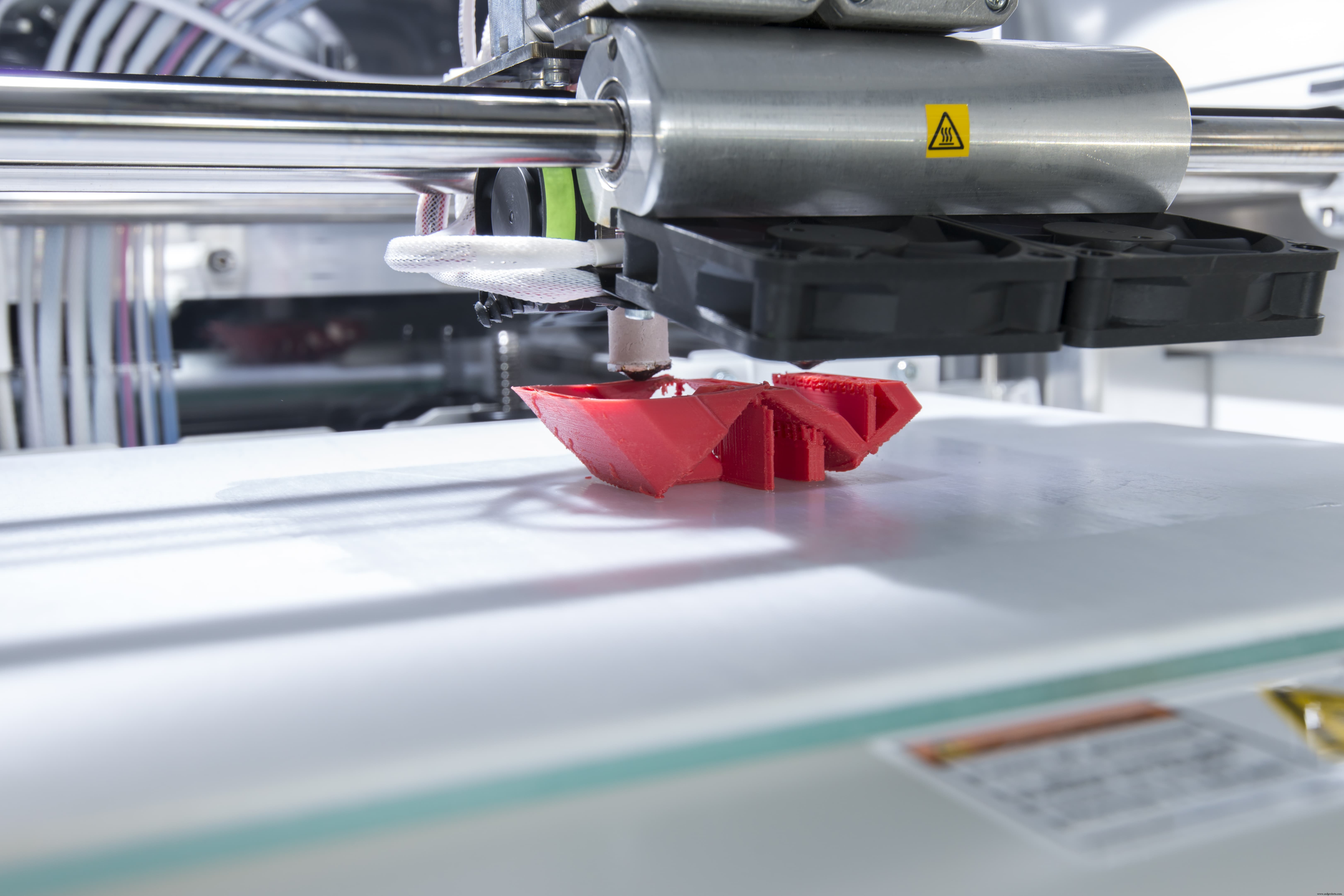
What is 3D Printing?
Simply put, 3D printing is the process of creating three-dimensional solid objects from a digital file using additive processes. An additive process creates an object by laying down successive layers of material until the object is created. Each individual layer appears as a thinly sliced horizontal cross-section of the object. Additive processes are the opposite of subtractive manufacturing, which involves cutting out or hollowing a piece of metal or plastic, such as the operation of a milling machine.
Advantages
3D printing has many advantages over other means of manufacturing. 3D printers allow you to produce complex functional shapes using less material than traditional manufacturing. It will shorten production times, as the product can start being printed the same day it's designed. It will also save money, as less tools and parts are needed for creation. Prototype creation is simple and inexpensive with 3D printers, making failed designs easy to discard. 3D printed objects are also very easy to personalize, unlike mass-produced objects that do not have room for slight alterations.
Applications
There are many different applications for 3D printers. They are an efficient tool to create objects made of all different materials that can be used in a variety of industries. Some of the main applications of 3D printers include:
-Rapid Prototyping
-Mass Customization
-Medical Devices and Bio-Printing
-Industrial Art and Jewelery
-Construction
-Maritime
-Space/Aeronautics
-Computers and Robotics
-Education and Research
How Steel Fabrication Drives the Green Energy Revolution
Avoid These Common Design Pitfalls for Efficient Manufacturing
Industrial Technology
- Multi‑Material 3D Printing: Unlocking Complex Designs & Faster Production
- Robocasting 3D Printing: Process, Differences, and Key Advantages
- Understanding Ringing (Ghosting) in 3D Printing and How to Eliminate It
- What Is a 3D Printing Marketplace? A Complete Guide to Buying and Selling 3D Models
- Bioprinting Explained: How 3D Printing Creates Living Tissues & Future Organs
- 4D Printing Explained: The Future of Adaptive, Time‑Responsive Manufacturing
- Understanding SLA 3D Printing: Process, Benefits, and Applications
- Understanding SLS 3D Printing: How Selective Laser Sintering Creates Durable Parts
- Demystifying 3D Printing: A Clear Guide for Innovators
- Understanding Resin 3D Printing: Process, Applications, and Benefits