



4D Printing Explained: The Future of Adaptive, Time‑Responsive Manufacturing
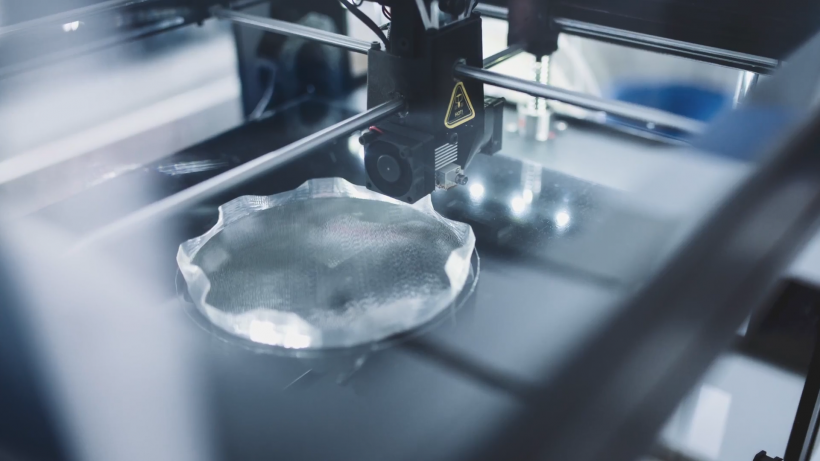
Imagine shoes that automatically adjust to your foot shape or a medical implant that adapts precisely to a patient’s anatomy when triggered by a stimulus. These scenarios are becoming reality thanks to 4D printing, a rapidly evolving field that combines additive manufacturing with smart materials and sophisticated software.
Gartner projects a $300 million investment in 4D printing by 2023, underscoring industry confidence even as the technology remains largely in the research phase.
In this article we examine how 4D printing works, its key differences from conventional 3D printing, the materials that enable it, and the transformative applications already under development.
What is 4D printing?
4D printing gives 3D‑printed objects the capacity to change shape over time. The added “fourth dimension” is time, allowing parts to morph in response to external stimuli once the print is complete.
At its core, the process layers material just like 3D printing, but the materials themselves are engineered to react predictably to triggers such as temperature, light, moisture, magnetic fields, or chemical environments. When activated, these smart materials fold, unfold, expand or contract according to a pre‑programmed sequence.
How does 4D printing differ from 3D printing?
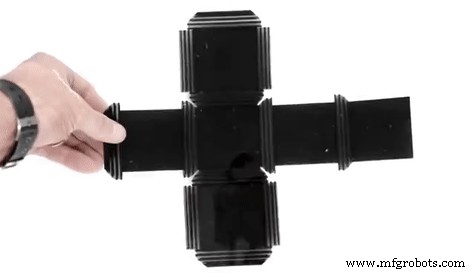
While both technologies deposit material layer by layer, 4D printing adds a time‑dependent dimension. 3D‑printed parts retain a fixed geometry, whereas 4D‑printed parts can transform after fabrication, guided by embedded geometric “codes” that encode movement instructions.
How does 4D printing work?
The first step is selecting a stimulus‑responsive material. Engineers then design a CAD model that incorporates variable material structures tailored to react in specific regions. The model is printed using a 3D printer capable of multi‑material deposition.
After printing, the embedded geometric code directs each region to respond to its designated stimulus, enabling controlled, programmable shape changes.
Suitable 3D‑printing technologies include:
- Stereolithography (SLA)
- Fused Filament Fabrication (FFF)
- Material Jetting
- Selective Laser Melting (SLM)
Material Jetting is especially powerful, allowing precise multi‑material layering that creates complex, responsive structures.
Which materials can be 4D printed?
Smart materials are the cornerstone of 4D printing. While the portfolio is still expanding, key candidates include:
Hydrogels
Hydrophilic polymer networks that retain large water volumes. They can be UV‑curable and programmed to reshape with temperature changes, making them ideal for biomedical devices, soft robotics, and flexible electronics. Rutgers University researchers recently demonstrated a hydrogel that morphs into living tissue structures when heated.
Shape‑Memory Polymers (SMPs)
Polymers that recover a permanent shape after deformation when exposed to a trigger (heat, light, etc.). SMPs are already used in aerospace actuators, soft robots, and medical stents.
Shape‑Memory Alloys (SMAs)
Metals such as NiTi that return to a pre‑set shape under temperature or stress, offering potential in aerospace, civil engineering, and implantable devices.
Ceramics
A hybrid ceramic‑polymer ink can produce 3D‑printed precursors that stretch up to three times their original length. Applications range from electronic packaging to aerospace components.
Exciting applications of 4D printing
Aerospace
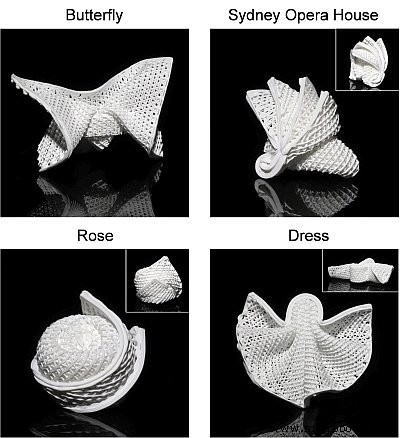
Smart materials can create self‑deploying structures that adapt to temperature, pressure, or aerodynamic conditions. Airbus and MIT’s Self‑Assembly Lab have prototyped an air inlet that adjusts airflow to optimize engine cooling. Georgia Tech used SMPs to 3D‑print foldable strut arrays that could serve as deployable antennas or soft robotic actuators.
Defense
Potential uses include adaptive camouflage fabrics, gas‑proof coatings, and self‑assembling shelters or bridges that deploy on demand, reducing logistics burdens in the field.
Medical
From magnetically guided gastrointestinal probes to injectable hydrogels that reshape into grafts, 4D printing promises minimally invasive, on‑demand solutions. MIT researchers developed a magnetic micro‑particle ink that allows remotely controlled navigation inside the body.
Automotive
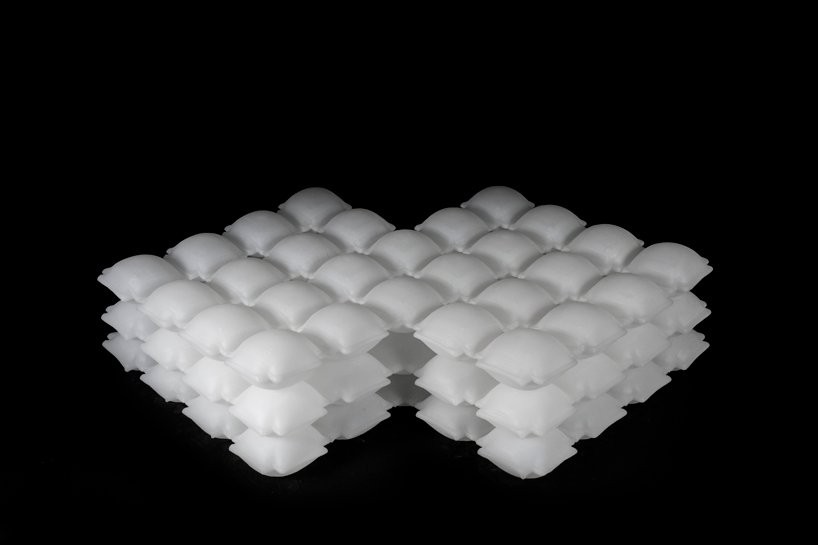
BMW’s collaboration with MIT produced an inflatable silicone structure that responds to pressure changes, suggesting future applications in adaptive seating, airbags, or aerodynamics.
Consumer goods
Flat‑pack furniture could self‑assemble when activated, eliminating manual assembly and reducing shipping volume. Similar concepts could extend to packaging, footwear, and electronics.
4D Printing: The Next Big Thing?
While the promise of programmable, time‑responsive manufacturing is immense, most applications remain in laboratory or prototype stages. Commercial viability will likely take several more years, possibly a decade, as materials, printing fidelity, and cost structures mature.
Nonetheless, as additive manufacturing evolves, 4D printing could become the next disruptive technology, reshaping how we design, fabricate, and use products across industries.
3D printing
- Multi‑Material 3D Printing: Unlocking Complex Designs & Faster Production
- Robocasting 3D Printing: Process, Differences, and Key Advantages
- Understanding Ringing (Ghosting) in 3D Printing and How to Eliminate It
- What Is a 3D Printing Marketplace? A Complete Guide to Buying and Selling 3D Models
- Bioprinting Explained: How 3D Printing Creates Living Tissues & Future Organs
- The Fundamentals of 3D Printing: Process, Applications, and Benefits
- Understanding SLA 3D Printing: Process, Benefits, and Applications
- Understanding SLS 3D Printing: How Selective Laser Sintering Creates Durable Parts
- Demystifying 3D Printing: A Clear Guide for Innovators
- Understanding Resin 3D Printing: Process, Applications, and Benefits