



Inside Nexa3D: How LSPc Technology Accelerates Industrial SLA 3D Printing

Industrial 3D printing is moving at breakneck speed, but the challenge remains: how to deliver parts that meet injection‑moulding tolerances in a fraction of the time. Nexa3D answers that question with its proprietary Lubricant Sublayer Photo‑curing (LSPc) technology.

During a recent interview, Chief Product Officer Izhar Medalsy explained how LSPc transforms the SLA process, the markets that stand to benefit, and the future of additive manufacturing.
What problem is Nexa3D solving?
Nexa3D tackles three core challenges: speed, scale and economics. “We saw a gap for fast, large‑scale industrial printers,” says Medalsy. “Our goal is to bring the time‑to‑print from days or hours down to minutes.”
With a build platform that is 2.5× larger than any competitor and six times faster in its class, Nexa3D’s printers can populate dozens or even hundreds of parts in a single run. That performance, combined with a competitive price point, positions the company as a serious alternative to traditional injection moulding.
How does LSPc work?
LSPc features a self‑lubricated, flexible membrane that eliminates the delamination forces that traditionally limit SLA speed. In conventional SLA, each layer is fragile and can peel under the forces needed to lift the build plate. The membrane allows resin to flow uniformly across the platform, enabling the printer to add layers at high speed without compromising part integrity.
How does Nexa3D guarantee speed and accuracy?
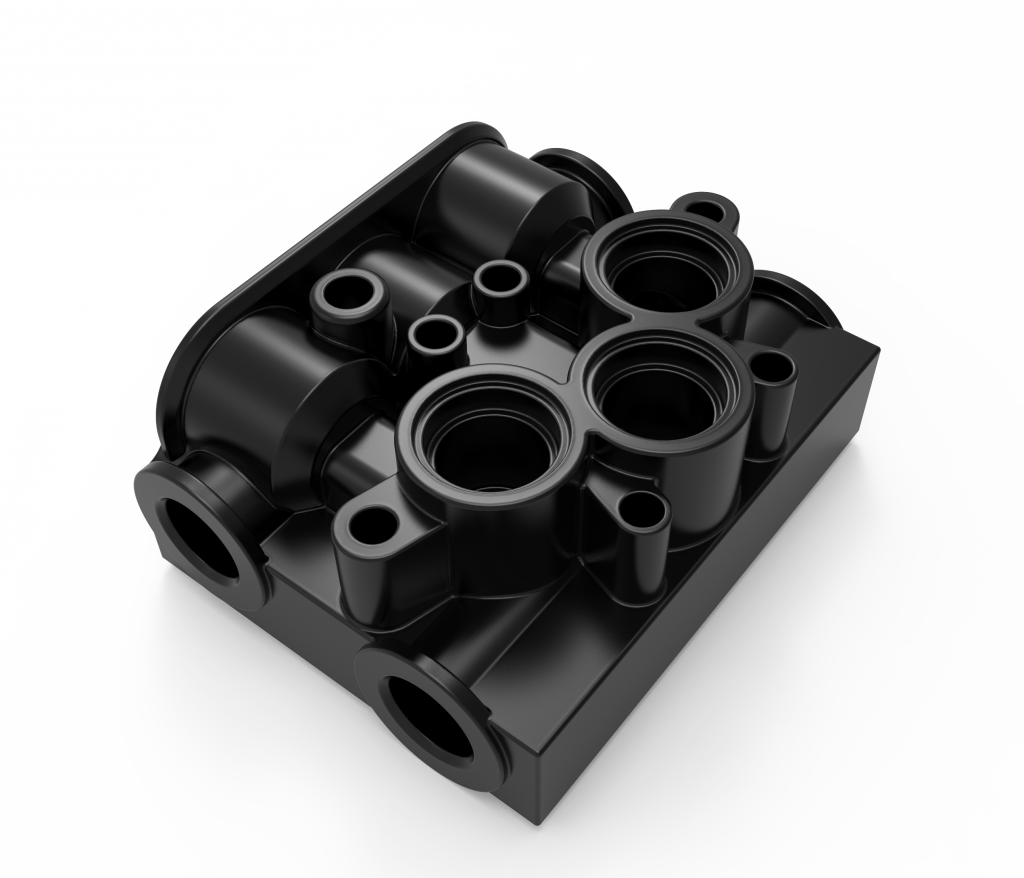
Beyond LSPc, Nexa3D uses a structured‑light light engine based on LCD technology, rather than the typical DLP projector. This approach delivers uniform illumination and pixel resolution across the entire build area, eliminating edge aberrations and ensuring consistent tolerances from part to part.
Why focus on SLA?
While laser‑based SLA offers unmatched resolution, its print times are prohibitive. Other “fast” SLA systems compromise on part quality or post‑processing. LSPc bridges that gap, delivering the speed of rapid‑prototyping printers with the accuracy of premium SLA machines.
Which industries benefit most?
Rapid prototyping is an obvious use case, enabling multiple design iterations in a single day instead of weeks. Automotive is a key sector: Nexa3D partners with Tier‑1 supplier Techniplas to provide high‑speed, high‑accuracy parts for both prototyping and low‑volume production.
Automotive also needs weight reduction. With topological optimisation and generative design, 3D printing can create lightweight, complex parts that conventional moulding cannot produce. Additionally, 3D printing supports rapid iteration across hundreds of thousands of units, reducing the cost of creating and changing moulds.
What’s next for additive manufacturing?
Speed will continue to drive adoption. In the dental field, for example, the current 5‑8% adoption is expected to reach 80% in five years. Footwear and other industries are similarly expanding. Integration with AI, virtual reality and automation will further cut production times and broaden application horizons.
“We’re on the cusp of a trillion‑dollar shift,” Medalsy says. “Additive manufacturing will replace many traditional manufacturing steps across the supply chain.”
How should a company start with 3D printing?
First, define the need. 3D printing is a tool that complements existing processes, not a wholesale replacement. For firms with limited internal talent or capital, the best approach is to experiment with a single machine, compare iteration times, and integrate the printer into the workflow where it adds measurable value.
Key specs of the NXE400
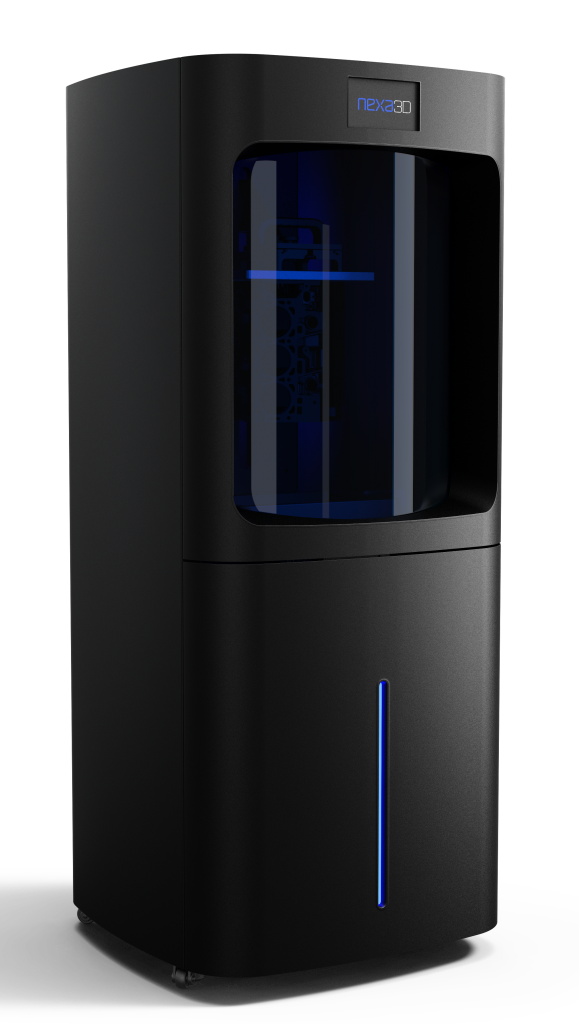
The NXE400 is Nexa3D’s flagship printer. It offers a 16‑litre build volume, a 270 × 165 mm build plate, and injection‑moulding‑level tolerances. Printing speed reaches up to 1 cm per minute—six times faster than the industry average. The front‑end interface monitors print progress and membrane health. Automatic resin replenishment eliminates mid‑run resin top‑ups, while a robotic arm can move the build plate to integrated washing and curing stations, fully automating the end‑to‑end workflow.
Software features voxel‑based orientation and support placement, leveraging machine‑learning algorithms that consider the part’s physical properties. Nexa3D also collaborates with BEGO to develop FDA‑approved dental resins, combining high resolution with record‑fast production.
Future directions
Next‑generation printers will push print times even further, expand build volumes, and introduce new materials with enhanced UV and temperature resistance. Nexa3D is also investing in user‑friendly software—“CTRL + P” style tools that let anyone upload a file and let the machine handle the rest.
Early access programs will launch later this year, with full commercial shipping slated for the second half of 2019.
Final thoughts
“The future of 3D printing is bright,” Medalsy says. “We’re confident that our technology will not only accelerate production but also transform how products are designed and manufactured.”
About Izhar Medalsy
Dr. Izhar D. Medalsy is Chief Product Officer at Nexa3D, bringing a PhD in Physical Chemistry from the Hebrew University of Jerusalem and post‑doctoral research in biophysics at ETH Zurich. He previously led product and business development at Wyatt Technology, the world leader in light‑scattering technology.
To learn more about Nexa3D, visit: https://nexa3d.com
3D printing
- Inside 3D Printing: Professor Neil Hopkinson on Innovation, Scale, and the Future
- Interview with Philip Cotton, Founder of 3Dfilemarket.com, UK 3D Printing Education Expert
- Dr. Alvaro Goyanes of FabRx on 3D‑Printed Medicines: From Innovation to Personalised Care
- Nanoe CEO Guillaume de Calan Discusses the Future of Ceramic 3D Printing
- John Kawola on Ultimaker’s Transition to Enterprise 3D Printing
- Understanding SLA 3D Printing: Process, Benefits, and Applications
- The Real Speed of 3D Printing: From Minutes to Hours
- PolyJet 3D Printing Explained: How It Differs from FDM and SLA
- Can 3D Printers Print Silicone? Learn How
- Resin 3D Printers: SLA, DLP, and LED‑LCD Explained