



Mastering Selective Laser Sintering: From Fundamentals to Real‑World Applications
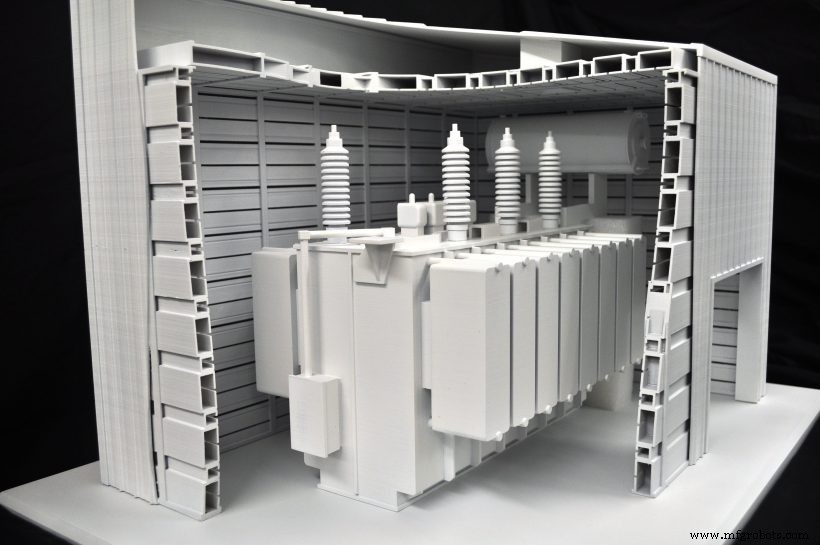
Since its introduction in the mid‑1980s, Selective Laser Sintering (SLS) has established itself as one of the most reliable and versatile additive‑manufacturing technologies. Its ability to produce lightweight, high‑strength parts in a matter of hours makes it a favorite for everything from rapid prototyping to low‑volume production.
In this guide we’ll explain how SLS works, highlight its most common applications, and share practical tips for optimizing your prints. Download our free SLS white paper for deeper insights into process tuning and quality control.
How SLS Works
Selective Laser Sintering builds parts layer by layer by fusing powdered material with a high‑power laser. The typical workflow is:
- Preheat the powder bed to a temperature just below the material’s melting point.
- The laser traces the cross‑section of the model, fusing powder particles into a solid layer.
- After the layer is complete, the build platform lowers and a fresh layer of powder is spread over the previous one.
- The cycle repeats until the part is fully formed.
- Once cooling is complete, the part is removed from the powder and cleaned; optional finishing steps can then be applied.
Why Choose SLS?
One of SLS’s biggest advantages is that it does not require support structures—unsintered powder surrounds and supports the part during printing. This makes it ideal for:
- Complex geometries and lattice structures
- Large parts that would be difficult to print with other methods
- Rapid production of multiple parts in a single build, maximizing build‑volume efficiency
Parts fabricated with SLS exhibit excellent mechanical properties—high strength, good flexibility, and excellent thermal stability—making them suitable for durable plastic components, metal parts, and even sand‑core molds.
Unlike many other AM technologies, SLS supports a wide range of materials, from engineering polymers like nylon and polystyrene to metals such as steel, titanium, and composite alloys, as well as specialty sand mixtures.
Applications Across Industries
From its origins in rapid prototyping, SLS has evolved into a full‑spectrum production tool. Typical use cases include:
- Jigs, fixtures, and tooling
- Aerospace and automotive parts
- Medical devices—hearing aids, implants, prosthetics
- Machine components and end‑use parts
High‑profile adopters demonstrate the technology’s versatility. Emirates announced last year that SLS is used to manufacture cabin components for its aircraft, while Porsche uses the process to produce spare parts for its classic car lineup. In healthcare, the ability to print highly customized, biocompatible parts has opened new possibilities for patient‑specific implants and prosthetics.
Key Considerations and Best Practices
While SLS parts generally require minimal post‑processing, some users encounter surface roughness or porosity. Strategies to mitigate these issues include:
- Optimizing laser power and scan speed for the chosen material
- Using surface‑finish post‑processing such as bead blasting or resin coating when a smooth finish is required
- Designing internal ribbing or supports to counteract thermal distortion and reduce warping during cooling
By carefully tuning the build parameters and incorporating thoughtful design features, you can achieve consistent, high‑quality parts that fully leverage the strengths of SLS.
3D printing
- Selective Laser Sintering: How Powder and Laser Build Durable 3D Parts
- Selective Heat Sintering vs Laser Melting: Which 3D Printing Technology Delivers Superior Strength?
- Choosing the Right Plastic for 3D Printing: A Comprehensive Guide
- 3D Printing with Resins: A Comprehensive Guide to Technologies, Materials, and Applications
- In‑House Production: The Fuse 1 Builds Its Own Parts
- SLS vs MJF: Understanding the Key Differences in Powder Bed Fusion 3D Printing
- Selective Laser Sintering (SLS) 3D Printing Explained: Professional Insights
- Selective Laser Sintering (SLS): The Complete 3D Printing Guide
- Expert Design Tips for Optimizing Direct Metal Laser Sintering (DMLS) 3D Printing
- Selective Laser Sintering (SLS) 3D Printing: Expert Guide & Industry Insights