



Nylon 3D Printing: Expert Guide to Materials, Tech, and Applications
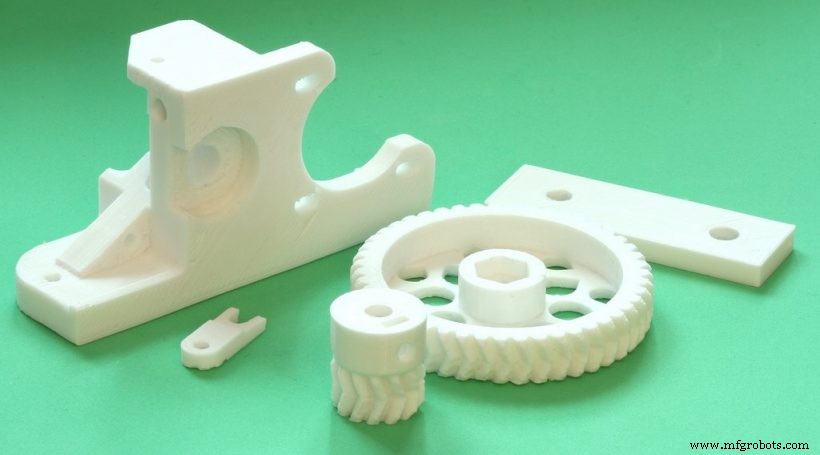
Nylon, or polyamide, is the industry’s most sought‑after 3D‑printing filament. Its abrasion resistance, toughness, and superior strength set it apart from common ABS and PLA. In this guide, we’ll explain why nylon excels, highlight the best printing technologies, and share practical tips for achieving flawless prints.
Why Choose Nylon for 3D Printing?
- High‑Performance Prototypes – Ideal for functional parts such as gears, tools, and snap‑fits. When reinforced with carbon or glass fibre, nylon becomes lightweight yet mechanically robust. For applications that demand stiffness, consider adding fibre reinforcement.
- Flexibility & Rigid‑to‑Thin‑Wall Ratio – Thin‑walled nylon prints remain flexible, while thicker walls offer rigidity. This property is perfect for living hinges and components that combine soft and hard sections.
- Excellent Surface Finish – Nylon typically produces a smooth finish, reducing the need for post‑processing.
- Complex Assemblies with Powder‑Bed Tech – SLS and MJF allow the creation of interlocking, moving parts in a single print, eliminating assembly steps and accelerating production.
- Colouring Flexibility – Nylon’s hygroscopic nature means it can be dyed after printing, enabling vibrant, custom finishes.
Choosing the Right Technology
Nylon is most effective with powder‑bed systems, but can also be used with FDM filaments. Each technology has its strengths:
Selective Laser Sintering (SLS)
Widely adopted for nylon, SLS works with PA11 and PA12. PA11 offers UV and impact resistance, while PA12 delivers higher strength and stiffness. Composite powders—glass, carbon, or aluminium reinforced—provide further performance gains. SLS remains the gold standard for industrial nylon parts.
Multi‑Jet Fusion (MJF)
HP’s MJF supports PA11, PA12, and high‑reusability glass‑filled PA12. Surplus powder (up to 70%) can be recycled without loss of part integrity, offering cost savings and sustainability.
Fused Deposition Modeling (FDM)
FDM can print nylon, but requires high nozzle temperatures (typically 240–260 °C) and a heated bed. Filaments such as Markforged’s Onyx—a nylon/micro‑carbon fibre blend—yield parts 1.4× stronger and stiffer than ABS. FDM is suitable for prototyping and low‑volume production when paired with a compatible printer.
Practical Tips for Nylon Printing
FDM Specifics
- Dry filaments at 70–80 °C for 4–6 h to eliminate moisture, which can cause weak layer adhesion and surface defects.
- Verify your printer’s maximum extruder temperature; many consumer FDM machines cannot reach the 240 °C required for nylon.
- Preheat the build plate to 80–100 °C to counter warping.
SLS & MJF Guidelines
- Maintain a minimum wall thickness of 1 mm. For living hinges, use 0.3 mm (SLS) or 0.5 mm (MJF).
- Avoid large, flat plates; the powder bed is prone to warping on such geometries.
- Include at least 0.5 mm clearance between interlocking features to prevent fused parts.
- Design escape holes for thick‑walled parts (≥20 mm) to facilitate powder removal and avoid deformation.
Real‑World Applications
- Automotive & Aerospace: Custom jigs, fixtures, interior panels, and low‑heat intake components. Metro Aerospace 3D‑printed glass‑filled nylon micro‑vanes reduce drag and achieve FAA approval.
- Medical: Prototyping anatomical models and production of lightweight, carbon‑reinforced prosthetic sockets (BASF Ultramid).
- Consumer Goods: Phone cases, eyewear, and even Chanel’s 3D‑printed mascara brushes (SLS).
Takeaway
Nylon offers unmatched strength, durability, and versatility for both functional prototypes and end‑use parts. While SLS dominates the market, MJF and improved FDM filaments are rapidly closing the gap. Stay informed about evolving materials and platforms—such as HP’s Open Platform—to keep your designs at the forefront of 3D‑printing technology.
3D printing
- Polylactic Acid (PLA) 3D Printing: A Comprehensive Guide for Professionals
- Why ABS is the Premier Thermoplastic for 3D Printing: Benefits, Limitations & Expert Tips
- Master Polymer 3D Printing: Latest Technologies, Innovations & Applications in 2021
- Warehouse Automation: A Comprehensive Guide to Boosting Efficiency
- Preventive Maintenance Demystified: A Complete Guide for Modern Organizations
- Injection Molding vs. 3D Printing: Choose the Right Production Method
- Simplify Custom Car Parts with 3D Printing: Your Comprehensive Guide
- Master 3D Printing with Gyroid Infill: A Comprehensive Guide
- Is 3D Printing Safe? Expert Guide to Avoiding Toxic Emissions
- Injection Molding vs. 3D Printing: Which Method Best Suits Your Project