



Injection Molding vs. 3D Printing: Choose the Right Production Method
Today’s companies have more options than ever to manufacture parts from almost any materials. And when it comes to producing parts from plastics, most end up opting for either injection molding and 3D printing.
While the 3D printing option is generally more well-known because of its availability to even consumer-level users, the injection molding market is much larger as of today. It’s worth almost 260 billion dollars and dwarfs the market size of 3D printing, which is just 16 million in 2020.
But in reality, these two processes aren’t necessarily competitors, as both of them fill their own valuable niches and have unique advantages in certain situations. Although both can sometimes produce similar results, the process that they use for manufacturing is quite different.
So, to help you better understand how both of them work, their most common applications, as well as the advantages and disadvantages that they offer, let’s dig deep into everything you need to know about injection molding vs. 3D printing.
The Basic Principles
Before we can start breaking down the differences in injection molding vs. 3D printing, we must first understand the basic principles behind each of these processes.
And unsurprisingly, since both primarily deal with plastic, there are quite a few similarities as well.
For instance, both are very accurate and can take even intricate designs and produce flawless parts. That means that they can be used in industries like aerospace and medicine, where even the slightest error is not allowed.
What’s more, both are excellent if you need to produce and test out various prototypes of parts at a lower cost, which is essential as you are refining your products or testing their capabilities.
In the end, both can produce a similar result and even have overlapping functionality. Still, the way that they get there is where you will find the biggest differences.
So let’s explore the basic principles of both.
Injection Molding
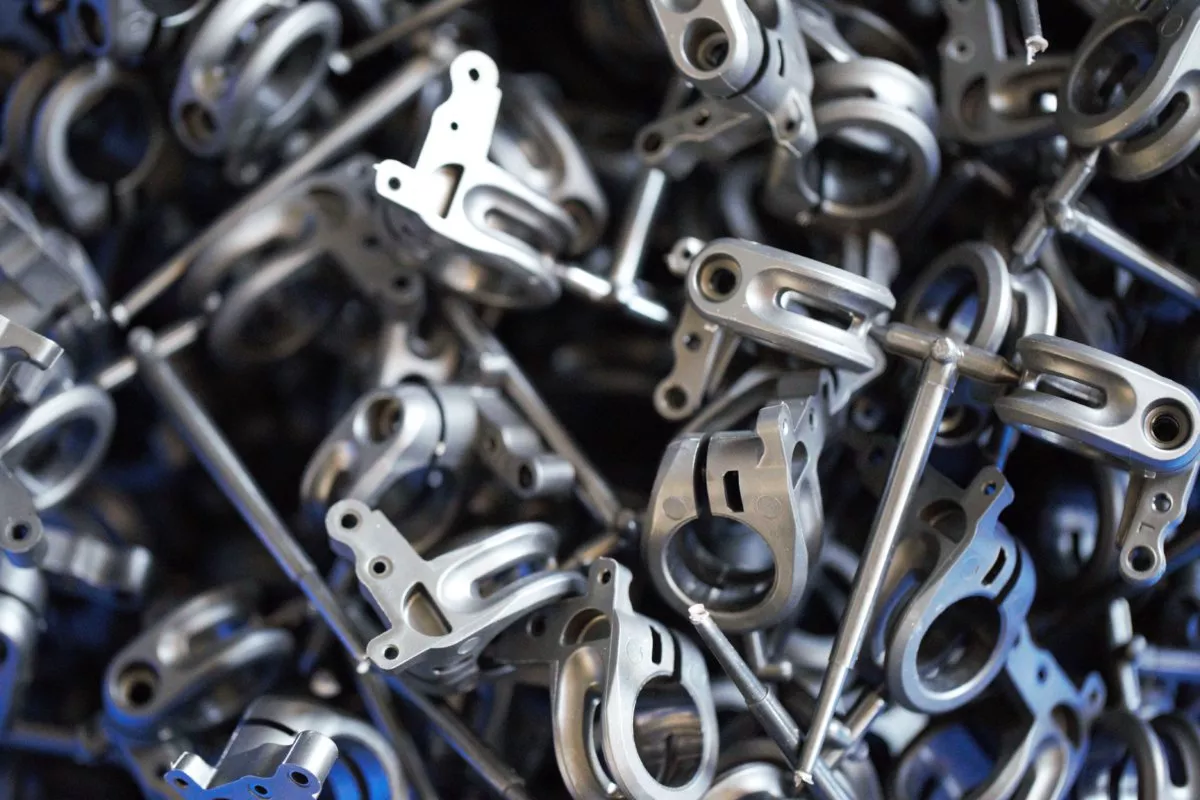
As you might guess from the name, injection molding uses molds to create complex shapes from plastic materials.
The necessary plastic materials are mixed in a barrel, where they are melted into liquid form. Then, they are injected into the mold, with pressure forcing it to take the exact shape of the mold, to the very last detail.
After that, the material is allowed to solidify by lowering the temperature, beginning the production of the next part. The process takes very little time, so it’s possible to produce a lot of parts quickly.
But before the process can begin, you will need to design and create the injection mold itself, which is actually the most challenging part of the entire process.
In fact, depending on how complex the part that you want to create, designing an injection mold that meets the requirements can take weeks or even months. Therefore, you should work with an experienced company that has a refined injection molding process and can cut down on the time that is needed.
There are also considerations that you will need to make in terms of hard tooling vs. soft tooling for injection molding, with soft tooling being more suitable for low production runs, and hard tooling being better for large-scale production.
3D Printing
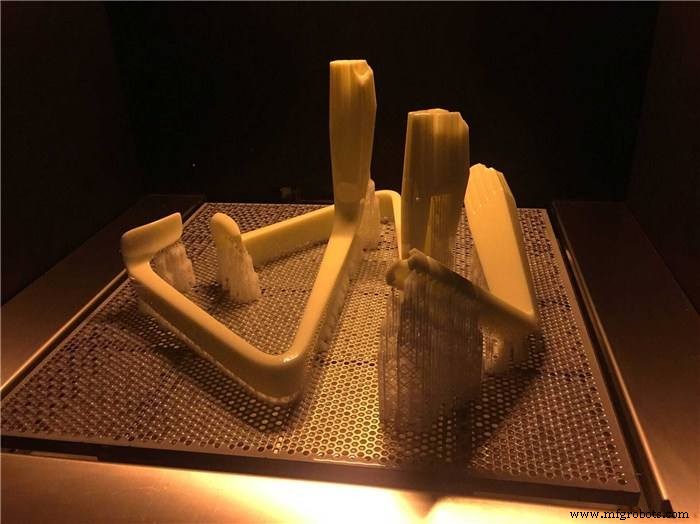
If the injection molding process centers around shaping plastic until it meets the dimensions and requirements of the part, 3D printing takes an entirely different approach, building up objects layer by layer until they take the necessary shape.
The plastic material is added on to the previous layer and is then immediately bound, ensuring structural integrity and the ability to withstand various external pressures.
Because of the way that 3D printing works, it allows producing even the most complex shapes, including inner holes, crevices, or unusual forms, as long as they don’t compromise the integrity of the piece.
Some of the industries that utilize 3D printing include sports, aerospace, automotive, and even the reconstruction of old artifacts.
Just like in the injection molding process, there are steps that need to be taken before the process can begin. Namely, you need to design the part through CAD software and prepare the machine for the specific print job. But with 3D, the process is typically shorter and allows testing out different options relatively quickly.
Pros & Cons
So, by now, we’ve established that both processes are quite similar, but also have fundamental differences in the way that they work. So, which one is better?
Well, let’s look at some of the main pros and cons of both to figure that out.
Injection Molding Pros & Cons
Pros
- Efficiency. Using injection molding, you can produce large quantities of parts in a relatively short amount of time, especially when you already have a mold design that you can work with.
- Large Scale Production. Because the injection molding process is so quick, you can realistically produce millions of parts fast and at an affordable cost, given that your services provider has sufficient equipment.
- Durability. The parts that are made using injection molding have strong structural integrity and can be additionally reinforced by combining different plastics or by adding fillers into the liquid resin.
- Cost-Effectiveness. Once the mold design is refined, the cost of every part is very low, which is why many companies use it for mass production.
- Superior Detail. Even though the process is affordable, injection molding remains one of the most accurate production methods, allowing to create complex parts and ensuring that tight tolerances are met every time.
- Minimal Waste. Because of the unique injection molding process, little or no plastic remains unused, which means that there’s almost no waste of materials, further improving the effectiveness of the method.
Cons
- Limitations. Even though the injection molding process is quite versatile, it does have its limitations. Certain angles are more difficult to execute correctly, and the complexity of your project will largely depend on how experienced, capable, and knowledgeable the company you’re working with is.
- Complicated Mold Creation. Before you can start production, you need to design and create the mold, which is basically an inversion of your part. That process isn’t easy, and you might run into various hiccups along the way, so be prepared to spend weeks or months before you can start using it. And if a mold comes out wrong, you will have to replace it, which will eat up even more time and resources.
- Higher Upfront Costs. You probably wouldn’t find a cheaper production method than injection molding once the process starts, but the initial expense of designing the mold can add up quickly. Therefore, it doesn’t always make sense for small-scale production, although it has been successfully used for prototyping as well.
3D Printing Pros & Cons
Pros
- Simple Adjustments. Since you don’t need a mold for producing parts with 3D printing, making adjustments to the digital design of the piece is simple. If something isn’t working as you’d like, just try a different approach, and you can see the results almost immediately.
- Low Upfront Costs. Unlike injection molding, 3D printing doesn’t require a significant upfront investment because everything up until the production itself takes place digitally, on special software platforms.
- Complex designs. Because of the layer-on-layer method of 3D printing, it can produce intricate shapes, including crevices and holes, which is an advantage in some instances.
Cons
- Small Part Size. One of the biggest drawbacks of using injection molding software is the relatively smaller size of the parts that you can create. The layering process has its limitations in terms of scaling, which will be hard to overcome. Sure, the biggest 3D printer in the world recently printed a boat, but usually, you’ll be looking at smaller dimensions.
- Imperfections. While the layering method is effective in some regards, it is also prone to produce imperfections during the manufacturing process. That’s especially true for the surface, which can often come out ridged and a bit uneven.
- Slow Production. Finally, no matter how you look at it, 3D printing just isn’t as efficient as what the injection molding process can offer. As you can imagine, layering the plastic materials takes time to produce even a single part, not to mention trying to create hundreds, thousands, or millions.
How to Choose the Right Option
Even though both approaches have their drawbacks, each also has unique strengths, which make them ideally suited for specific situations.
If you need to do large production runs at an affordable price, you can’t go wrong with injection molding. Meanwhile, 3D printing provides you with more flexibility and the ability to tweak your designs quickly.
If you don’t have a lot of time and need parts now, 3D printing will do better. But if you’ll eventually need to scale, it makes much more sense to opt for the injection molding process, as the initial time you spend will be made up for in the later production stages.
Since there are so many deciding factors that can influence your decision, it makes sense to talk with an experienced company that provides both services and can help you figure out the best approach for your needs.
At 3ERP, we have a team of specialists who can answer all of your questions and offer the most cost-effective course of action that delivers on our requirements.
After all, this is a big decision, so it makes sense to take your time and explore your options carefully.
CNC Machine
- Polylactic Acid (PLA) 3D Printing: A Comprehensive Guide for Professionals
- Why ABS is the Premier Thermoplastic for 3D Printing: Benefits, Limitations & Expert Tips
- Nylon 3D Printing: Expert Guide to Materials, Tech, and Applications
- Master Polymer 3D Printing: Latest Technologies, Innovations & Applications in 2021
- Horizontal Boring Explained: Comprehensive Guide to Precision Hole Drilling
- Boring vs. Turning: Expert Guide to Metal Fabrication Processes
- Simplify Custom Car Parts with 3D Printing: Your Comprehensive Guide
- Is 3D Printing Safe? Expert Guide to Avoiding Toxic Emissions
- Injection Molding vs. 3D Printing: Which Method Best Suits Your Project
- Two‑Shot Molding vs. Overmolding: Key Differences Explained