



Power Transistors Explained: Key Features, Benefits, and Applications
Think of a power supply system that delivers high power levels. Such a unit requires power amplifiers to deliver just the right amount of current. Here is where a power transistor comes in handy.
At OurPCB, we have all the key insights on any type of transistor. Nonetheless, the emphasis will be on the power transistors for this guide. In addition, it’ll explain the operational principle, pros, and cons, among other key insights.
What is the Power Transistor?

Fig 1: An Electronics Engineer Working on a Circuit Board
It is a transistor type that is key in switching and amplifying electronic signals and electrical power. You’ll find this transistor in power supplies systems and high-power amplifiers. Primarily, it is a junction transistor, but you can regard it as a semiconductor field-effect transistor.
While its structure is different from other transistors, it operates under the same principle.
Nonetheless, for the power transistor, you’ll find unique controlled characteristics. For instance, the supply of input current to the base terminal switches it on. On the other hand, removing the control signal will turn off the power transistor.
Types of Power Transistors
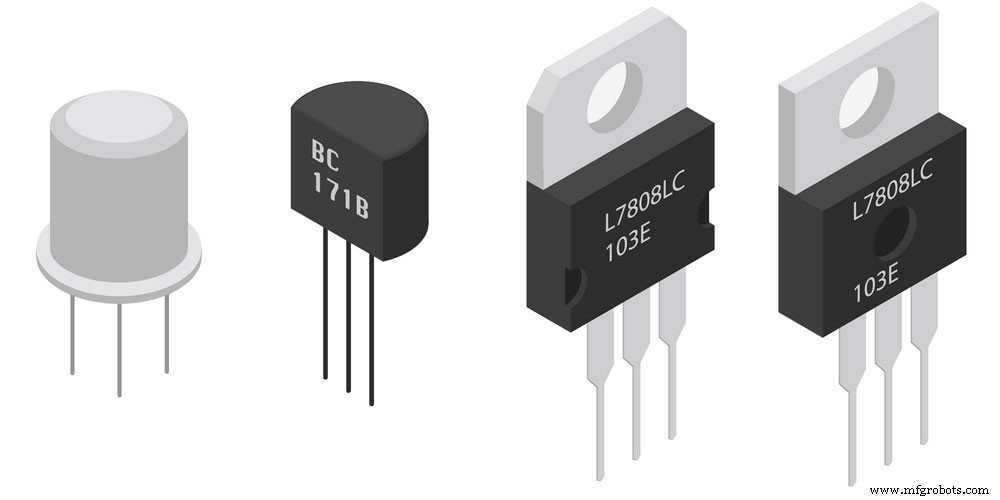
Fig 2: Different Transistor Types
The following are the different transistors that are commonplace in power control circuits:
Bipolar junction transistor (BJTs)
This type of transistor has holes and electrons as charge carriers. Thus, we can regard it as having two polarities; hence the name- bipolar transistors. It’s useful as a switch and amplifier, making it an important current control device.
Characteristics of the power BJT include:
- It’s essential in high power use.
- It features a higher on-state voltage drop than other transistor types.
- A higher current carrying capacity.
- Has a high breakdown voltage.
- It is also larger than the average transistor. It is imperative to allow maximum current to flow.
Metal oxide semiconductor field-effect transistor (MOSFETs)
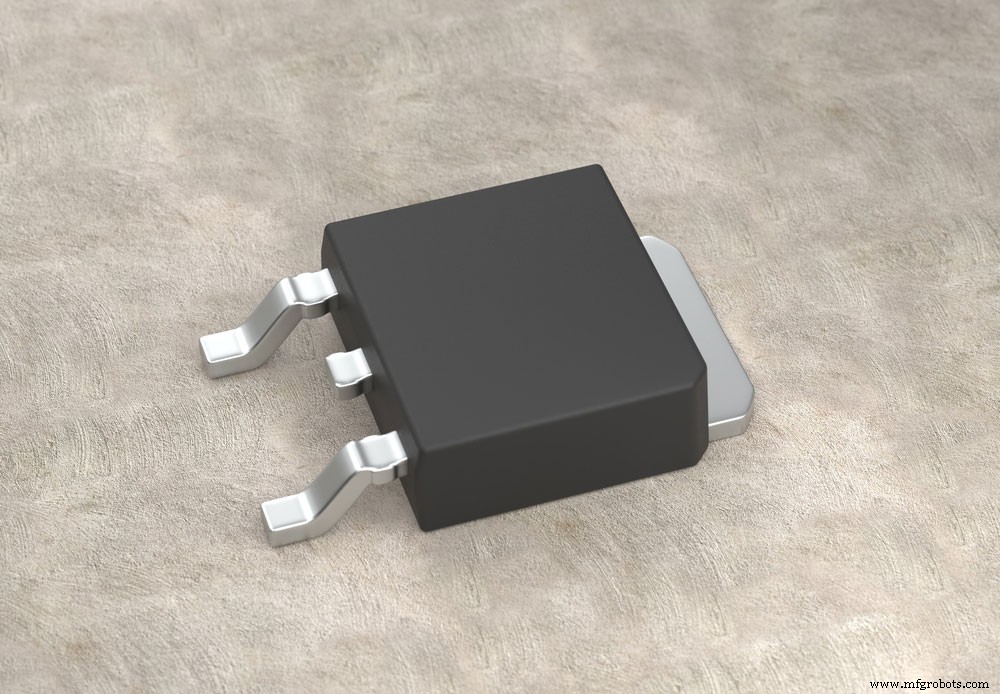
Fig 3: DPAK MOSFET Electronic Transistor
The MOSFET is a type of field-effect transistor with three terminals. They include the base, source, and drain terminals. The operation of a power MOSFET relies primarily on its channel’s width. For instance, at a wide channel width, the performance of the transistor will be optimal.
The characteristics of power MOSFETs include:
- The transistor is useful as a voltage controller
- During operation, it doesn’t need an input current
- Its also characterized by a high input impedance
Static Induction Transistor
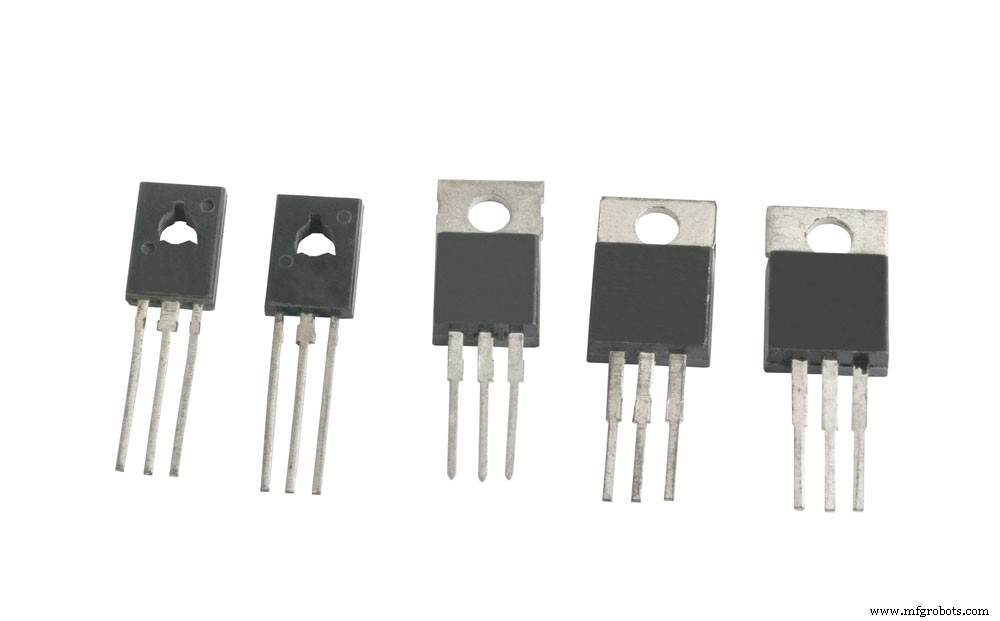
Fig 4: Power Transistors
The transistor has three terminals. Additionally, it has a vertically oriented frequency and transmits high power. It has a higher voltage breakdown than conventional FET- field-effect transistors.
Its key properties include:
- Lesser noise than other FETs
- Low terminal resistance
- It turns off and on within seconds
- It features a relatively short channel
Insulated-gate Bipolar Transistor (IGBTs)
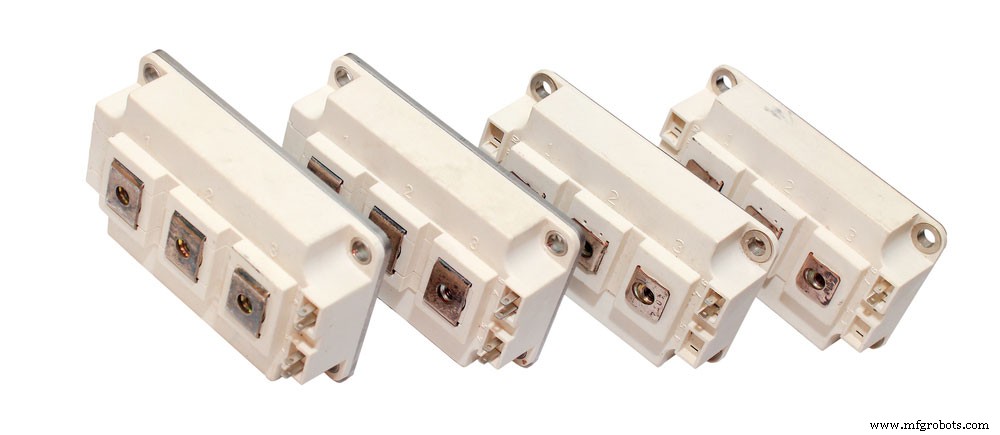
Fig 5: Powerful IGBT transistors
It’s an amalgam of a FET and a BJT transistor. This transistor’s function relies on its gate from which you can turn it on or off. You’ll commonly find them in power electronics gadgets like power supply systems, inverters, and converters.
They are characterized by:
- A relatively high power gain,
- Significantly limited losses at the circuit’s input.
Operation of Power Transistor
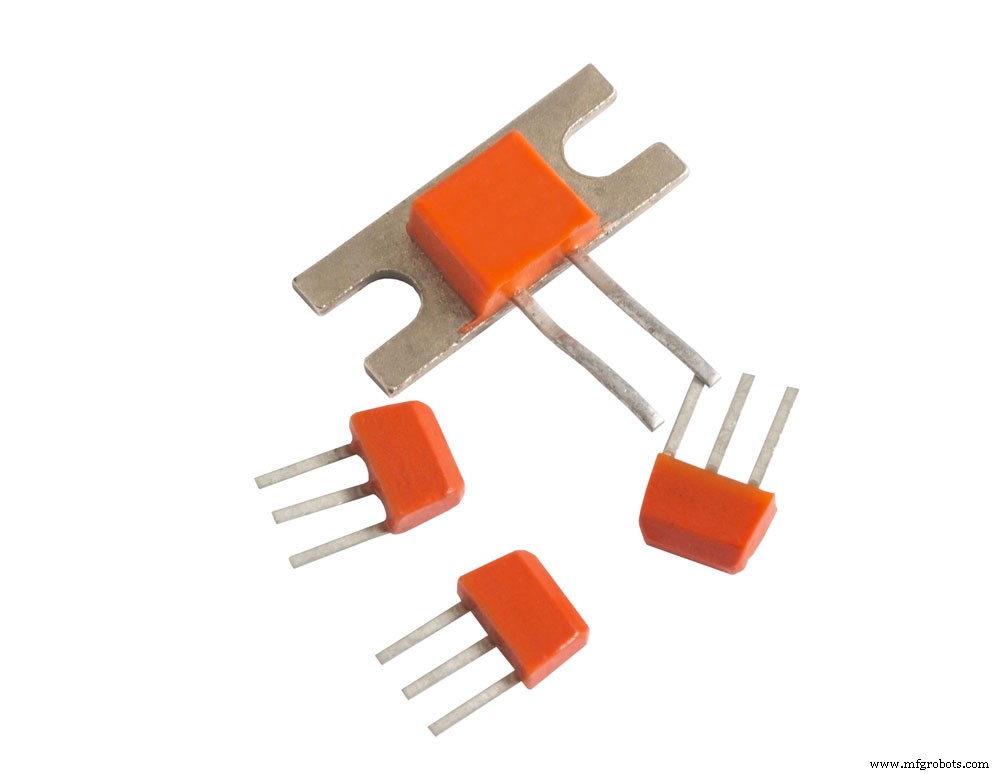
Fig 6: BJT Transistors
Any typical Bipolar Power Transistor (BJT) will feature four zones of operation. They include:
- Active region
- Quasi saturation zone
- Hard saturation zone
- Cut off region
You can have the transistor in the cut-off zone if you reverse bias it under two conditions. They include:
- Connecting its base terminal to the negative terminal and the emitter terminal to the positive terminal,
- Connecting its collector terminal to the negative terminal and the base terminal to the positive terminal.
Secondly, the transistor is in an inactive state if you achieve:
- An emitter-base junction forward bias and a collector-base region reverse bias.
Next, your transistor will be in the quasi-saturation status when you forward bias the base-emitter and collector-base. Lastly, it’ll be in the hard saturation regions when you forward bias the base-emitter and collector-base.
Pros and Cons of using Power Transistor
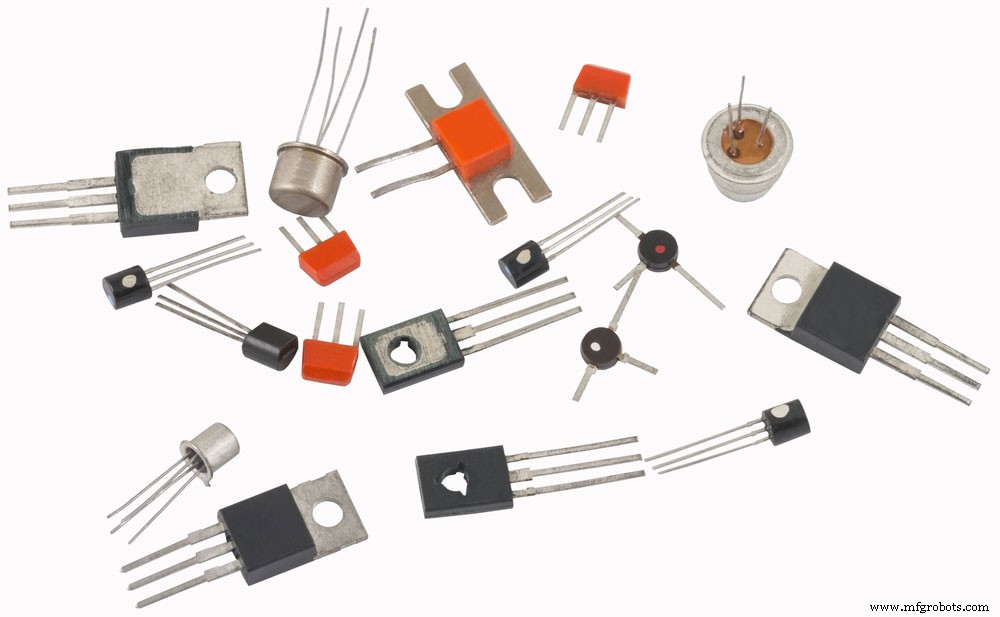
Fig 7: Different Transistor Types
Advantages of power transistors
- High current density
- Low forward voltage
- High voltage gain
- Large bandwidth gain
Disadvantages of power transistors
- Noisier than other types of transistors
- They are relatively more complex to control
- Low thermal stability
Applications
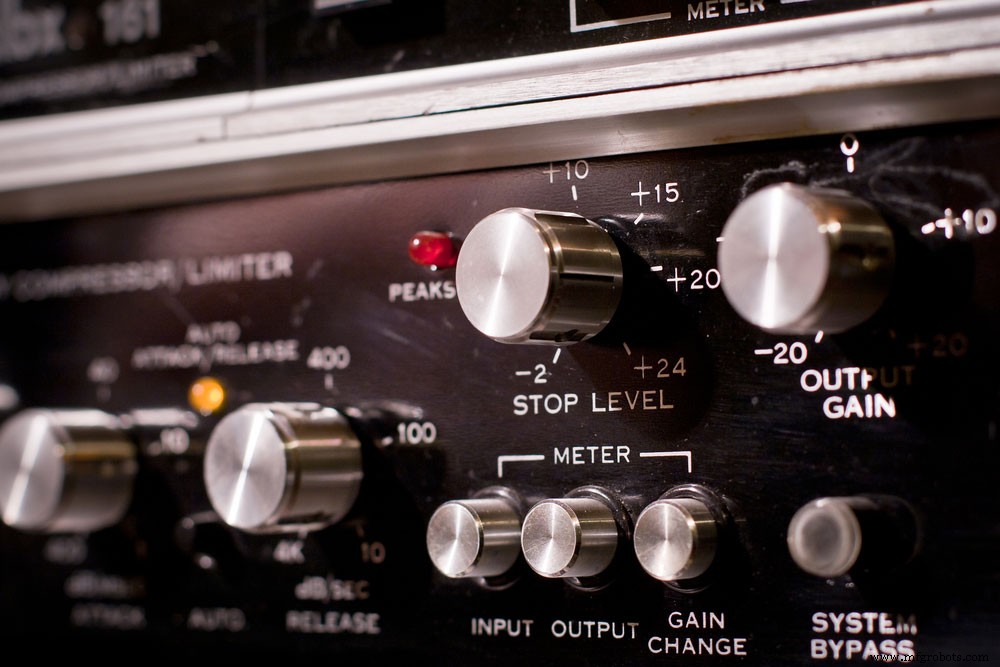
Fig 8: Amplifier Control Panel
- They are useful in relays
- Essential in power amplifiers
- You’ll also find them in DC-DC Converters
- Useful in power control circuits
- Lastly, they also find use in Switch-mode power supplies (SMPS)
Difference Between a Transistor and a Power Transistor?
A transistor is an electronic device with three or four terminals in structure. Applying a supply voltage to one of its terminals causes a current change in another terminal. Thus, its operation is synonymous with the working of an amplifier or switch.
Conversely, a power transistor is like a heat sink. It is significant in protecting the circuit from damage. Also, it is relatively larger than the average normal transistor.
Conclusion
As you have seen, almost all digital systems must have a power transistor. They are especially significant in switching circuits, power systems, and audio applications. Also, for any questions, reach out to us.
Industrial Technology
- Comprehensive Guide to Industrial Power Distribution: Reliable Solutions & Best Practices
- Everything You Must Know About Wi‑Fi 6E: The Next‑Generation Wireless Revolution
- Variable Power Supplies Explained: Key Features, Applications, and Top Models
- Battery Separators Explained: How They Keep Your Devices Safe and Efficient
- LM386 Amplifier: Comprehensive Guide to Features & Applications
- 2SC2879 Transistor: Key Features, Pinout, and Applications Explained
- Master BJT Biasing: Techniques, Tips, and Troubleshooting for Reliable Amplification
- D880 Transistor Explained: Features, Specs, and Use Cases
- 1N5402 Diode Explained: Specs, Applications, and Performance
- Injection Molding vs. 3D Printing: Which Method Best Suits Your Project