



Barometric Pressure Sensors Explained: Key Features & Applications
About Barometric Pressure Sensors, Weather measurement is an essential aspect of everyday human life.
Thanks to technological advancement, weather measurement instruments are now small enough to incorporate into various circuits.
Therefore, in this article, we will look at various aspects of the sensor to familiarize it with those who wish to know more.
1. What is a Barometric Pressure Sensor?
A barometric pressure sensor is a sensor for detecting atmospheric pressure. It is also known as the modern form of the barometer.
Pressure sensor classification is done regarding how the sensor works and material. For illustration, a piezo-resistive air pressure sensor uses silicon semiconductors. It senses air pressure change via a diaphragm connecting a resistive bridge circuit. Thus, the pressure measurement originates from pressure change on the resistance bridge.
The most common modern pressure sensors include BMP180, BME280 & BMP280.
More information on how the sensors work is in the next section.
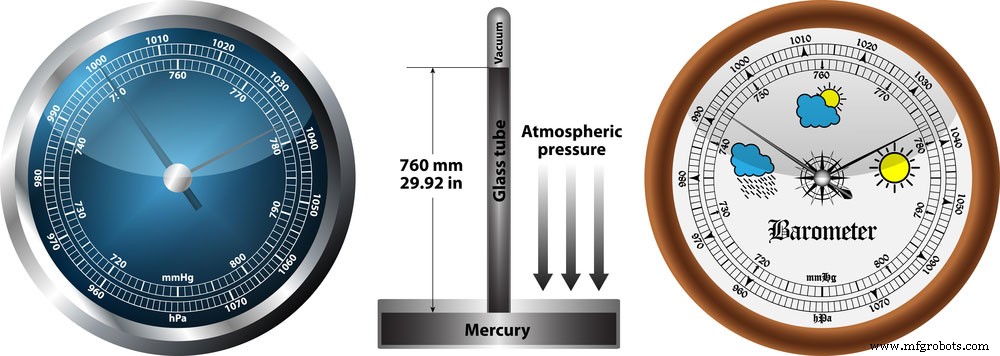
Varieties of the barometric pressure sensor
2. How do Barometric Pressure Sensors Work?
Mercury Barometer
Mercury barometers are one of the oldest atmospheric pressure measurement tools. Typically, they constitute a vertical tube sitting in a basin with mercury at the bottom.
The environmental sensor works by balancing the mercury column and measuring its height. Therefore, the taller the mercury column height, the higher the atmospheric pressure and vice versa.
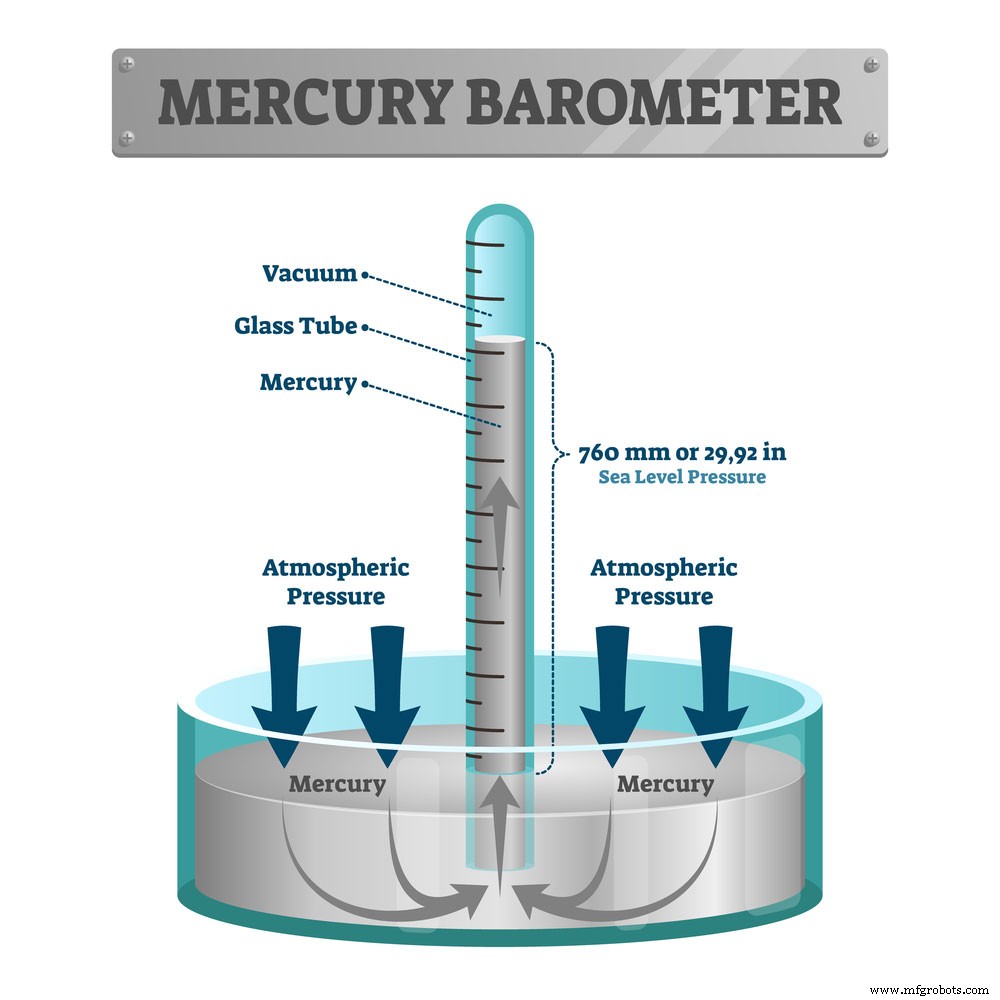
a mercury barometer at work
Aneroid Barometer
Barometric pressure measurement does not always require liquids, and the aneroid barometer is an example.
Instead, it uses mechanical movements and an aneroid cell to give actual pressure readings. The cell contracts or expands if there is any air pressure change in the atmosphere.
The contraction and expansion movements impact the mechanical levers that amplify signals, thus registering readings on the device’s display.
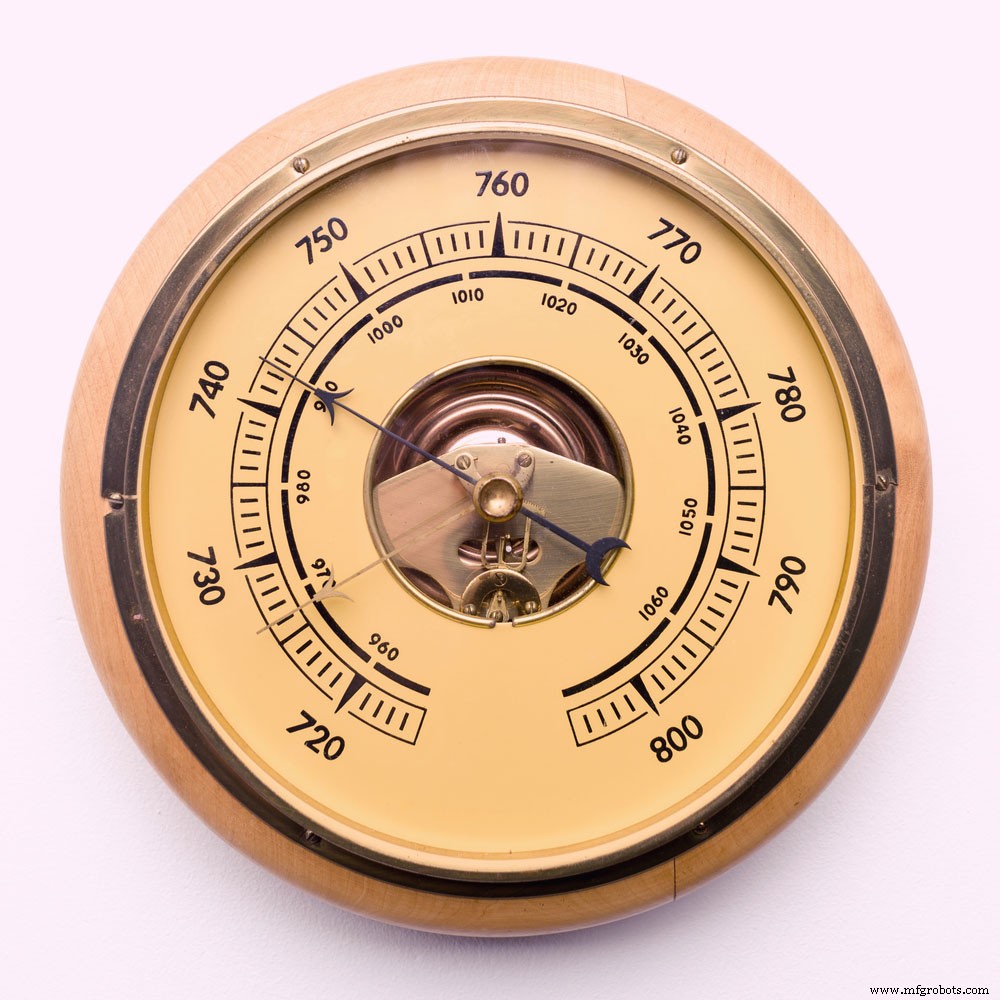
An aneroid barometer
MEMS Barometric Pressure Sensor
These use Microelectromechanical systems (MEMS); thus, they can record a slight pressure difference. They are the type present on phones thanks to their miniature size and easy fitting on circuit boards.
Moreover, these barometric pressure transducers can also measure static air pressure, increasing their popularity as portable weather stations.
They have a capacitive plate that forms a diaphragm, and it is in contact with atmospheric air. Hence the precision sensor detects deformity on the diaphragm due to pressure to determine the absolute air pressure.
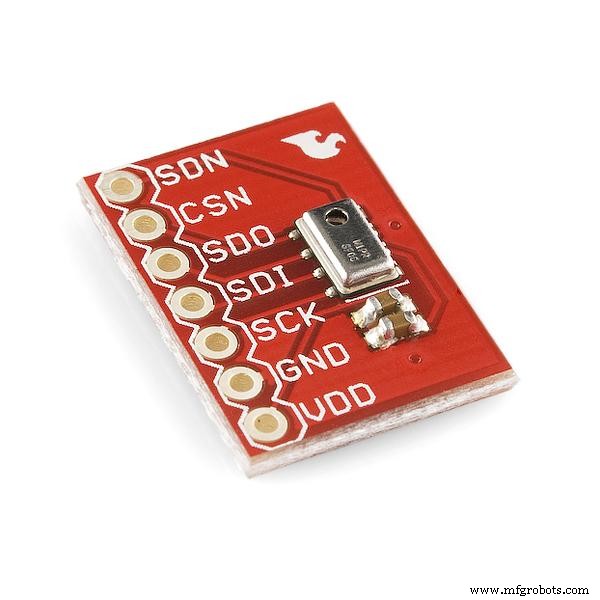
(Source: https://commons.wikimedia.org/wiki/File:SparkFun_Barometric_Pressure_Sensor_Breakout_-_MPL115A1_09721-01.jpg)
A MEMs technology barometric sensor
3. Things to Consider When Choosing a Barometric Pressure Sensors
Barometers being precision sensors, they have to provide consistent and accurate readings. Thereby it would help if you considered some things when getting one.
- The pressure precision – consider going for a higher precision sensor as they allow for easy calibration and reduce reading variations because of temperature interference.
- Pressure and temperature range – a wide temperature range would allow precise readings even in extreme temperatures. The same goes for a wide pressure range.
- Sensitivity – precision sensors need to be sensitive enough to notice the slightest pressure variations.
- Power consumption – The sensor’s power consumption rate should meet basic barometric pressure sensing requirements. Additionally, the primary power requirements should not be too high.
- Size – luckily, the modern sensor’s actual module size is small enough to fit on wearable devices.
- Price – consider purchasing a barometric sensor you can afford to provide accurate pressure measurements.
4. How to read Barometric Pressure Sensors?
Notably, a rising reading indicates air pressure increase, while a falling task means a decrease in air pressure.
Consequently, these readings are essential for various environmental applications, as we shall see.
Here is a video with more on barometric pressure sensors and how to adjust them for correct readings.
5. Applications for Barometric Pressure Sensors
Among the various pressure sensor applications are:
- The precision sensor can help predict and forecast weather conditions, thus helping in better planning.
- Also, the sensors work in smartphones to detect changes in air pressure and convert the readings to a digital signal.
- The precision sensor is also in car engines, especially the intake manifold for air density and pressure measurement.
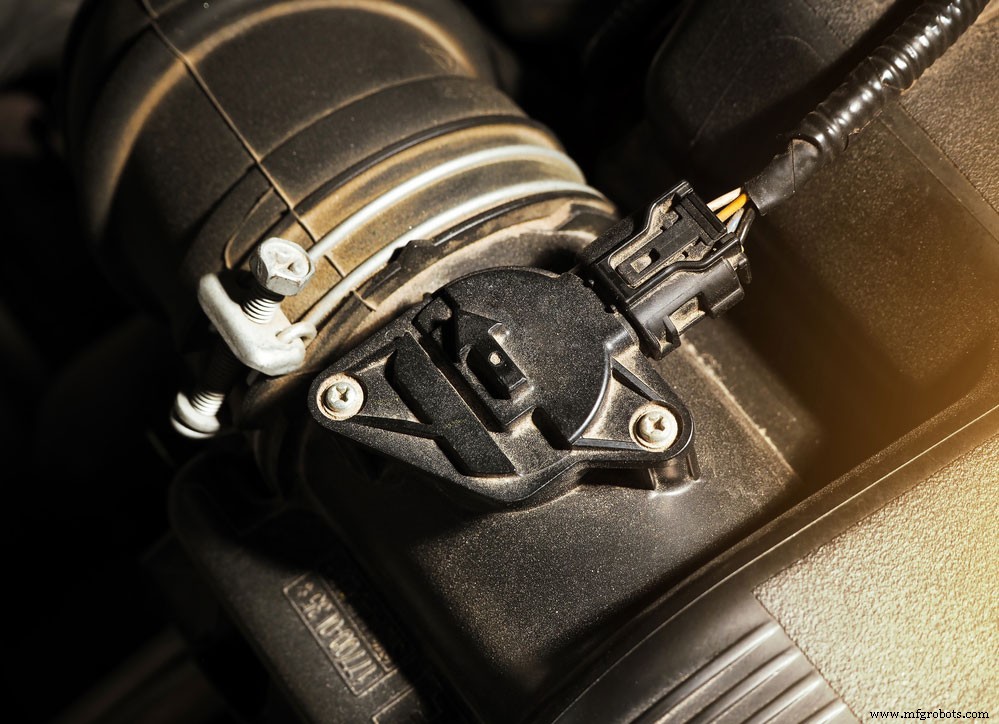
Air sensor in the intake manifold of a car engine
Conclusion
In conclusion, pressure sensor technology is beneficial in many practices in our everyday lives. Therefore, you can contact us for practical miniature size sensor circuits that will work in whatever application. Also, reach out if you have any queries regarding sensors.
Industrial Technology
- Polylactic Acid (PLA) 3D Printing: A Comprehensive Guide for Professionals
- Nylon 3D Printing: Expert Guide to Materials, Tech, and Applications
- Warehouse Automation: A Comprehensive Guide to Boosting Efficiency
- Preventive Maintenance Demystified: A Complete Guide for Modern Organizations
- Everything You Must Know About Wi‑Fi 6E: The Next‑Generation Wireless Revolution
- Battery Separators Explained: How They Keep Your Devices Safe and Efficient
- Power Transistors Explained: Key Features, Benefits, and Applications
- 1N5402 Diode Explained: Specs, Applications, and Performance
- Injection Molding vs. 3D Printing: Which Method Best Suits Your Project
- Car Sensors Demystified: Key Facts Every Driver Should Know