



Emergency Maintenance: Minimizing Risks and Responding Effectively
Emergency maintenance events are the most stressful incidents for any maintenance team, threatening brand reputation, safety, and the bottom line. Reducing their frequency and responding swiftly is therefore a top priority.
In this article we cover:
- Defining emergency maintenance
- Typical examples in residential and industrial settings
- Strategies to minimize emergencies
- How to establish robust emergency procedures
What Is Emergency Maintenance?
Emergency maintenance is the urgent repair of an asset that has failed unexpectedly, posing significant health, safety, or production risks. Because these failures are often severe, they require coordinated action from multiple team members and can halt all other work until resolved.
Emergency Maintenance Examples
Both residential and industrial facilities face emergencies. Here are common scenarios:
Residential & Hospitality
- Fire outbreak
- Roof leaks
- Electrical surges
- Major flooding
- Elevator failure
- Loss of water supply
Industrial
- Fire outbreak
- Poisonous gas leak
- Generator failure
- Steam boiler explosion
- Critical asset failure that stops production
Reducing Emergency Requests
While emergencies can never be fully eliminated, a proactive maintenance strategy can drastically cut their frequency and impact.
Effective approaches include:
- Preventive maintenance
- Condition‑based maintenance (CBM)
- Predictive maintenance (PdM)
- Total productive maintenance (TPM)
Coupling any of these with a reliable CMMS provides full visibility and faster response when an emergency arises. For an overview of CMMS, see our What Is a CMMS System and How Does it Work guide.
Additional risk‑reduction measures:
- Highly trained technicians performing quality work
- Well‑trained operators handling critical equipment
- Clear operating procedures and maintenance checklists
- Adherence to manufacturer’s guidelines and parts
Setting Up Emergency Procedures: 4 Key Steps
Even with the best prevention, emergencies will occur. Structured procedures minimize harm and cost.
#1 – Define and Identify Emergencies
Begin by distinguishing true emergencies (requiring immediate action) from urgent non‑emergencies that can wait until business hours. This clarity speeds reporting and resource allocation.
#2 – Establish an Emergency Workflow
Decide how incidents are reported and processed:
- Manual: Employee reports the issue, manager creates a work order.
- Automated: Sensors detect anomalies, trigger shutdowns and work orders.
Regardless of method, a CMMS should log every incident to build a digital trail for continuous improvement.
#3 – Outline Response Procedures
From your risk assessment, draft general steps applicable to most emergencies:
- Isolate the danger.
- Notify the chain of command and affected staff.
- Implement lockout‑tagout if necessary.
- Assess damage and asset condition.
- Plan the repair.
- Execute the repair.
Health and safety always precede maintenance work.
#4 – Accelerate Response with Mobile CMMS
A mobile CMMS enhances response by:
- Instantly scheduling and notifying the right technicians.
- Providing real‑time access to asset history.
- Enabling on‑site communication.
- Delivering step‑by‑step safety instructions and checklists.
Learn more in our What Is a CMMS System and How Does it Work guide.
Managing Emergency Work Orders in Limble CMMS
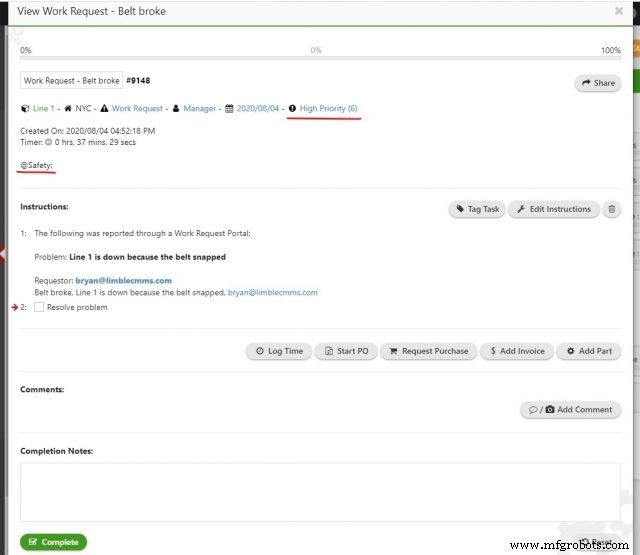
Limble CMMS lets you flag high‑priority work orders with tags like “Safety incident.” Notifications are sent via email and push alerts to assigned technicians.
Example workflow:
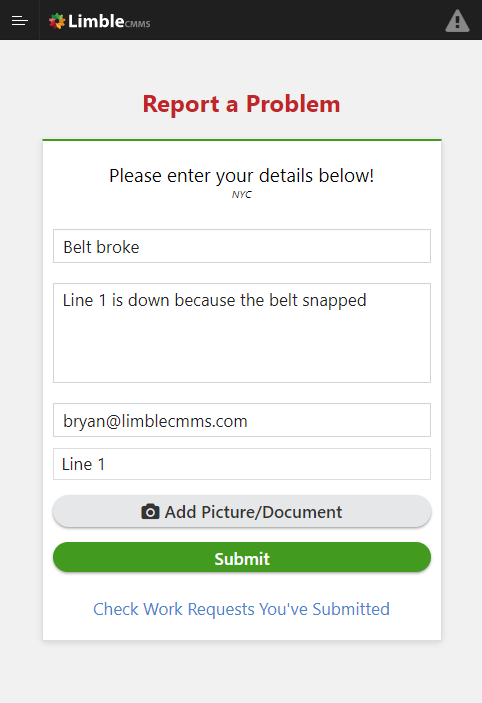
Manager creates a level‑6 emergency WO tagged with @Safety:
Technicians receive notifications, complete the work, and close the WO, logging time, parts used, and completion notes:
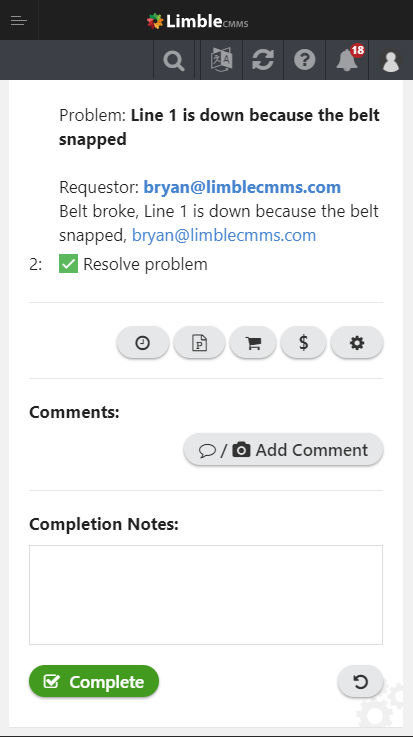
These records help track resource expenditure on emergency repairs.
Proactive Planning Saves Lives and Money
While no system can guarantee zero emergencies, a strong preventive strategy and well‑trained staff dramatically reduce their likelihood. A clear, documented emergency plan empowers your team to act decisively when incidents arise.
Limble CMMS has enabled countless businesses to control emergency maintenance. Reach out to learn more.
Equipment Maintenance and Repair
- Refractory Metals: Properties, History, and Modern Applications
- Mastering Metal Binder Jetting: Innovation, Applications, and Industry Opportunities
- Building Maintenance Mastery: Expert Insights on Safety, Cost‑Effectiveness, and Compliance
- Comprehensive Guide to Stainless Steel Pipes: Types, Properties, Applications & Standards
- Industrial IoT Demystified: A Comprehensive Guide
- Master IoT-Enabled Maintenance: Expert Strategies for Asset Health Monitoring
- Preventive Maintenance Demystified: A Complete Guide for Modern Organizations
- Everything You Must Know About Wi‑Fi 6E: The Next‑Generation Wireless Revolution
- The Complete Guide to Maintenance Work Orders: Boost Asset Reliability & Reduce Downtime
- Master CMMS Software: The Complete Guide to Preventive Maintenance Success