



The Top 7 Ceramic 3D Printers of 2018 – Expert Review

Ceramics are an emerging frontier in additive manufacturing, enabling production of jewelry, kitchenware, aerospace components, and custom prosthetics. Despite inherent challenges—such as fragile green parts requiring sintering—many manufacturers have introduced robust solutions for both desktop and industrial environments.
Below, we present a curated list of the seven most noteworthy ceramic 3D printing systems available in 2018, each evaluated on build volume, technology, speed, and cost to aid professionals in selecting the right equipment.
Ceramic 3D Printing in a Nutshell
Ceramic parts are typically fabricated in a fragile green state and must undergo post‑processing—sintering or firing—to achieve full density and mechanical strength. Common AM modalities include Binder Jetting, SLA, and extrusion‑based systems, each offering distinct advantages for specific applications.
Check out our guide to ceramic 3D printing for more information.
1. ComeTrue’s M10 Ceramic 3D printer
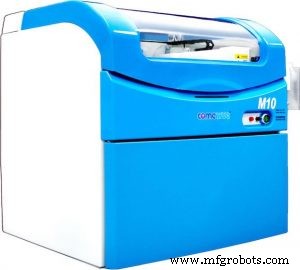
Taiwanese startup ComeTrue recently launched the M10, a desktop binder‑jetting machine that accepts ceramic composite powders. Designed for small‑batch production of intricate parts—ranging from art and jewelry to dental prostheses—the M10 delivers a 200 × 160 × 150 mm build envelope without the need for support structures. The system also includes a dedicated firing kiln, a critical component for ceramic post‑processing.
Pros:
- Intuitive operation
- Fast build times
- Integrated dry vacuum cleaner and kiln
Cons:
- Not ideal for high‑volume manufacturing
2. DeltaBots’ 3D Potterbot XLS-1
DeltaBots’ 3D PotterBot XLS‑1 is the latest in its line of large‑scale ceramic printers. Priced at $14,850, the system expands the possibilities of clay‑based AM by enabling production of objects that exceed the printer’s own dimensions, thanks to a high‑pressure hose extrusion mechanism. The XLS‑1 balances precision and speed, making it suitable for customized ceramic products.
Pros:
- Large object capability
- High‑pressure extruder
- User‑friendly interface
Cons:
- Moderate build speed (30–100 mm/s)
3. Kwambio’s Ceramo One 3D printer
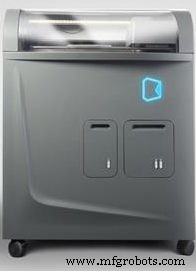
Debuted at CES 2018, Kwambio’s Ceramo One is a powder‑binding system that can print a ceramic mug in just 2–3 hours. With a generous 350 × 350 × 380 mm build volume, it caters to jewelry, decorative pieces, aerospace, and medical components.
Pros:
- Rapid production times
- High‑quality output
- Large build volume
Cons:
- Limited material selection
4. Vorm Vrij’s LUTUM® DUAL extruder 3DclayPrinter
The Dutch firm Vorm Vrij offers the LUTUM® DUAL extruder 3DclayPrinter, an extrusion‑based desktop machine capable of simultaneous dual‑color or dual‑material printing. This capability affords designers unprecedented control over complex geometries, supporting applications from jewelry to architectural models.
Pros:
- Dual‑extruder color capability
- Large build envelope
- Supports grogged clay
Cons:
- Not suited for industrial production
- Requires skilled operation
5. Lithoz’s CeraFab 8500 3D printer

Lithoz’s CeraFab 8500 employs SLA to produce high‑resolution ceramic parts with mechanical properties matching conventionally manufactured counterparts. Compatible with technical ceramics such as LithaCon Zirconia and Lithabone TCP—both medical‑grade materials—the printer serves aerospace, consumer, and medical markets.
Pros:
- User‑friendly operation
- High accuracy
- Supports high‑performance ceramics
- Low energy consumption
Cons:
- Higher price point
- Smaller build envelope (115 × 64 × 150 mm)
6. 3DCeram’s Ceramaker 900

The Ceramaker 900 is powered by 3DCeram’s proprietary laser‑SLA technology, enabling rapid fabrication of high‑performance ceramics. The system accepts a range of photocurable ceramic pastes and features a 300 × 300 × 100 mm build volume, ideal for short‑run production in aerospace, medical, and luxury sectors.
Pros:
- Wide selection of technical ceramics
- High‑quality prints
Cons:
- Premium pricing ($250,000+)
- Requires professional operator
7. Admatec’s ADMAFLEX 130

Admatec’s ADMAFLEX 130 is an industrial printer engineered for dense technical ceramic parts. Its innovative material‑reconditioning loop minimizes waste, while a broad material library—including alumina, zirconia‑oxide, fused silica, and hydroxyapatite—enables diverse applications such as casting cores, bone replacement, and jewelry.
Pros:
- Extensive high‑performance ceramic catalog
- Fast printing speeds
- High‑density parts
Cons:
- High cost (~$100,000)
- Smaller build envelope
3D printing
- Top 5 Strategic Metals Shaping Modern Defense & Aerospace
- Expert Guide to Top DMLS Machines – 2024 Edition
- Top 10 Professional SLA 3D Printers for Precision & Reliability
- Top 6 SLS 3D Printers of 2018: A Comprehensive Comparison
- Top 10 Industrial‑Scale 3D Printers for Large‑Format Production
- 10 Key 3D Printing Trends Driving 2020 Innovation
- Top Microcontroller Boards of 2021 – Expert Picks & Features
- Navigating the Biggest Challenges to Achieve Industry 4.0 Success
- Top 11 Resin 3D Printers of 2022 – Updated Guide
- Why Proper Lubrication Is Essential for 3D Printer Performance