



10 Expert Tips for Optimizing FDM 3D Printing Designs

Fused Deposition Modelling (FDM) remains the go‑to technology for hobbyists, service bureaus, and OEMs alike. Whether you’re prototyping on a budget or producing functional parts, FDM delivers design flexibility and a wide range of thermoplastic options, including emerging metal filaments. However, achieving high accuracy and reliable builds requires a clear understanding of the technology’s strengths and limits.
The FDM Printing Process
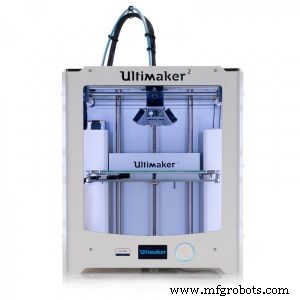
FDM builds objects layer by layer by extruding heated filament through a nozzle onto a build plate. Each layer solidifies before the next is added, creating a robust structure. While the finish is typically coarse—requiring post‑processing for a smooth surface—proper design can reduce defects and streamline the workflow.
10 Design Guidelines for FDM
1. Ensure a watertight model
A watertight design—one without holes or gaps—is essential for printability. Non‑watertight STL files will fail during slicing. RP Platform’s automated validator quickly flags these issues, saving time and preventing costly re‑prints.
2. Plan support structures wisely
Complex features such as steep overhangs, bridges, and hollow sections demand support. Use the 45‑degree rule: any feature leaning more than 45° from the vertical should be supported to avoid collapse. Keep support wall thickness between 1.2–1.5 mm to maintain structural integrity while minimizing material use.
3. Design appropriate wall thickness
Wall thickness should be at least twice the nozzle diameter, with a minimum of 1.5–2 mm. Thicker walls increase strength but also print time and the risk of warping. If your part requires robust walls, consider a cross‑hatch infill rather than solid walls to save material.
4. Account for undersized holes
FDM typically prints holes 2–4 % smaller than designed. Oversizing holes by 2–4 % (for diameters up to 10 mm) compensates for this effect. For precision parts, print the hole slightly smaller and finish it by drilling or sanding.
5. Optimize threads for FDM
Avoid sharp edges and 90° angles. Use 29° (Acme) threads with a minimum 0.8 mm pitch. Threaded holes should be larger than 3 mm to ensure reliable printing.
6. Respect minimum feature size
Engraved details should be no thinner than 1 mm and 0.3 mm deep. Columns and pins must be at least 2 mm in diameter to be printable.
7. Incorporate fillets and chamfers
Chamfers at bottom edges help distribute thermal stresses and reduce warping, while fillets on high‑stress areas improve strength and eliminate the need for supports on overhangs exceeding 45°.
8. Orient parts strategically
Orientation influences surface quality and strength. Position upward‑facing surfaces for the best finish. Align curved or angled features parallel to the build plate to minimise stair‑stepping. Position holes vertically to avoid supports, and orient brittle features parallel to the XY plane to exploit the stronger XY axis.
9. Design for assembly
Breaking a complex model into multiple parts reduces support volume, eases post‑processing, and shortens print times. Assemble components afterward for a seamless finish.
10. Choose infill wisely
Infill determines material usage and part strength. Prototypes can use low infill (10–20 %) to save cost, while functional end‑uses often require 40–60 % or higher. Balance strength needs against material consumption and print speed.
Takeaway
FDM offers a cost‑effective route to both rapid prototyping and functional production. By integrating these design principles before you slice, you’ll reduce trial and error, cut material waste, and improve print reliability.
3D printing
- Five Key Considerations for Safely Cleaning SLS 3D Prints
- Top 6 SLS 3D Printers of 2018: A Comprehensive Comparison
- How to Prolong Your Power Supply’s Lifespan: 6 Expert Tips
- Essential Design Tips for Cast Urethane Products
- 6 Essential Tips for Successful PCB Design and Layout
- 7 Proven Strategies to Cut PCB Board Costs
- 10 Essential Tips for Seamless Schematic-to-PCB Conversion
- 6 Essential Factors to Evaluate Before Purchasing a 3D Printer
- 6 Proven SLA Design Tips for Flawless 3D Print Quality
- 5 Key Reasons to Choose Fraser Crane for Your Next Purchase