



Achieve Stunning Color Results on Your Next FDM Print
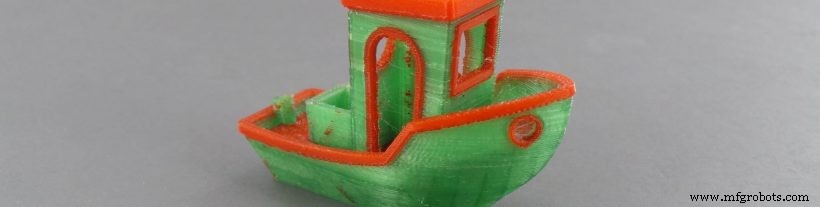
FDM excels at color printing thanks to a broad spectrum of colored filaments. For single‑color parts, choosing the right hue and material properties is all that’s needed.
If you need more advanced color, such as a display model that faithfully reproduces the original artwork or a prototype that uses color coding to distinguish parts, recent FDM innovations provide multiple ways to achieve vivid, multi‑color prints. Let's explore these options.
Printing in full color vs. post‑processing
If you’re aiming for a striking, multi‑color FDM print, you should decide early whether to color the part during post‑processing or to leverage new full‑color FDM technology. Full‑color FDM can save time, but it remains niche and typically requires a specialized printer or outsourcing to a specialist. If that’s impractical, you might print each color as a separate component and assemble them later, though this adds a post‑processing step. For blending colors, a specialist printer such as 3D Systems’ Pro‑Cube C is needed; yet for truly intricate color work, hand finishing still wins.
Painting your part by hand
Most painting methods used for other 3D printing technologies can be applied to FDM prints. First, ensure the part is cleaned and finished before priming. We recommend using an airbrush for a smooth, even coat. Even after sanding, bead‑blasting, or tumbling to hide layer lines, paint can reveal them if too thin. Airbrushing mitigates this. Use acrylic paints and apply several thin layers, allowing 30‑minute drying between coats. After fully drying, a thin epoxy coat preserves the colors, though account for added thickness if precision is required.
The perfect time to explore colored FDM printing
If you’ve considered full‑color parts for prototypes or production but thought they were too time‑consuming or expensive, now is the ideal moment. With a growing range of techniques and technologies, creating distinctive, eye‑catching prints is simpler than ever.
3D printing
- Effortless Post‑Processing for FDM 3D Prints
- Professional Finishing Techniques for FDM 3D Prints
- A Practical Guide to Ceramic 3D Printing: Techniques, Materials, and Design Tips
- 3D Printing: From Rapid Prototyping to Full‑Scale End‑Part Production
- Mastering 3‑D Print Orientation: Tips for Surface Finish, Strength, and Support Efficiency
- Quickly Label 3D Printed Parts with Engraver Filler – A Proven, Easy Method
- Mastering Isotropic Fiber 3D Printing: Build Ultra‑Strong Parts with the Mark Two
- Achieving High-Quality All-Metal Parts with 3D FDM Printing
- Preventing and Fixing Adhesion Issues in FDM 3D Printing
- Adura X: Elevating FDM 3D Printing to New Heights