



O‑Ring Essentials: 7 Key Terms Every Engineer Should Know
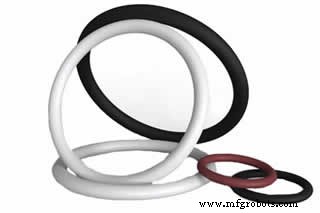
When selecting O‑rings for machinery, vehicles, or industrial systems, a clear grasp of industry terminology is essential. O‑rings provide reliable, leak‑proof seals for liquids and gases, but their performance hinges on matching the right specifications to the application. Below are seven foundational terms that every engineer should master.
#1) Inside Diameter (ID)
The inside diameter is the measurement across the central cavity of the O‑ring. Measure from the innermost point on one side of the ring to the corresponding point on the opposite side. This dimension is critical when determining the O‑ring’s fit within a groove or shaft.
#2) Outside Diameter (OD)
The outside diameter measures the total width of the ring from its outermost edge to the opposite outer edge. The OD is always larger than the ID and, together with the ID, defines the ring’s overall size and its ability to compress within a groove.
#3) Groove
Every O‑ring is designed for a specific groove—a recessed slot or chamber in a component. The groove’s geometry, depth, and width dictate how the O‑ring sits, compresses, and ultimately seals the joint. Selecting the correct groove size is vital for ensuring optimal performance.
#4) Hardness
Hardness refers to the material’s resistance to deformation, typically measured with a Shore A durometer. A hardness of 40 is considered soft, providing excellent sealing in low‑pressure environments, whereas a hardness of 90 is much harder, suitable for high‑pressure or abrasive applications. Matching hardness to operating conditions reduces wear and extends service life.
#5) Face O‑Ring
A face O‑ring is a specialty seal that mates perpendicularly to the flow direction, creating a clean, flush surface. These are ideal for applications where a flat sealing face is required, such as in rotating equipment or high‑precision assemblies.
#6) Tensile Strength
Tensile strength, expressed in PSI (pounds per square inch), indicates how much force an O‑ring can withstand before failure. Higher tensile values mean the seal can operate safely under greater pressure or mechanical stress, which is crucial for demanding environments.
#7) Flash
Flash is the excess material that remains at the parting lines after manufacturing. While some flash is normal, excessive flash can compromise seal integrity by creating gaps or interfering with the groove. Inspecting and trimming flash is a standard practice to ensure reliable sealing.
Industrial equipment
- Key Metallurgy Terms Every Professional Should Master
- Mastering Overmolding: Key Insights, Materials, and Applications
- How Blockchain is Revolutionizing Industrial Manufacturing: A Comprehensive Guide
- Top 7 Crane Functions Every Construction Professional Should Master
- Inside a Wind Turbine: How It Converts Wind into Power
- Cranes vs. Hoists: Key Differences to Guide Your Equipment Choice
- Water Jet Cutter Buying Guide: 6 Essential Tips for Smart Buyers
- CNC Machining vs. 3D Printing: Which Process Best Meets Your Production Needs
- Mastering Surface Finishing: Your Comprehensive Guide for Superior Metal Parts
- Refrigerant Dryers Explained: Moisture Control & Environmental Benefits