



Robotics: Driving the Next Wave of Industrial Automation
Over the past decade, the manufacturing sector has experienced a seismic shift, largely driven by advances in industrial automation and robotics. Companies are now leveraging these technologies to push efficiency, productivity, and product quality to new heights. This article explores the trajectory of industrial automation and the pivotal role that robotics will play in shaping tomorrow’s factories.
The Current State of Industrial Automation
Automation has been part of manufacturing for decades, but recent breakthroughs have taken it from isolated machines to integrated ecosystems. Modern solutions link production lines, warehouse logistics, and supply‑chain data into a single, cohesive platform that can be managed in real time.
These systems deliver measurable benefits: they cut labor costs, elevate throughput, and raise consistency across batches. In addition, automation reduces workplace incidents, creating safer environments for employees.
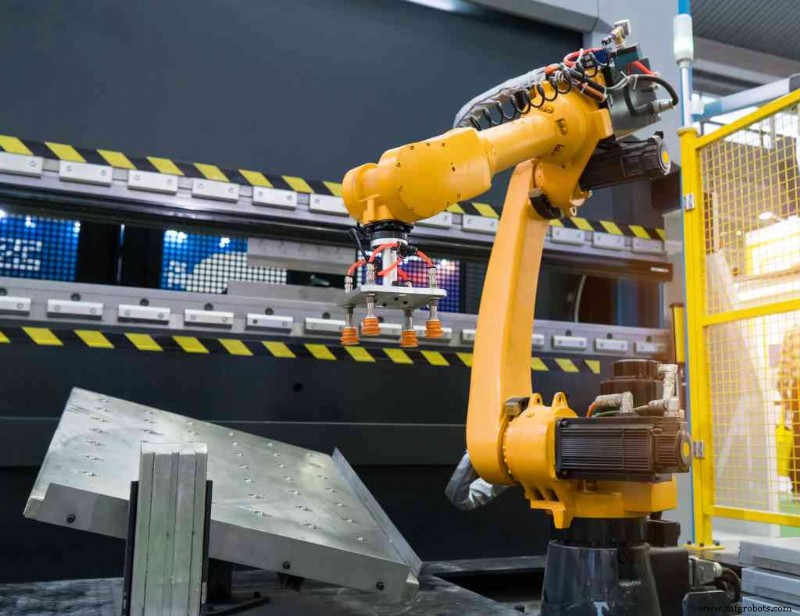
Robotics is no longer a niche luxury; advances in hardware, software, and affordability have democratized the technology. From assembly and packaging to material handling, robots now handle tasks that were once exclusively human.
One of the strongest advantages of robotic systems is their unwavering precision and repeatability. They perform repetitive motions with micro‑level accuracy, enhancing both output volume and product quality. Because they can operate around the clock, businesses can maintain continuous production without the fatigue constraints of human staff.
Flexibility is another hallmark. Robots can be reprogrammed or re‑configured to accommodate new products, variants, or production volumes, making them ideal for manufacturers that need to pivot quickly or run multi‑product lines.
The horizon for industrial automation is bright. The Internet of Things (IoT) allows machines and devices to exchange data seamlessly, giving managers real‑time visibility into operations and enabling proactive adjustments that cut downtime.
Artificial intelligence (AI) adds another layer of sophistication. Machine‑learning models analyze process data to optimize workflows, forecast maintenance windows, and detect quality deviations before they reach the customer. Collaborative robots, or cobots, are also gaining traction—designed to work side‑by‑side with human operators, they take on repetitive or hazardous tasks while freeing people for more complex, creative work.
Industrial equipment
- 8 Essential Quality Control Protocols Every Food Industry Leader Must Follow
- Step‑by‑Step Guide to Checking Hydraulic Fluid Levels on Heavy Equipment
- Enhancing Factory Safety: The Critical Role of Machine Guards
- Eddy‑Current Brakes Explained: How They Work and Why They Matter
- Understanding Radial Thrust: Why Centrifugal Pumps Fail and How to Prevent It
- Brazing vs. Soldering: A Comprehensive Guide with PDF Download
- Key CNC Concept #1: Mastering the Fundamentals of Computer Numerical Control
- Flexible Screw Conveyors: Advantages, Drawbacks, and Practical Insights
- Innovations in Forklift Design: Modern Manufacturing & Cutting-Edge Technology
- What Is a Chain Hoist? | How It Works & Key Benefits