



Why Cobots Are a Game‑Changer for Modern Manufacturing
Manufacturers have long relied on industrial robots to elevate output, safety, and consistency. Yet these heavy‑duty machines are typically costly, complex to program, and best suited to fixed‑layout operations that rarely change. For businesses that need agility, a different breed of automation is emerging: the collaborative robot, or cobot.
What is a Cobot?
A cobot is engineered to work side‑by‑side with human operators. Designed with reduced speeds, integrated safety sensors, and open‑system interfaces, cobots can seamlessly coexist with workers in a shared workspace. Often shaped like a human arm, they excel at repetitive or hazardous tasks, adding precision without compromising safety.
Advantages of a Cobot
Like all robots, cobots deliver pinpoint accuracy and consistent performance—boosting production rates, cutting defects, and enhancing overall efficiency. While they operate at a lower speed than traditional industrial units, their built‑in safety features and lower capital cost make them a compelling choice for many companies.
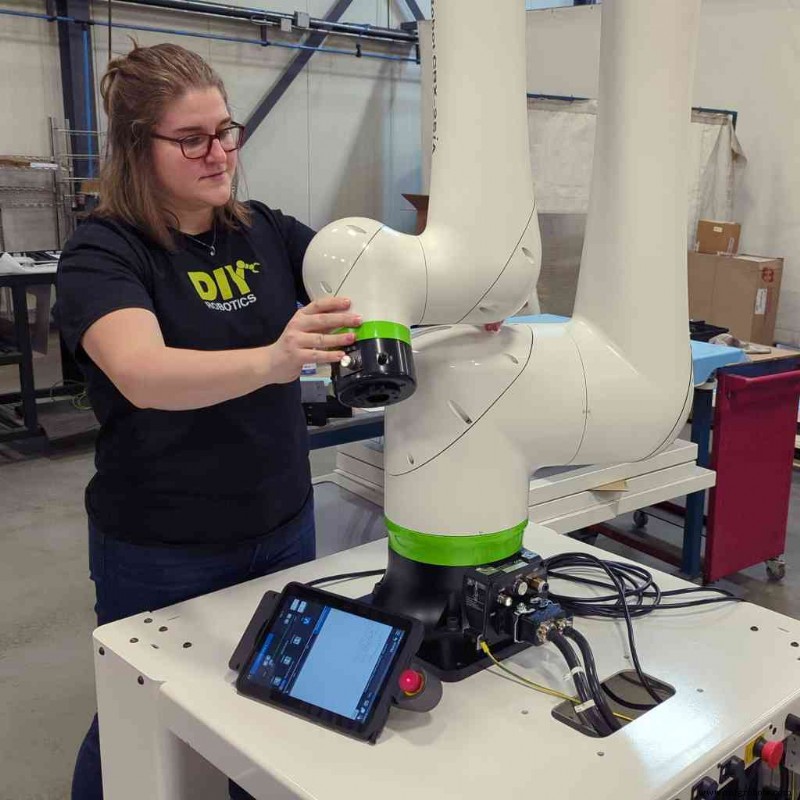
Installation is straightforward: most cobots arrive pre‑assembled, requiring only a few mounting bolts and a power connection before they’re ready to work. With intuitive programming environments and human‑machine interfaces (HMIs), staff can train on the job—many vendors, such as DIY Robotics, supply user‑friendly software that guides operators through setup and commissioning.
Mobility and versatility set cobots apart. A single unit can be reprogrammed for a new task or relocated to another station with minimal downtime. By mounting a cobot on a mobile cart or robotic cell, small and medium‑sized enterprises can deploy a single robot across multiple workstations, dramatically improving asset utilization without the overhead of multiple dedicated units.
In short, collaborative robots offer a practical, cost‑effective pathway to automation. Their human‑friendly interfaces, safety compliance, and adaptability make them ideal for businesses that want to elevate quality and throughput without the complexity and expense of conventional industrial robotics.
Industrial equipment
- Megohmmeter Explained: The Essential Tool for High-Resistance Electrical Testing
- Choosing the Ideal Mining Conveyor Belt: Expert Tips & Best Practices
- How April Showers Affect Compressors: Prevention Tips
- Boost Output with Mazak’s Hyper Quadrex 150MSY Twin-Spindle Turning Center
- Harnessing Sustainable Production to Drive Economic Growth and Environmental Stewardship
- Precision CNC Lathes with Advanced Synchronous Spindle Technology
- Rexroth A8V Compact High‑Performance Hydraulic Pump Units – Low Noise, Variable Displacement
- How Compressed Air Powers Elite Drag Racing Performance
- Top 5 Safety Practices Every CNC Machinist Must Follow
- Roller Coasters: How Air Compressors Power Safe, Exhilarating Rides