



Tool Presetter vs Laser Tool Setter: Leveraging Both for CNC Precision
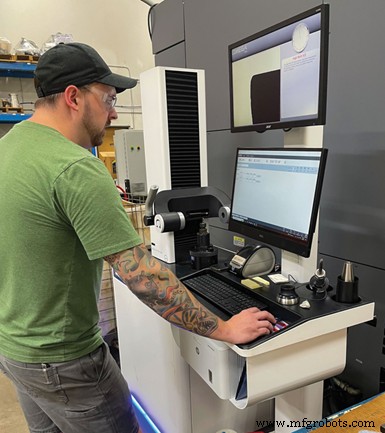
Tool presetters specialize in offline measurement and preparation. By measuring a tool before it ever reaches the spindle, operators can stage assemblies and preload verified geometry values into the CNC control. Source: PM
In today’s CNC landscape, every second counts. Tight tolerances, compressed cycle times, scarce skilled labor, and a razor‑thin margin for error demand the highest levels of accuracy and efficiency.
A common debate on the shop floor centers on how best to handle CNC tool geometry offsets: rely on an offline presetter, use an in‑machine laser tool setter, or combine both?
Featured Content
Each technology tackles a distinct challenge in the machining chain. When paired, they create a robust, layered approach that delivers both speed and reliability. Automated data‑transfer systems such as Caron Engineering’s ToolConnect amplify this synergy by eliminating manual entry and ensuring data integrity from the tool room to the spindle.
Key Differences
Both tool presetters and laser tool setters measure tool geometry, yet their roles diverge.
- Tool presetters: Offline measurement and preparation before the tool reaches the machine.
- Laser tool setters: In‑machine verification that monitors tool position, wear, and breakage during production.
The Case for CNC Tool Presetters
Offline measurement allows operators to set length, diameter, and, when available, run‑out on a presetter without interrupting machining operations.
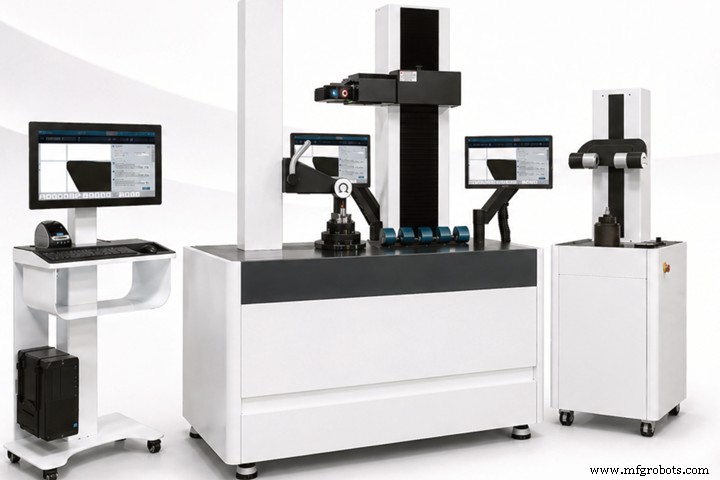
By keeping measurement out of the CNC, tools can be staged while production continues. This results in faster load times, reduced idle periods, and consistent offsets that lower variability.
Advantages:
- Production continuity: No machine stoppage for touch‑off.
- Time savings: Rapid tool loading cuts setup time.
- Accuracy: High‑precision measurement delivers reliable offsets.
- Setup efficiency: Ideal for high‑mix, high‑precision shops with large tool counts.
Presetters shine in environments where tool assemblies are prepared in advance and staged for rapid changeover. However, the traditional bottleneck is manual data entry into the CNC. A single mistyped digit can cause scrap, tool damage, or part failure.
Eliminating the Manual Data Entry Gap
Many shops still rely on manual entry of length and diameter values from the presetter. Even experienced operators risk transposition errors or wrong field loading.
Automated tool‑data‑transfer solutions—using RFID tags, barcodes, or digital interfaces—carry verified measurements directly into the CNC control. This removes the human error factor and guarantees that the precise values reach the correct offset fields.
When a presetter is paired with automated transfer, the entire process—from measurement to spindle insertion—becomes highly reliable. ToolConnect is a prime example, enabling seamless RFID or barcode scans that populate the CNC without manual intervention.
The Case for In‑Machine Laser Tool Setters
Laser tool setters, such as those from Blum‑Novotest, add an additional layer of protection by measuring tools inside the CNC. They verify length and diameter offsets in the actual cutting environment.
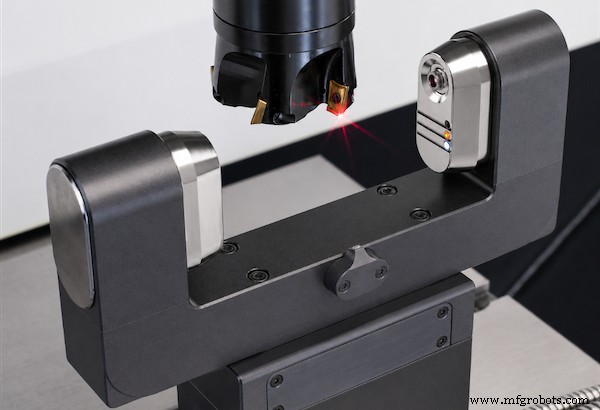
Key benefits:
- Real‑time measurement: Captures the true tool position in the spindle.
- Wear detection: Identifies gradual wear as it occurs.
- Breakage detection: Detects tool failure instantly, preventing downstream damage.
- Automation support: Enables lights‑out machining with greater confidence.
Even the most accurately preset tool can suffer run‑out, pullout, or micro‑chipping during cutting. Laser setters provide the in‑process validation that protects part quality, especially in high‑value applications like aerospace or medical devices.
Why Shops Need Both
The discussion should not be about choosing one technology over the other, but about protecting every stage of the machining process. Presetters guarantee precision before production, automated transfer ensures data integrity, and laser setters maintain accuracy during machining.
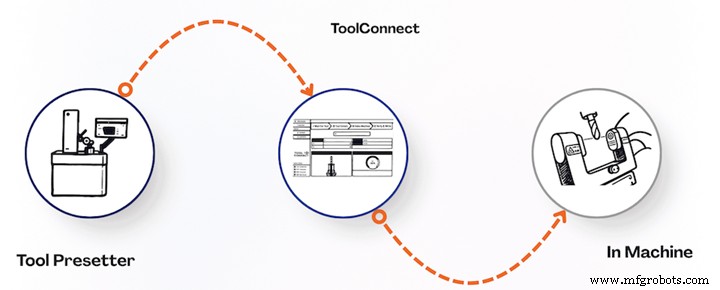
Combining these elements creates a layered strategy: accurate data enters the machine correctly, the tool is verified in the spindle before cutting, and wear data is captured throughout the operation. This is not redundancy—it is robust process control that yields higher spindle utilization, longer unattended runs, and confidence in complex machining environments.
Take a Measured Approach
Manufacturers no longer need to choose between offline precision and in‑machine protection. The optimal solution merges the offline accuracy of a presetter (enhanced with automated transfer) with the real‑time monitoring of a laser tool setter, resulting in a process that is efficient, protected, and scalable.
In modern CNC manufacturing, precision is about more than just measuring tools—it’s about intelligent tool‑data management from the tool room to the spindle, enabling stable machining, lower scrap, and confidence in lights‑out operation.
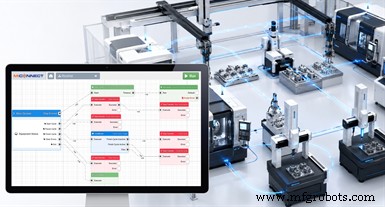
See ToolConnect and More in Action
At IMTS 2026, Caron Engineering will showcase how connected automation and real‑time process control technologies solve these challenges in a fully integrated live production environment at Booth 134742. Visitors will experience a fully automated cutting cell where CNC machines, automation, tooling data, measurement systems and process intelligence work together continuously in real time to improve machining stability, eliminate manual processes, and increase operational reliability.
The centerpiece of the demonstration is MiConnect Technology, Caron Engineering’s low‑code manufacturing automation platform that simplifies communication and orchestration across machines, robots, sensors, gaging systems and software platforms. MiConnect enables manufacturers to rapidly build and deploy automation workflows that streamline production and coordinate entire machining cells without complex custom programming. The live demo will also feature Caron Engineering’s TMAC Tool Monitoring Adaptive Control for real‑time cutting optimization, adaptive feed control and tool breakage detection; AutoComp closed‑loop dimensional feedback with automatic CNC offset compensation; ToolConnect RFID and barcode‑based tool data management and transfer; and DTect‑IT advanced sensor analysis for machine health, vibration monitoring and predictive process intelligence.
Attendees will observe adaptive control responding live during cutting, automated feedback adjusting machining offsets, machine‑to‑device communication coordinating the cell, and integrated automation working together in a real production environment.
Industrial equipment
- 5 Essential Benefits and Applications of Wire EDM Technology
- Leading Laser Cutting Machine Manufacturers: Top 3 Brands Reviewed
- Product Layout Explained: Design, Process, and Benefits
- What Is a Soil Pipe? A Comprehensive Guide to Design, Function, and Installation in Plumbing Systems
- Axiom Equipment Group Leads Oxbow Community Pool Renovation Effort
- Why Wind Energy Is Booming: A Look at the Rapid Growth of the Industry
- Why Manual Mills Still Matter in a CNC-Driven Industry
- Understanding Hydraulic Flow-Control Valves: Function, Types, and Applications
- Streamline Production: Cost‑Effective Printing & Coding Strategies for Manufacturing
- YV-1200ATC: High‑Rigidity Vertical Turning Center for Heavy‑Duty Applications