



Maximizing Conveyor TPH: How Belt Width, Speed, and Design Influence Capacity
Posted on November 10, 2025 by admin
When designing or troubleshooting a mining conveyor system, engineers often ask: How much material can my conveyor actually handle? The answer depends on several interrelated factors—belt width, belt speed, troughing angle, material density, and overall system design. Understanding how these variables influence tons per hour (TPH) is essential for maximizing throughput while maintaining safety and efficiency.
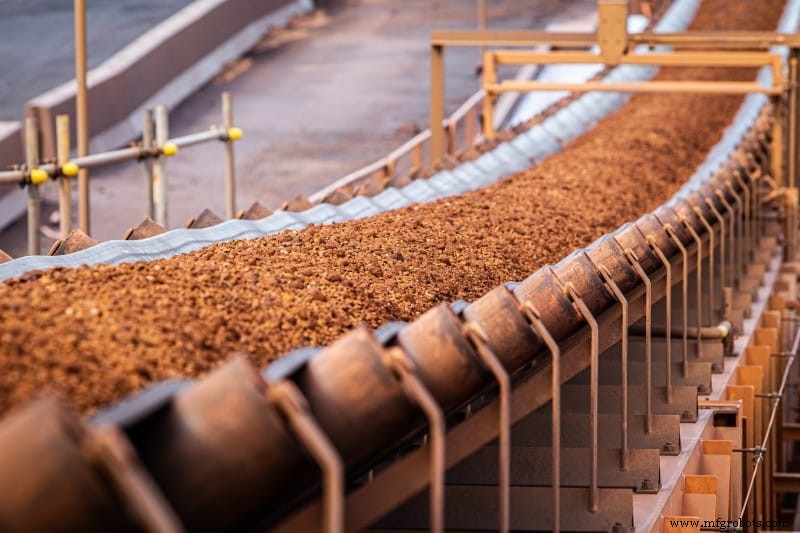
How Belt Width Affects Load Capacity
Belt width is typically the starting point for determining conveyor capacity. Wider belts can transport larger volumes, directly increasing TPH potential.
As a general rule of thumb:
- 24‑inch belts are suited for light material loads or short runs.
- 36‑ to 42‑inch belts are common in smaller operations or secondary lines.
- 48‑ to 60‑inch belts are the backbone of most primary mine conveyors.
- 72‑inch and wider belts serve high‑tonnage or long‑distance applications such as coal, salt, and aggregate transport.
However, width alone does not tell the full story. Two conveyors with identical belt widths can differ dramatically in capacity depending on belt speed, trough angle, and material characteristics.
Tons per Hour (TPH): The Full Equation
Conveyor TPH capacity is typically calculated using the following formula:
TPH = 3.6 × Belt Speed (m/s) × Load Cross‑Sectional Area (m²) × Material Density (t/m³)
Increasing belt speed or troughing angle can raise TPH without changing belt width, but only within safe operating limits. Over‑speeding or overloading can cause belt mistracking, spillage, and accelerated wear on pulleys and idlers.
In short, the best way to increase throughput is to balance belt width, speed, and design capacity to match your specific material and layout.
Common Conveyor Belt Types & Their Capacities
The belt type also influences load capacity and throughput, so choosing the right one is critical.
1. Flat Belts
Flat belts are ideal for shorter, light‑duty runs or when elevation changes are minimal. Their limited troughing capacity results in lower material volume and TPH.
2. Troughed Belts
Standard in mining, these belts use angled idlers (typically 20°, 35°, or 45°) to form a trough that carries more material at once. A steeper troughing angle increases the cross‑sectional area, and therefore the TPH.
3. Pipe Belts
Pipe conveyors form the belt into a closed tube, preventing spillage and protecting the material from the environment. While they provide clean, enclosed transport, their capacity is lower than an open‑trough belt of equal width.
4. Steel‑Cord or Fabric Belts
Material composition doesn’t directly affect capacity, but it impacts allowable tension and belt speed. Steel‑cord belts can handle higher loads and longer runs, enabling higher TPH in demanding mining environments.
Why Your Throughput Might Be Struggling
If your conveyor isn’t meeting its target TPH, the issue may lie in more than just belt width. Common causes include:
- Overloaded belts: Operating beyond design capacity can lead to spillage and inconsistent loading.
- Belt slippage or stretch: Reduces drive efficiency and disrupts consistent material flow.
- Idler or pulley wear: Creates drag and vibration that limit belt speed and cause misalignment.
- Build‑up or carryback: Decreases effective load space and slows throughput.
- Improper loading or transfer design: Can cause uneven belt loading and reduced capacity.
A comprehensive system evaluation can pinpoint performance bottlenecks and determine whether a targeted upgrade or a full replacement is most cost‑effective.
Modernizing for Higher Throughput
Upgrading part or all of your conveyor system can dramatically improve performance without the expense of a total rebuild. Options include:
- Installing a wider belt or higher‑trough idlers to increase load volume.
- Upgrading drives or motors to support higher belt speeds.
- Adding belt cleaners, impact beds, or improved transfer points to reduce carryback and spillage.
- Implementing modern control systems for better load management and power efficiency.
West River’s engineering team can assess your existing system’s bottlenecks and recommend the best modernization path to safely boost throughput—whether that means a new belt, an upgraded drive, or a fully re‑engineered conveyor.
Comparing Current vs. New System Specs
When you compare your conveyor’s current load and speed specs to those of a modern system, the performance gap is often striking. Older conveyors designed for lower capacities may be pushed beyond their limits, resulting in excessive downtime, maintenance costs, and safety risks.
By evaluating belt width and material, drive horsepower and pulley configuration, and idler spacing and trough geometry, you can pinpoint the factors limiting throughput and see where modern equipment could deliver significant efficiency gains.
When to Consider a New Conveyor System
If component upgrades no longer provide meaningful gains, it may be time to upgrade to a newer conveyor system.
A modern conveyor system from West River Conveyors offers:
- Optimized belt width and speed for maximum TPH.
- Integrated tensioning and control systems for consistent performance.
- Modular designs for easier maintenance and scalability.
- Custom engineering to handle specific materials and operating conditions.
These features and benefits allow you to boost productivity with a state‑of‑the‑art conveyor system.
Partner with West River Conveyors
Whether you’re troubleshooting an underperforming system or planning a major expansion, West River Conveyors can help you achieve higher throughput with confidence. Our engineering team specializes in designing conveyor systems that meet demanding production targets while minimizing maintenance and downtime.
Contact WRC today to discuss your belt width, load capacity, or system modernization project, and discover how the right conveyor design can help you move more material, more efficiently.
Explore Our Conveyor Systems
Industrial equipment
- Reflections on a 30-Year Career in Compressed Air
- Inside a Car Production Line: Key Stations & Roles
- Understanding Overflow Pipes: Function, Importance, and Safety Applications
- Ensuring Aerospace Safety with Nitrogen Gas Generation
- 5 Key Insights About Rapid Prototyping
- Fuji's Automated Multitasking Machine Enhances Production Efficiency
- Understanding Sandblasting Etching: Techniques, Benefits, and Applications
- Metal Fabrication vs. Welding: Key Differences Explained
- Reviving a Century-Old Machine Shop: Thermo IEC’s Path to Profitability
- Understanding Notching: A Precise Metal Cutting Technique