



Balancing Commercial Protocols and Aerospace Cabling: Selecting the Optimal Cable
Expert Guidance for Selecting the Right Cable
Commercial protocols used in aerospace—Gigabit/10‑Gigabit Ethernet, USB, IEEE 1394—demand a careful balance between industry standards and the unique constraints of aircraft. While standards provide clear electrical and structural criteria, aerospace designers must also reduce size, weight, and address strict safety requirements such as low smoke, low toxicity, and flame resistance.

Figure 1. Aerospace applications increasingly adopt commercial protocols for high‑speed data transfer.
Why Category Cables Matter
Take a Cat 5e cable for Gigabit Ethernet. The ANSI/TIA‑568‑C.2 standard specifies 24 AWG solid copper, polyethylene insulation, and a PVC jacket. Insertion loss is the key metric that limits cable length when crosstalk goals are met. In aerospace, each modification—stranded conductors, silver‑coated alloys, or smaller gauge—adds insertion loss, shortening the maximum run.
TE Connectivity partners with designers to optimize these trade‑offs. For example, switching from solid to stranded conductors increases insertion loss by ~20 %, reducing the run by the same percentage. Using a silver‑coated copper alloy can add ~10 % more loss. To counteract weight savings from 26 AWG or 28 AWG conductors, designers also use thin‑wall dielectrics and tougher jackets, achieving practical distances shown in Figure 2.
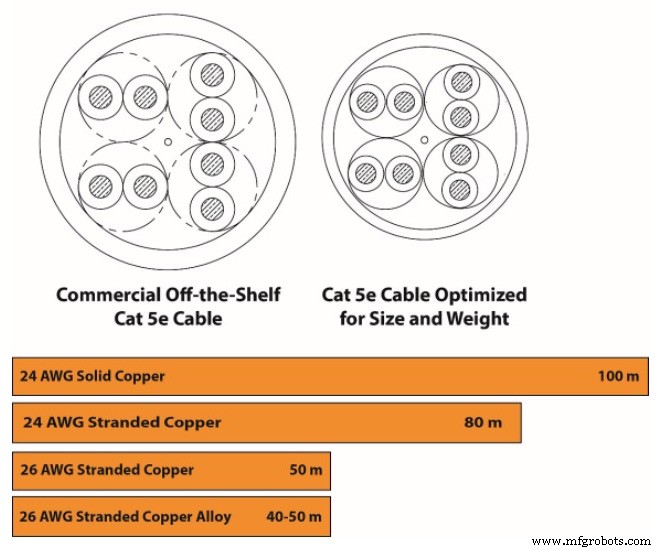
Figure 2. Practical distances for various conductors in aerospace‑grade Cat 5e.
USB Extensions Beyond the Standard
USB 2.0/3.0 typically supports 5 m/3 m cable lengths. Aerospace applications often need longer runs while maintaining data integrity and power delivery. The solution lies in conductor size, insulation type, and velocity of propagation.
High‑velocity insulations—low‑density PTFE or foamed FEP—boost propagation speed by 13–25 % compared with polyethylene, allowing distances up to 6.3 m without violating the 26 ns delay limit for USB 2.0.
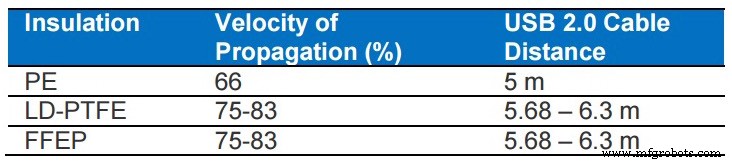
Figure 3. Insulation options that extend USB cable lengths.
IEEE 1394 as a Lightweight Backbone
IEEE 1394 is gaining traction in aerospace. By employing quad‑axial cables that carry only the two data pairs, designers eliminate on‑board power lines, achieving the lightest possible configuration. Depending on AWG, runs of 50–80 ft are achievable, with power supplied separately.
Ruggedizing the Cable
Choosing the right polymer for insulation and jacket is critical to meet aerospace requirements for chemical resistance, temperature extremes, low outgassing, and flame performance. Although these materials cost more than commercial equivalents, they ensure safety in confined aircraft environments.
Off‑the‑Shelf vs. Engineered Solutions
While ANSI/TIA‑568 and USB standards provide a solid baseline, aerospace designers often modify specifications to meet weight, size, and environmental targets. TE Connectivity’s expertise in semi‑custom cabling allows us to balance high‑speed performance with the stringent safety and mechanical demands of aerospace.
Explore more white papers from TE Connectivity for in‑depth technical insights.
Industry Articles are a form of content that allows industry partners to share useful news, messages, and technology with All About Circuits readers in a way editorial content is not well suited to. All Industry Articles are subject to strict editorial guidelines with the intention of offering readers useful news, technical expertise, or stories. The viewpoints and opinions expressed in Industry Articles are those of the partner and not necessarily those of All About Circuits or its writers.
Industrial equipment
- Elevate Manufacturing Performance: Integrating People, Processes, and Technology
- Navigating Challenges and Seizing Opportunities in the Aerospace Industry
- E3.cable L1: Master Robust, Optimized Cable & Harness Design
- Choosing the Ideal Coding & Marking Machines for Your Packaging Line
- Budget-Friendly Prototyping: Tools & Tips for Cost-Effective Innovation
- Expert Guide for Engineers: Selecting Reliable Machine Parts Efficiently
- Choosing the Right Compactor: A Comprehensive Guide to Efficient Waste Management
- How to Choose the Right Industrial Parts & Service Provider
- How to Choose the Ideal Laser Cutting Machine for Your Fabrication Needs
- Precision Laser Engraving for Aerospace: Ensuring Safety & Quality