



Rapid Prototyping in Manufacturing: How 3D Printing Accelerates Product Development
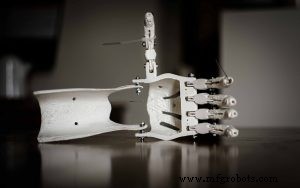
Manufacturing firms rely on CAD files to design and produce components. Once a design is finalized, the CAD model is uploaded to a 3D printer, which fabricates the part from raw material. Rapid prototyping is the discipline that harnesses this workflow to create quick, functional prototypes that can be tested before full‑scale production.
What Is Rapid Prototyping?
Rapid prototyping refers to a set of 3D‑printing techniques that enable manufacturers to build a prototype swiftly and cost‑effectively from a CAD file. The goal is to validate design intent, assess fit and function, and identify potential issues early in the development cycle.
Rapid Prototyping vs. 3D Printing: The Key Differences
Although both processes use a 3D printer, the terms are not synonymous. 3D printing is an umbrella term covering all additive manufacturing applications—from hobbyist desktop printers to industrial production lines. Rapid prototyping, on the other hand, is a specialized subset that focuses exclusively on creating prototypes for evaluation and refinement.
Two defining traits set rapid prototyping apart:
- Purpose‑driven: It is intended for prototype creation rather than end‑use production.
- Speed‑oriented: The workflow is optimized to deliver a working model in the shortest possible time.
How Rapid Prototyping Works
The process begins with a CAD model that is sliced into layers using dedicated software. The slicing program generates a toolpath for the printer, which then deposits or cures material layer by layer. Common technologies include material extrusion, stereolithography (SLA), and selective laser sintering (SLS). Each method offers unique strengths—for instance, SLA delivers high‑resolution surfaces, while SLS can produce fully functional parts from nylon or metal powders.
After the prototype is built, engineers perform mechanical testing, fit checks, and visual inspections. Feedback from these evaluations informs design iterations, allowing teams to converge on a final product faster and with fewer costly revisions.
Ready to prototype your next design? Discover Monroe’s Additive Printing Service or get your parts printed now!
Industrial equipment
- 5 Key Insights About Rapid Prototyping
- Binder Jet 3D Printing: How It Works and Why It Matters
- Rapid Manufacturing: Accelerate Production for Custom and Low‑Volume Parts
- Subtractive vs Additive: Choosing the Right Rapid Prototyping Method
- Rapid Prototyping: Accelerating Innovation for Gaming Consoles
- Top 10 Advantages of In-House Rapid Prototyping
- Fast & Reliable PCB Prototyping: Accelerate Your Design Process
- Rapid Prototyping Explained: Benefits, Techniques, and Fidelity Levels
- How Rapid Prototyping & 3D Printing Accelerate Manufacturing Success
- How Rapid Prototyping is Revolutionizing EV Manufacturing