



How Extrusion Drives Precision in Fused Filament Fabrication (FFF) 3D Printing
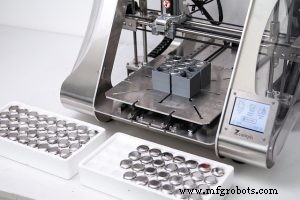
In fused filament fabrication (FFF), extrusion is the engine that brings raw polymer into precise shape. The printer pushes heated or softened material through a nozzle—essentially a die—depositing it layer by layer to build the part.
What Is Extrusion?
Extrusion forces a material—commonly a thermoplastic—through a die that is smaller than its storage container. The back pressure pushes the softened filament or pellet, and the ejected stream adopts the exact geometry of the die, producing a uniform, controlled flow.
Why Extrusion Is Essential for FFF 3D Printing
Because the material is propelled rather than dripped, extrusion delivers consistent cross‑sectional dimensions, reduces oozing, and maintains the nozzle’s structural integrity. The result is a cleaner print surface and fewer defects.
Extrusion Variants in FFF
Hot‑Extrusion (Rod or Pellet)
Most commercial FFF printers use hot‑extrusion. A rigid filament rod—or a batch of thermoplastic pellets—is fed into a heated barrel. As the material reaches the nozzle, it melts to a viscous liquid, then is extruded under pressure. The heated path allows for rapid, smooth deposition.
Cold‑Extrusion (Powder‑In‑Liquid)
Cold‑extrusion bypasses the heating step. Fine thermoplastic powder is suspended in a liquid binder and pushed through the nozzle while remaining at ambient temperature. This method is useful for composites or applications that require minimal thermal degradation.
Choosing the Right Process
Selecting between hot and cold extrusion depends on the polymer’s thermal tolerance, desired part properties, and the printer’s mechanical design. Manufacturers typically specify the optimal extrusion method for each material grade.
Learn More About Monroe’s Additive Printing Service
Need high‑quality FFF prints? Explore our service or contact us today to get your parts printed.
Industrial equipment
- 5 Key Facts About Fused Filament Fabrication (FFF)
- Plasma Spraying: How the Process Protects Workpieces from Corrosion
- Fused Filament Fabrication (FFF): The Complete Beginner’s Guide
- How Metal Stamping Works: A Comprehensive Guide for Modern Manufacturing
- Understanding the Metal FFF 3D Printing Process: From Printing to Sintering
- Material Extrusion: Understanding Fused Deposition Modeling and Its Variants
- Stainless Steel Fabrication: From Raw Materials to Finished Products
- The Role of Friction Materials in Vehicle Brakes and Industrial Applications
- Understanding Offset Printing: A Comprehensive Guide
- Understanding Retraction: Essential Technique for 3D Printing Quality