



Material Extrusion: Understanding Fused Deposition Modeling and Its Variants
What is Material extrusion?
Material extrusion is an additive manufacturing technique that uses a continuous filament of thermoplastic or composite material to construct 3D parts. The material in the form of plastic filament is fed through an extruding nozzle, where it is heated and then deposited onto the build platform layer by layer.
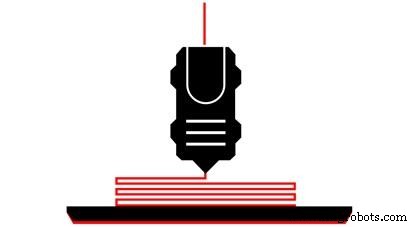
Material extrusion is now the most popular additive manufacturing process in terms of availability for general consumer demand and quality. As per ISO/ASTM 52900-2015, it is one of the 7 Additive manufacturing processes. You can read the other types here.
Material extrusion technology was first developed in the 1980s by S. Scott Crump under the registered name of fused deposition modeling (FDM). The term fused deposition modeling (FDM) and its abbreviation FDM are trademarked by Stratasys Inc, a company co-founded by Scott Crump.
A detailed description of fused deposition modeling can be found here
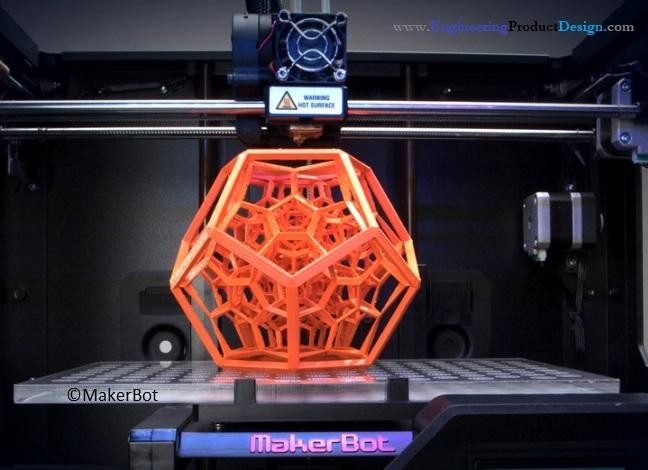
Fused filament fabrication (FFF) is another type that falls under this category developed by the members of the RepRap project which is not restricted to use by others. You can read all about RepRap here. This is also referred to as Plastic Jet Printing.
The following video by Solid Concepts explicitly outlines the Material extrusion process
Advantages and Disadvantages of material extrusion
Advantages
- Wide selection of print material
- Easily understandable printing technique
- Easy and user-friendly method of the material change
- Low initial and running costs
- Comparable faster print time for small and thin parts
- Printing tolerance of +/- 0.1 (+/- 0.005″)
- No supervision required
- Small equipment size compared to other AM
- Comparably low-temperature process
Disadvantages
- Visible layer lines
- The extrusion head must continue moving, or else the material bumps up
- Supports may be required
- Poor part strength along Z-axis (perpendicular to build platform)
- Finer resolution and wider area increases print time
- Susceptible to warping and other temperature fluctuation issues such as delamination
- Toxic print materials
Manufacturing process
- How Extrusion Drives Precision in Fused Filament Fabrication (FFF) 3D Printing
- How Tactile Sensors Work: Types, Principles, and Applications
- Interrupts Explained: Types, Mechanisms, and Applications in Modern Computing
- Fused Deposition Modeling (FDM): A Practical Guide for Hobbyists and Professionals
- 3D Printing Explained: Types, Processes, and How It Works
- Extrusion Explained: Process, Types, and Practical Applications
- Extrusion Process Explained: How It Works, Types, Applications, Pros & Cons
- Honing: Process, Parameters, Types, and Key Advantages for Superior Surface Finish
- Extrusion Explained: Process, Types, and Key Applications
- Gas Welding Techniques and Their Industrial Applications