



Chromium: Properties, Production, and High‑Temperature Applications
Chromium: Properties, Production, and High‑Temperature Applications
Chromium is a key refractory metal used across a range of high‑temperature alloys and industrial processes. Below we explore its physical characteristics, how it’s produced, the challenges of alloy development, and its most common applications.
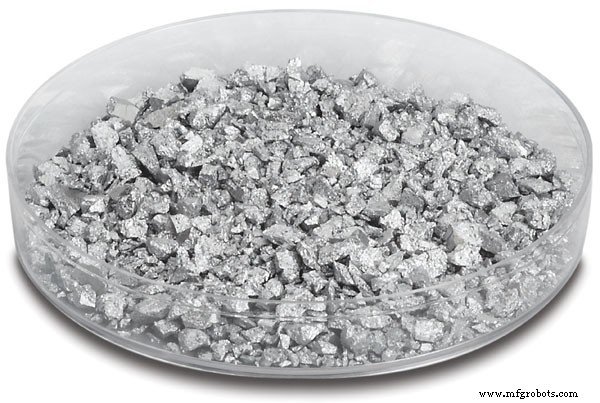
Key Physical Properties
- Melting point: 1907 °C (3465 °F) – one of the highest among metals.
- Density: 7.19 g cm⁻³, slightly lower than iron’s 7.87 g cm⁻³.
- Oxide film: At temperatures up to ~1700 °F (927 °C), a stable chromium oxide layer forms, protecting the metal from further oxidation.
- Availability: Chromium is relatively abundant, making it cost‑effective for large‑scale use.
Production Methods
Chromium metal can be obtained through several processes, each yielding different purity levels:
- Direct reduction of chromite ore.
- Electrolytic extraction from chromite ore concentrates.
- Hydrothermal processes for ultra‑pure grades.
Only the highest‑purity grades (typically >99.9%) exhibit the ductility required for many industrial applications.
Alloy Development and Challenges
Chromium’s mechanical properties are highly sensitive to:
- Purity (e.g., >0.01% carbon, >0.015% sulfur, or >0.02% nitrogen can cause brittleness at room temperature).
- Grain size, fabrication history, and surface condition.
Despite these challenges, several alloys have proven successful:
- 1–5 % tungsten + 1 % titanium alloys: suitable for extrusion and rolling.
- 25 % iron + 6–9 % molybdenum + trace Ti/Al alloys: hot‑forged and hot‑rolled.
- Chromium + yttrium + rhenium alloys: promising for extreme‑temperature environments.
- Recent developments include a chromium base alloy with columbium, molybdenum, and tungsten that can be shaped into bars, flats, wire, strip, tubing, and forgings.
- Cast chromium‑nickel alloys designed for corrosion resistance in flue‑gas environments.
Industrial Applications
Chromium’s versatility stems from its combination of strength, corrosion resistance, and high‑temperature stability:
- Chromium plating: Ranges from decorative thin layers to thick “hard” plates used for wear resistance.
- Ferrochromium for steel and cast‑iron alloying – small percentages in low‑alloy steels; ≥12 % in stainless steels.
- Alloying element in nickel‑ and cobalt‑based superalloys.
- Component manufacturing for turbines, heat exchangers, and chemical processing equipment.
Conclusion
Chromium’s unique combination of high‑temperature performance and corrosion resistance makes it indispensable for modern engineering. For deeper insights into chromium and other refractory metals, visit Advanced Refractory Metals. We supply premium chromium products and a range of refractory metals at competitive prices.
Metal
- Plasma Spraying: How the Process Protects Workpieces from Corrosion
- How Metal Stamping Works: A Comprehensive Guide for Modern Manufacturing
- Compression Molding Explained: Process, Materials, and Industrial Benefits
- Inside GE Aviation’s CMC Production: From Silicon Carbide to Composite Parts
- Understanding How a Shaper Machine Operates: A Practical Guide
- Ultrasonic Welding Explained: Seamless Bonding Without Fasteners
- The Role of Friction Materials in Vehicle Brakes and Industrial Applications
- The Mechanics of Clutches: A Comprehensive Industrial Guide
- Understanding Offset Printing: A Comprehensive Guide
- How Industrial Generators Keep Your Facility Running During Outages