



Rhenium: Key Applications and Industrial Uses of the Rare Refractory Metal
What Can Rhenium Be Used For?
Rhenium is one of the world’s rarest refractory metals, boasting the second‑highest melting point of all metals (3,186 °C) and a high density of 21.02 g/cm³. Its unique combination of high-temperature strength, excellent ductility, and resistance to oxidation makes it indispensable in high‑performance industrial applications.
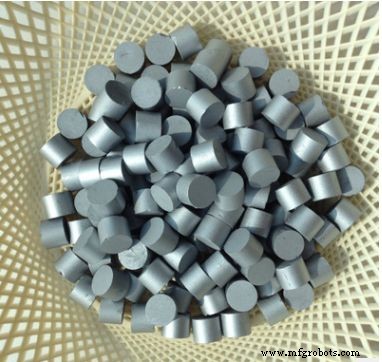
Rhenium is typically recovered from molybdenite ore, where it occurs as trace sulfides. The metal is refined into a fine powder and then consolidated by pressing and resistance sintering under vacuum or hydrogen. The resulting rhenium bars retain remarkable ductility at room temperature, allowing them to be rolled or cold‑worked. However, they harden quickly and require annealing after modest reductions.
At high temperatures, rhenium’s tensile strength surpasses that of all other metals; for instance, it can withstand 49,000 psi at 3,000 °F (1,650 °C). Because it oxidizes rapidly in air above 1,000 °C, rhenium components are typically operated in vacuum or protective atmospheres to preserve performance.
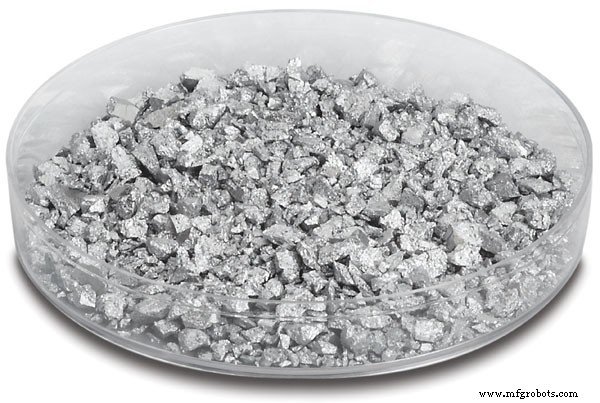
Due to its scarcity and cost, rhenium is reserved for specialized uses where its exceptional properties are essential. In electrical contacts, rhenium exhibits superior arcing and sparking resistance compared to tungsten. In high‑vacuum tubes, rhenium filaments are less prone to the so‑called “water cycle” reaction—where trace water vapor causes tungsten to deposit on the glass walls—thereby maintaining filament longevity.
Adding 40–50 % rhenium to molybdenum alloys dramatically improves their ductility after high‑temperature annealing. Similar effects are observed in other refractory metal alloys, making rhenium a valuable strengthening agent in high‑temperature structural materials.
Rhenium is also employed as an alloying element in platinum‑group thermocouples, enhancing stability at extreme temperatures. Moreover, rhenium‑tungsten or rhenium‑molybdenum thermocouple elements extend temperature measurement ranges beyond the limits of conventional platinum thermocouples, enabling accurate sensing in the 1,200–1,800 °C range.
Conclusion
Rhenium’s unique properties—high melting point, exceptional high‑temperature strength, and excellent oxidation resistance—make it indispensable in advanced aerospace, nuclear, and high‑temperature chemical processing applications. For more information on rhenium and other refractory metals, visit Advanced Refractory Metals to explore our high‑quality, competitively priced product range.
Metal
- Rhenium in Modern Industry: From Aerospace to Catalysts and Electronics
- Molybdenum Compounds: Key Industrial Applications and Benefits
- Key Applications of Hafnium: From Nuclear Control Rods to Advanced Alloys
- Rhenium Metal Powder: Applications in Superalloys, Catalysts, and Precision Instruments
- Choosing the Right Metal for Building Exteriors: Durability, Cost, and Aesthetics
- Niobium: Applications in Industry, Jewelry, Gravimetry, and Orthopedic Implants
- Aluminum Bronze: Applications, Properties, and Advantages
- Laser Cutter Applications: From Wood to Aerospace
- CNC Routers: Applications, Benefits, and Industry Uses
- Explore the Versatile Applications of 3D Printing in Industry and Healthcare