



Aluminum Bronze: Applications, Properties, and Advantages
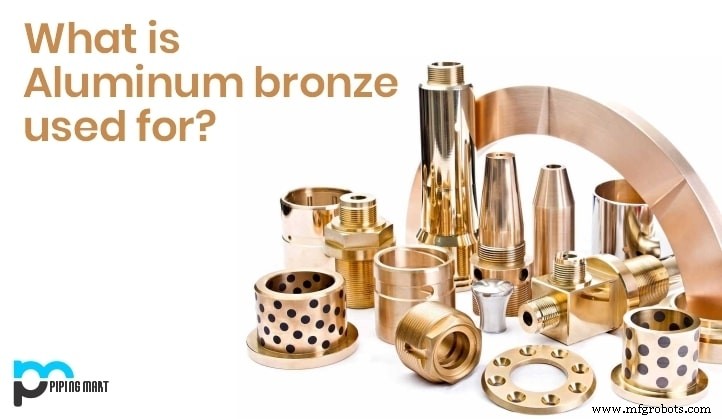
Aluminum bronze is a copper alloy where aluminum—rather than the tin in bronze or zinc in brass—serves as the primary alloying element. The aluminum forms a thin, adherent oxide film that protects the metal from oxidation and corrosion. Additional elements such as manganese, silicon, iron, or copper can be added to tailor strength, wear resistance, or anti‑corrosive performance.
The production process mirrors that of other copper alloys: copper is heated to a specified temperature until molten, then the required quantities of aluminum and any secondary alloying elements are introduced. The mixture is then cast or wrought into the desired shape.
Categories of Aluminum Bronze Alloys
The American Society for Testing and Materials (ASTM) and the Society of Automotive Engineers (SAE) use the Universal Numbering Scheme (UNS) to classify aluminum bronze. UNS numbers range from C95200 to C95800, with the aluminum content typically between 8.5 % and 11 % by weight. The alloys are grouped into four main families:
- Low‑aluminum, single‑phase alloys – contain less than 8 % aluminum and offer excellent cold ductility, making them ideal for tubing, plates, sheets, and wires.
- Moderately alloyed, two‑phase (duplex) alloys – include 8–11 % aluminum with small additions of other elements for enhanced strength, suitable for hot‑working and casting.
- Silicon‑rich bronzes – contain up to 6 % aluminum and 2 % silicon, providing low magnetic permeability and high shock and vibration resistance.
- Manganese‑rich bronzes – have roughly 13 % manganese and 8–9 % aluminum; they excel in impingement, cavitation, and wear resistance, though they are not as strong as other types.
Applications
Marine Environments
Aluminum bronze’s oxide film gives it exceptional resistance to seawater corrosion, making it the material of choice for impellers, propellers, and other offshore equipment.
Water Treatment
Its corrosion resistance also benefits components in water treatment plants, where exposure to aggressive chemicals can degrade standard metals.
Oil & Gas
Non‑sparking and durable, aluminum bronze is ideal for valves, fittings, and machinery that operate in explosive or flammable atmospheres.
Highly Corrosive Settings
In industrial processes that involve aggressive acids or salts, aluminum bronze remains reliable where other copper alloys would fail. It also resists biofouling in saline waters.
Architectural & Structural
Its combination of strength, shock absorption, and seismic resilience makes it suitable for bridge bearings, base isolation systems, and other load‑bearing architectural components.
Metal
- Rhenium in Modern Industry: From Aerospace to Catalysts and Electronics
- Molybdenum Compounds: Key Industrial Applications and Benefits
- Key Applications of Hafnium: From Nuclear Control Rods to Advanced Alloys
- Rhenium: Key Applications and Industrial Uses of the Rare Refractory Metal
- Niobium: Applications in Industry, Jewelry, Gravimetry, and Orthopedic Implants
- Laser Cutter Applications: From Wood to Aerospace
- CNC Routers: Applications, Benefits, and Industry Uses
- Explore the Versatile Applications of 3D Printing in Industry and Healthcare
- Why C63200 Aluminum Bronze Is Ideal for High-Performance Industrial Applications
- Silicon Aluminum Bronze: Composition, Advantages, and Industrial Applications