



Carbon Fiber Wrap: Uses, Benefits, and How It Compares to Real Carbon Fiber
Carbon fiber wrap has surged in popularity, offering a lightweight, cost‑effective way to achieve the iconic look of real carbon fiber. In this article we answer the most common questions about its definition, uses, and how it measures up against authentic carbon‑fiber products.
RELATED: Colored Carbon Fiber Is Usually Texalium, But What Is Texalium?
In this article:
- What Is Carbon Fiber Wrap?
- How Do You Use Carbon Fiber Wrap?
- Is Carbon Fiber Wrap Real Carbon Fiber?
- Does Carbon Fiber Wrap Look Real?
- How Does Carbon Fiber Wrap Compare to Real Carbon Fiber?
- What Are the Benefits of Carbon Fiber Wrap?
What Is Carbon Fiber Wrap?
Carbon fiber wrap, often referred to as vinyl wrap, is a textured film or sticker that imitates the weave pattern of genuine carbon fiber. While it captures the visual appeal, it lacks the mechanical properties and is significantly less expensive.
What Is Carbon Fiber Wrap Used For?
As the name implies, you can apply it to virtually any surface that accepts adhesive. The demand for authentic carbon fiber has surged, yet the production cost and technical expertise required make it prohibitive for many. For those who crave the aesthetic without the performance, wrap is the go‑to solution.
Common applications include:
- Automotive: spoilers, hoods, interior trim
- Smartphone cases
- Laptops
- Kitchen cabinets
- Furniture
- Wall panels
With a heat‑curable backing, the wrap can conform to complex shapes, curves, and corners.
Is Carbon Fiber Wrap Real Carbon Fiber?
Some manufacturers may be ambiguous, touting the product as “real” while delivering only a printed vinyl. The truth is that wrap is a polymer film, not a composite material. Authentic carbon fiber sheets or laminates are true carbon composites.
RELATED: What is Forged Carbon Fiber? The Ultimate Guide To Forged Composites
Does Carbon Fiber Wrap Look Real?
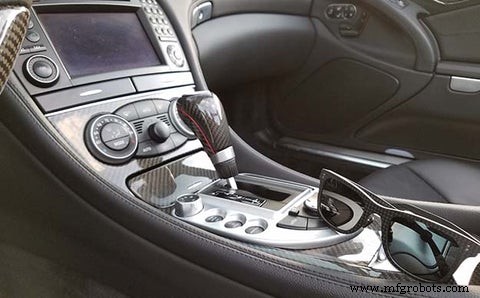
The latest generation of vinyl wraps is highly realistic. Variants with high‑gloss or epoxy finishes mimic the depth of genuine fiber. While the tactile feel differs, quality wraps can fool both casual viewers and seasoned enthusiasts.
How Does Carbon Fiber Wrap Compare to Real Carbon Fiber?
Cost is a primary differentiator. A custom carbon‑fiber hood can exceed $1,500, whereas wrapping a similar surface may cost a fraction of that amount. Availability is another factor: real parts can be scarce, whereas wrap can be applied to any compatible surface.
Performance-wise, wrap adds weight but offers minimal structural benefit. In contrast, real carbon fiber delivers superior strength and stiffness.
Installation is straightforward—apply like a sticker, then remove or replace with ease.
What Are the Benefits of Carbon Fiber Wrap?
Vinyl wrap stands out as one of the most innovative customization tools of recent years. It provides a distinct aesthetic that is otherwise unattainable.
Its reversible nature means you can change colors or patterns without repainting. Many wraps also provide scratch resistance and can last up to seven years with proper care.
Clean‑up is simple, and the low cost makes it an attractive alternative for those who prioritize look over structural performance.
Choose wrap if you need a visual upgrade at a budget, but reserve genuine carbon fiber for applications where weight, strength, and durability are critical.
Want to learn more about carbon fiber? Contact Carbon Fiber Gear or visit our website for more information.
Up Next:
fiber
- Key Applications of Hafnium: From Nuclear Control Rods to Advanced Alloys
- Carbon Fiber Explained: 5 Key Advantages for Modern Industries
- Unidirectional Carbon Fiber: The Strength, Lightness, and Cost‑Savings Advantage for Modern Manufacturing
- Upgrade Your Home with Durable Carbon‑Fiber Appliances
- Carbon Fiber Explained: Strength, Production, and Industry Applications
- Carbon Fiber 101: How the Ultra‑Light Material Is Revolutionizing 5 Key Industries
- Beyond the Factory: 8 Innovative Ways Carbon Fiber Shapes Everyday Life
- 5 Innovative Applications of Carbon Fiber Sheets
- SCUBAPRO MK19 EVO BT/G260: Carbon‑Fiber Regulator Boosts Durability & Performance
- Explore the Versatile Applications of 3D Printing in Industry and Healthcare