



FFF 3D Printers: 5 Key Facts You Must Know
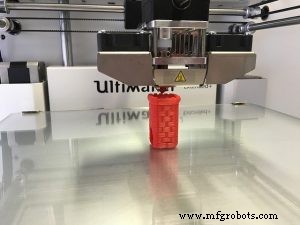
Fused Filament Fabrication (FFF) has become the industry standard for additive manufacturing. Whether in a home lab or a production line, FFF 3D printers build objects from filament, making them the most widely used category worldwide.
According to recent market data, FFF accounts for roughly 70 % of all 3D‑printing sales, underscoring its versatility and accessibility across both consumer and commercial segments.
#1 – Layer‑by‑Layer Construction
Unlike subtractive techniques, FFF printers deposit material one thin slice at a time. A heated nozzle extrudes filament onto a build plate, and the printer builds successive layers until the final geometry is complete.
#2 – Filament as the Core Material
All FFF systems use thermoplastic filament—typically PLA, ABS, PETG, or specialty blends—spooled directly behind the nozzle. The filament is drawn through a Bowden or direct‑drive carriage, ensuring a steady feed during printing.
#3 – Heating and Melting at the Nozzle
The filament arrives at the nozzle cold and solid. The printer’s hot end rapidly heats the material to its extrusion temperature (usually 190–260 °C for common polymers), turning it into a fluid that can be precisely laid down.
#4 – Precise X‑Y Movement
Most FFF printers employ a Cartesian motion system: the print head moves in the X‑Y plane while the build platform or the head itself moves in the Z‑axis. These motions are driven by stepper motors and controlled by the G‑code instructions generated from your 3D model.
#5 – Electric Coil Heaters and Hot‑End Design
The heating element—typically a 3‑phase or 1‑phase electric coil—provides the necessary thermal energy. Combined with a heat‑break and a fan, the hot end maintains a stable temperature, ensuring consistent extrusion and preventing filament jamming.
With a solid understanding of these five fundamentals, you can confidently select an FFF printer that meets your project’s needs.
Industrial equipment
- Understanding UV Resin: Is It Toxic? Essential Safety Information
- Mastering 3D Printer Feed Rate: Key Insights for Optimal Speed & Accuracy
- PETG vs PET: Key Differences Explained for 3D Printing
- Essential 3D Printer Lubrication Guide: Keep Your Machine Running Smoothly
- Essential Insights into Metal Casting: Techniques, Applications, and Advantages
- Expert Guide: CNC Machining Acrylic – 8 Essential Insights
- A Comprehensive Guide to Pumps: How They Work, Types, and Key Benefits
- Essential Guide to the Pitot Tube: How It Measures Airspeed and Fluid Flow
- Essential Guide to the Honing Process: Precision Finishing for Industrial Applications
- Essential Insights into the Lapping Process for Precision Surface Finishing