



Robotic Welding: Boosting ROI by Tackling Labor Shortage & Enhancing Safety
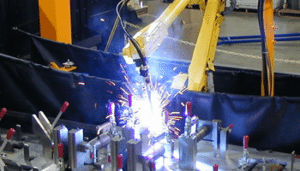 Robotic Welding: Resolving Labor Shortage & Workplace Safety
Workplace safety is of paramount importance, particularly to manufacturers who face higher insurance costs and a loss of their skilled labor force when potentially hazardous processes can lead to worker injuries or worse. Even finding qualified talent, whether the environment is hazardous or not, is as much of a challenge as safety concerns.
Welding robots play a two-fold role in resolving manufacturers’ issues surrounding safety and labor to deliver measurable ROI.
Robotic Welding Solves Dire Lack of Skilled Labor
A study has shown that 40% of manufacturers had to decline new contracts because they were unable to hire enough welders to meet throughput requirements. Unfortunately, the problem is getting worse as the U.S. is projected to be short 400,000 welders by 2024. Clearly, this is a direct constraint on growth and revenue opportunities.
Robotic welding is playing an important role at a crucial time for manufacturers. It is filling the void of the “skills gap,” making up for a shortage of professional welders. In addition to productivity gains, robotic welding is also providing manufacturers with expanded revenue and growth opportunities by way of new or even larger contracts in both existing and new markets.
Welding Robots Improve Workplace Safety
When you think of safety, you may imagine hurting efficiency to ensure the safety of your workers. But in today’s manufacturing environment, that’s just not the case. Often times, safety leads to efficiency. For instance, a safe operation has lower liability and fewer accidents, leading to higher productivity, as well as lower operating and insurance costs.
An Experience Modification Rating (EMR) is a great example of safety and efficiency leading to higher productivity and lower costs. Insurance companies base an EMR score on the number of workplace injuries and use it to adjust premiums. As a result, a safe work environment improves your EMR and can lower your insurance costs – savings that can be passed on to your customers.
Robotic work cells typically have safety features built-in to protect workers while maintaining productivity and uptime. Robotic welding cells have mechanical barriers and sensors that allow workers to remain clear of the dangerous welding processes.
Robotic welding cells help manufacturers realize ROI by resolving workplace safety and labor shortage issues – achieving greater uptime, higher productivity and enhanced efficiencies that support their skilled workforce.
To learn more about robotic welding ROI, read part 4 in our four-part series next week: Process Optimization with IIoT.
Previous blogs in our Robotic Welding series:
Robotic Welding Series Part 1: Avoiding Rework and Excessive Material Consumption
Robotic Welding Series Part 2: Increased Uptime and 85% Efficiency
Industrial robot
- Maximizing ROI in Robotic Welding Through IIoT-Driven Process Optimization – Part 4
- Robotic Welding ROI: Boosting Uptime & Efficiency for Manufacturers – Part 2
- Maximizing ROI with Robotic Welding: Insights for Manufacturers – Part 1
- Ensuring Robotic Welding Safety: Best Practices for Your Operations
- Robotic Welding: Transforming Heavy Fabrication for Industry
- Maximize ROI: Proven Strategies to Extend Your Welding Robot’s Lifespan
- Robotic Deburring: Boosting Productivity & Delivering Tangible ROI for Manufacturers
- Boosting Production Efficiency: How Robotic Welding Drives Quality and Speed for Large Transportation Components
- Maximizing Robotic Welding Efficiency with Cloud Computing
- Boost Your Bottom Line: How to Maximize ROI with Robotic Arc Welding Systems